Take our quiz to find the best commercial zero-turn mower or best residential zero-turn mower for you.
Easily compare all riding lawn mower attachments to see how you can get more out of your mower.
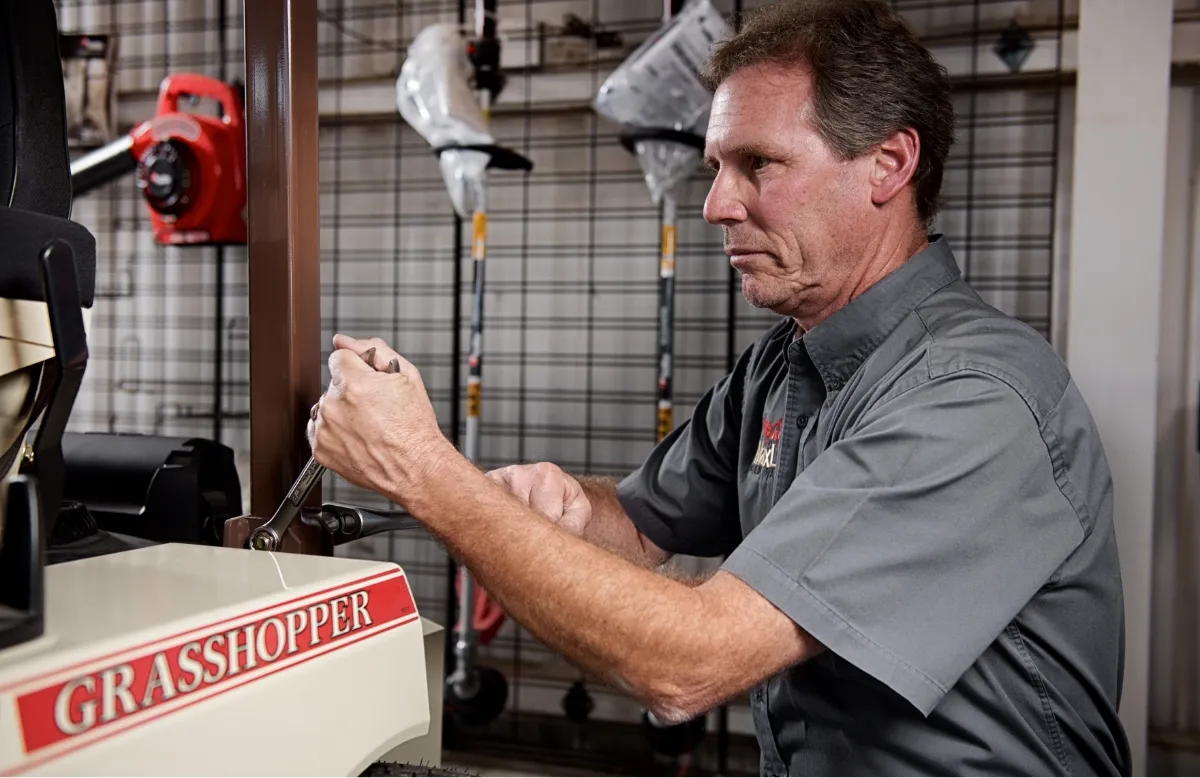
Your local dealer can also offer great service and support for your riding lawn mower. Find the dealer nearest you.

Elite performance doesn't need to cost elite money. Get 0.98% APR financing for 48 months on any new Grasshopper zero-turn mower.
Choosing the right zero-turn lawn mower for your property, terrain, and hours of use
Key takeaways in this article
- Match the mower to the property: Choose a zero-turn mower by weighing acreage, terrain, deck placement, and annual hours of use.
- Commercial-grade needs real hours: Mowing less than 2 acres weekly rarely justifies a commercial zero-turn mower, since it logs under 150 hours yearly.
- Bigger decks save time on open ground: At 6 mph, a 61-inch zero-turn deck mows an acre about 5 minutes faster than a 48-inch deck.
- Diesel pays off with heavy use: Diesel zero-turn mowers burn around 50% less fuel per hour but pay off best beyond 2,000 operating hours.
- Hills favor a low center of gravity: Avoid mowing slopes steeper than 15° with a zero-turn; front-mount and stand-on models offer a low center of gravity.
With so many options available, deciding which zero-turn lawn mower to buy can be a little overwhelming. It helps to think through four variables that will help you zero in on the best zero-turn mower for your needs:
- Acreage: How much grass you need to mow will help you determine how large of a machine you need and how durable it should be.
- Terrain: Factors like slopes, ditches, and obstacles can also influence mower size as well as mower configuration.
- Deck placement: Speaking of mower configuration, you should also think about whether you would prefer a mid-mount or front-mount deck. Each has its advantages and disadvantages, and choosing often comes down to personal preference.
- Hours of use: Think about how many operating hours you anticipate putting on the mower each year. This will help you determine if a heavier-duty, commercial-grade mower would be the best option.
What size zero-turn mower do I need?
Start by thinking about how much grass the mower will be cutting. Larger properties often require larger cutting decks, which require higher-horsepower engines. Larger properties and more frequent mowing call for a more durable mower built to withstand longer operating hours and increased wear and tear.
Following are some general recommendations:
Mower considerations by acreage
Mowable acreage | Deck width in inches | Engine type | Build quality |
Up to 2 acres | 41–52 | Gas | Residential use |
2–5 acres | 48–61 | Gas | Entry-level commercial use |
5–15 acres | 52–72 | Gas or diesel | Commercial use |
15+ acres / commercial use | 61–72 | Gas or diesel | Commercial use |
Mower considerations by annual use
Annual operating hours | Engine type | Build quality |
Under 150 hours | Gas | Residential or commercial use |
Over 150 hours | Gas or diesel | Commercial use |
Variables impacting deck width
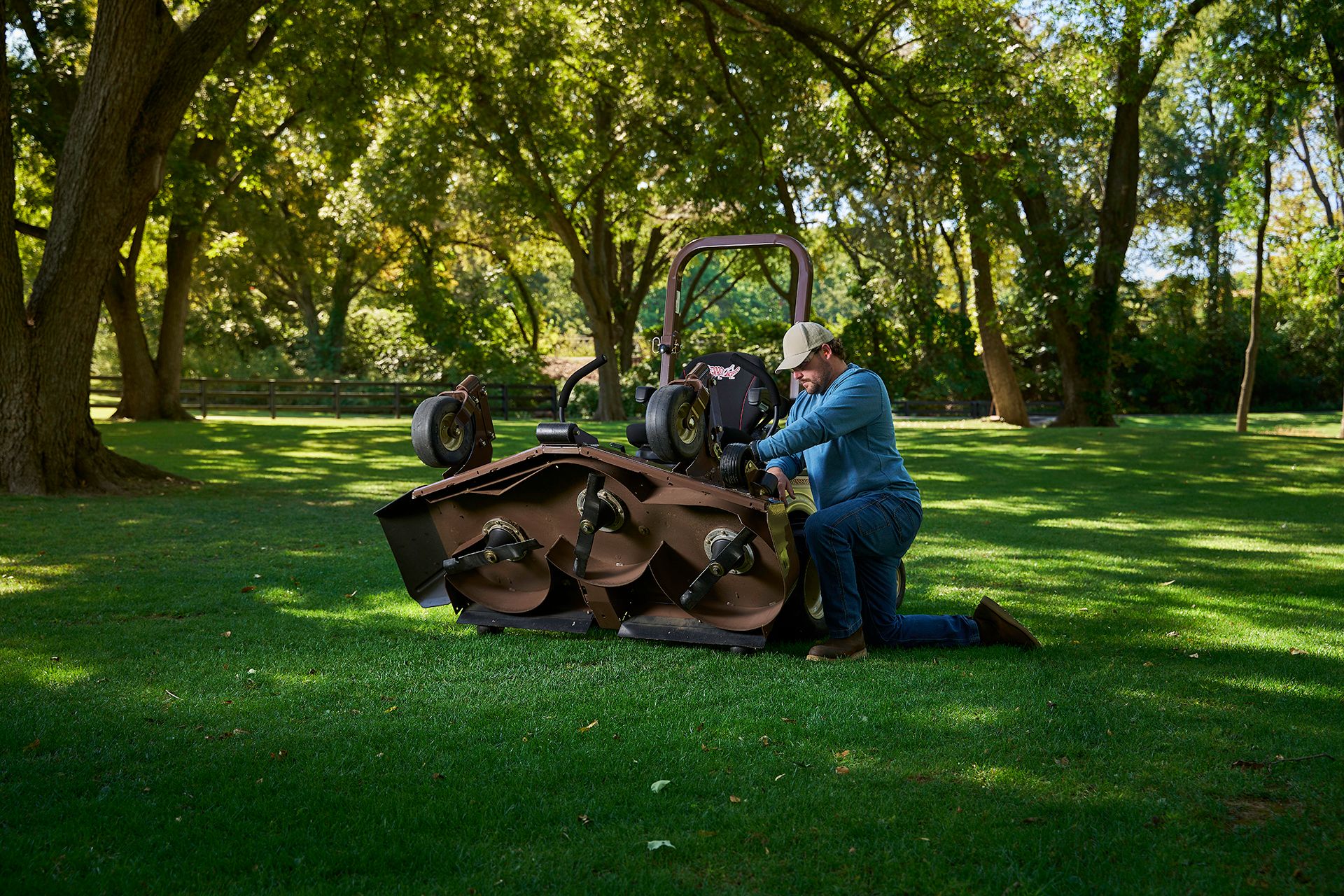
Even on a larger property, a smaller deck could still be the best choice if the property has a lot of trees, obstacles, and uneven terrain. On the other hand, a larger deck could be the best choice on a smaller property if the property is more open, which allows you to take full advantage of the larger deck’s cutting swath. But remember, every time a deck gets bigger, the mower gets more expensive. It’s a good idea to evaluate how much time you can really save when bumping up to the next largest deck size in order to determine if the price premium is worth it to you.
Grasshopper has an interactive Mower Model Chooser that helps customers choose the ideal Grasshopper mower based on their needs and preferences.
How much acreage can a zero-turn mower handle?
Any zero-turn mower can technically handle any amount of acreage. However, undersizing will result in more time spent mowing, which will accelerate wear and tear, increase the frequency of maintenance and repairs, shorten mower life in years, and overall lead to a more expensive experience over time. Undersized mowers can also result in a lower-quality finished cut appearance. It’s important to identify how much grass needs to be mowed and how often, along with variables like terrain and obstacles, to determine which zero-turn mower will do the best job.
There is a formula for determining how long it will take to mow an acre of grass. Essentially, the formula factors in the amount of grass within an acre, 10% overlap, 10% non-mowing time (i.e., turning around), mower speed, and deck width. The formula looks like this:
Minutes per acre = [108.9 ÷ (speed in mph × deck width in inches × 0.90)] × 60
Let’s look at an example of how two deck sizes would compare, assuming each mows at 6 mph:
- 48-inch deck: 25.2 minutes per acre
- 61-inch deck: 19.8 minutes per acre
The 61-inch would save around 5 minutes per acre. So, the best zero-turn mower for 5 acres would be the larger 61-inch, which would help save around 25 minutes per mowing. However, an argument could be made that the best zero-turn mower for 2 acres has a smaller 48-inch deck. You’ll save a little bit of money by going with the smaller deck, but you won’t sacrifice much time (10 minutes) mowing your residential property. That said, if saving a couple hundred bucks isn’t important to you, choosing the largest deck your property can handle could be the right way to go.
That’s an important point whether you’re a professional or residential user. Deck size must be compatible with the property you’re mowing. The formula described above assumes back-and-forth mowing. But variables like rolling terrain, ditches, narrow passages, trees and landscaping amenities all impact mowing efficiency. It’s a time killer when a mower is too big to maneuver efficiently or maybe can’t even access certain areas on a property.
What’s the best zero-turn mower for hills and rough terrain?
For safety reasons, it generally isn’t recommended to mow a slope greater than 15°. That said, mowers featuring a wider wheelbase, lower center of gravity, and better weight distribution have an advantage on hills, as well as rough and challenging terrain. You can also opt for certain types of tires like lug tires and airless tires that are designed for improved gripping and stability.
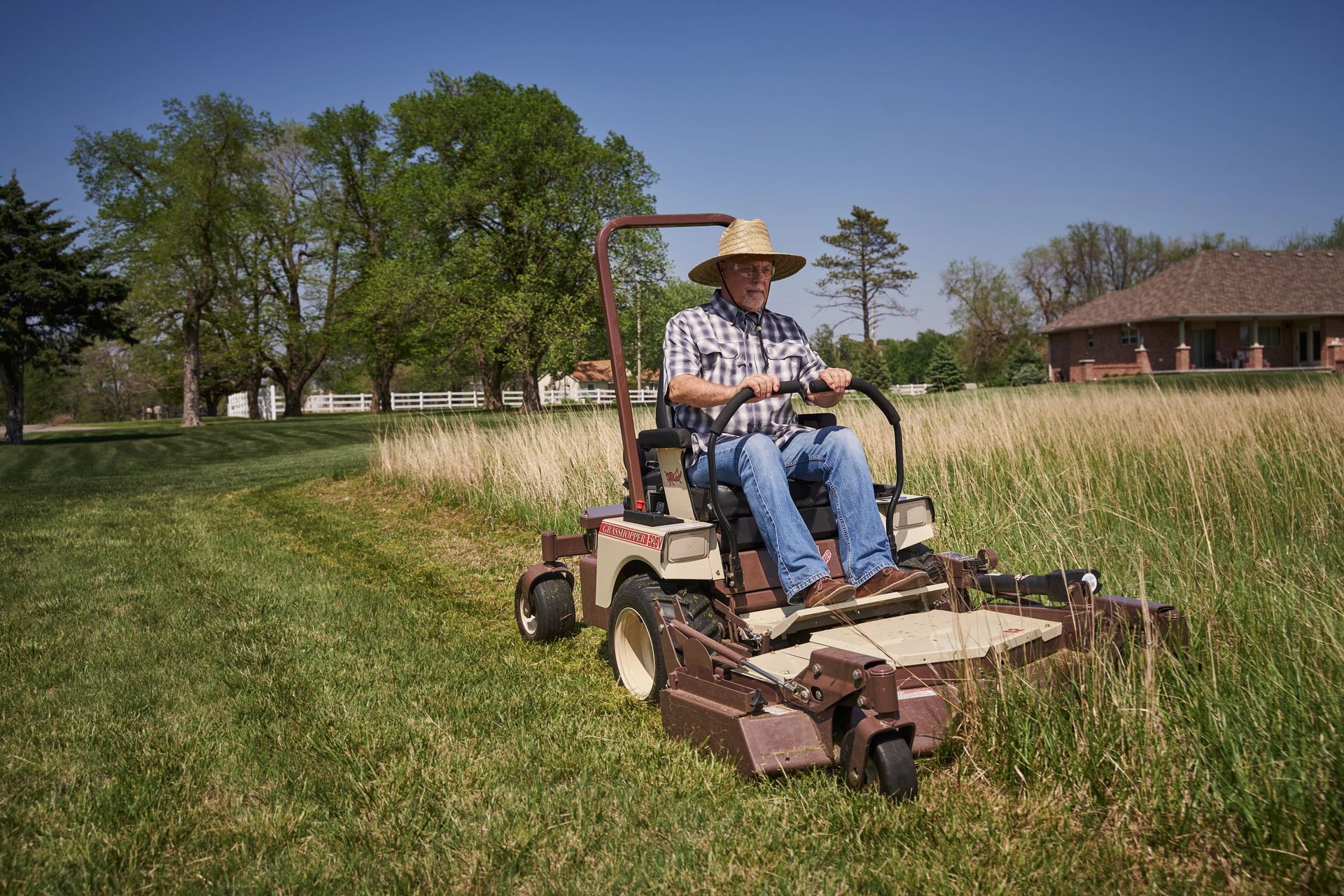
With respect to mowing quality, the mower deck is another key consideration. Large mid-mounted decks can have a tendency to scalp the grass when mowing on uneven ground. It may be a wise idea to refrain from using anything larger than a 61-inch deck. Front-mounted decks provide more leeway. Because of the way they are connected to the mower, front-mount decks are able to flex and float over uneven ground, which helps reduce the likelihood of scalping.
For mowing hills, front-mount decks can be effective because they naturally have a lower center of gravity and optimum weight distribution. Some mid-mounts also have design features to lower their center of gravity. Grasshopper MidMount™ Mowers, for instance, have a fuel tank that’s positioned directly below the operator’s seat. Stand-on mowers are also an excellent choice for mowing slopes. Because the operator is standing, the mower has an extremely low center of gravity. The operator can also shift their weight more easily which further enhances hillside stability.
One final consideration when mowing rough terrain is how comfortable the mower will be. Look for zero-turn mowers with well-engineered suspension systems and adjustable suspension seats designed to provide customized operator comfort.
What type of zero-turn mower should I buy for my property or business?
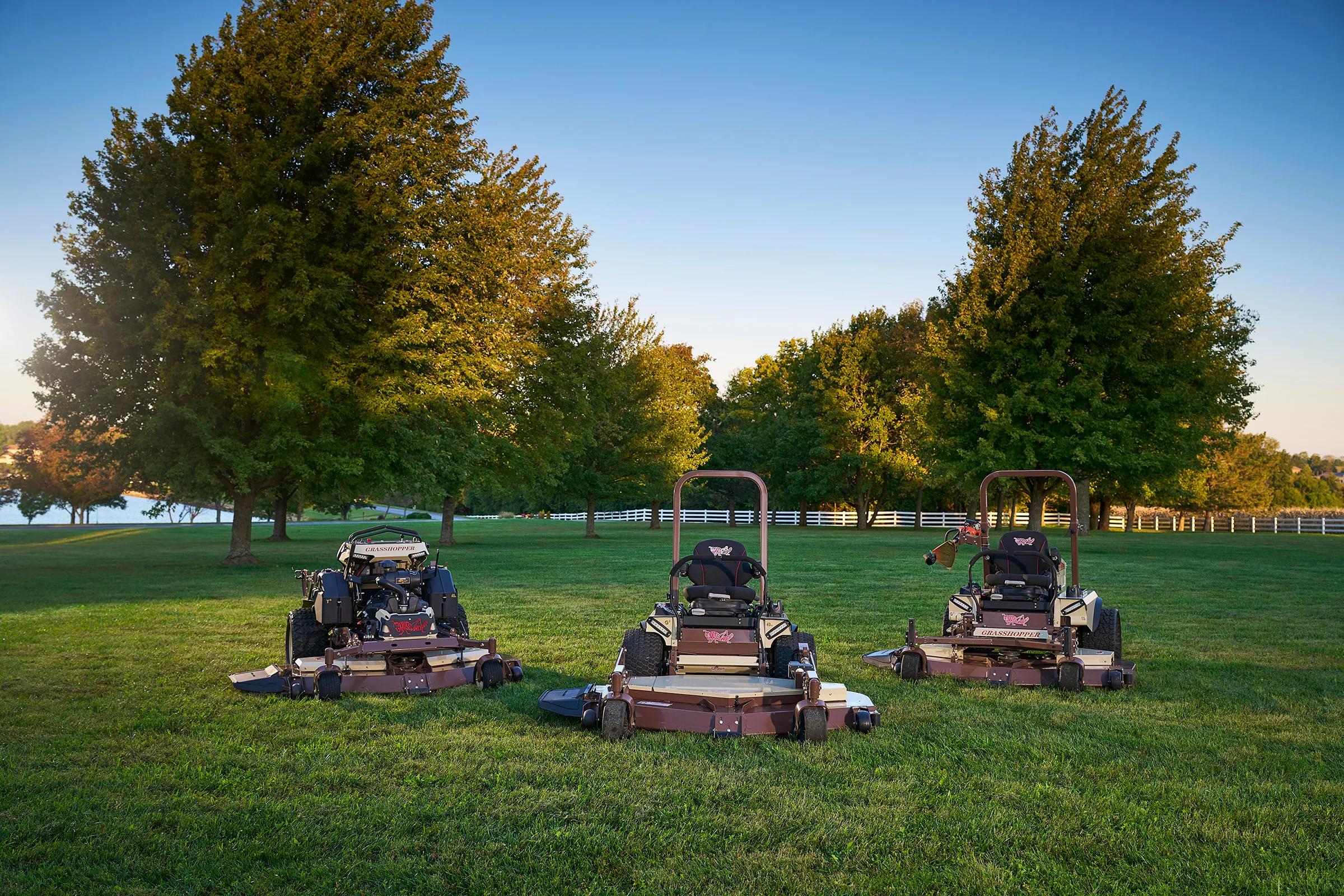
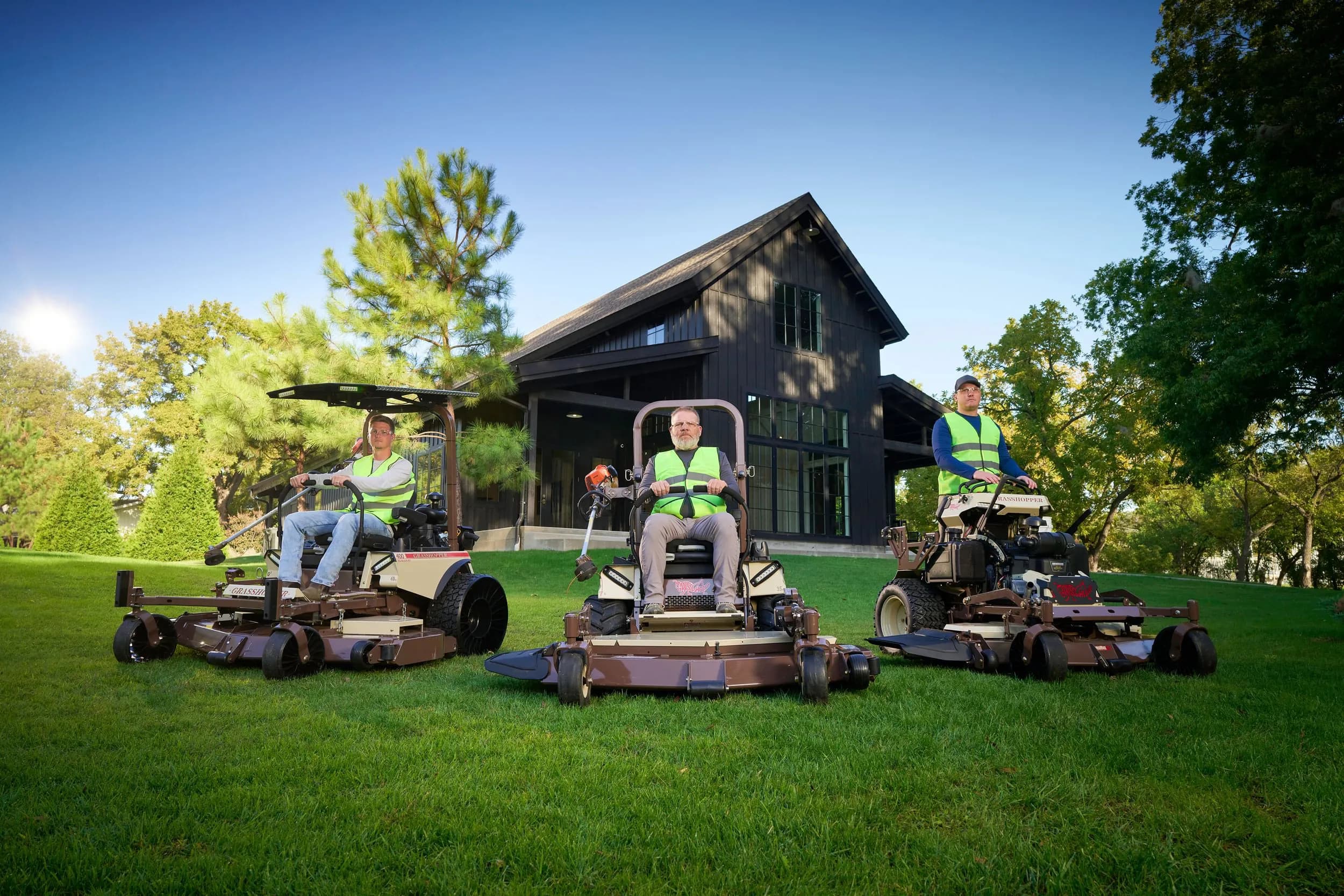
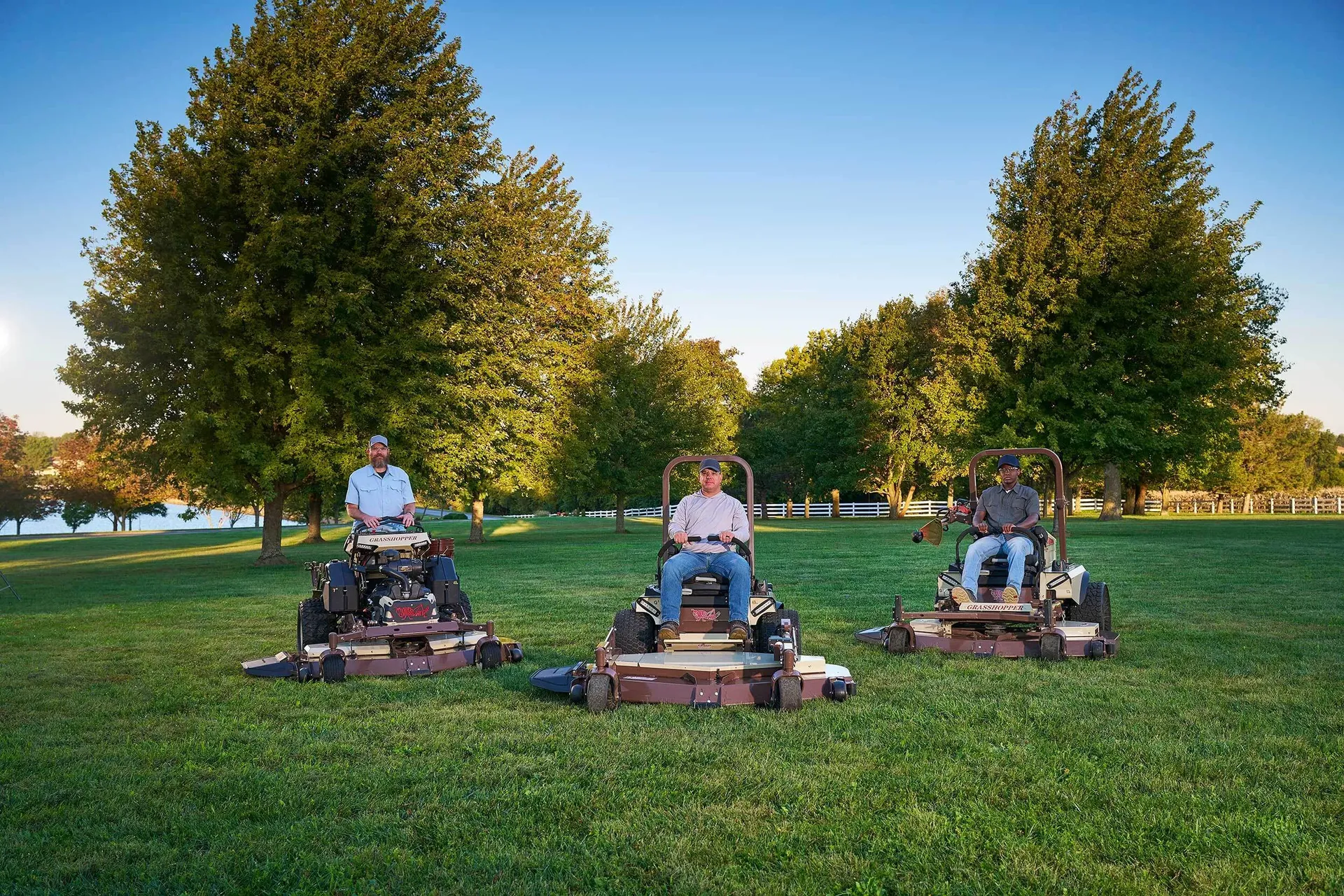
There are three main types of zero-turn mowers: seated midmount, seated frontmount, and stand-on. Each has its advantages that must be considered when choosing which will be best for your property or lawn care business.
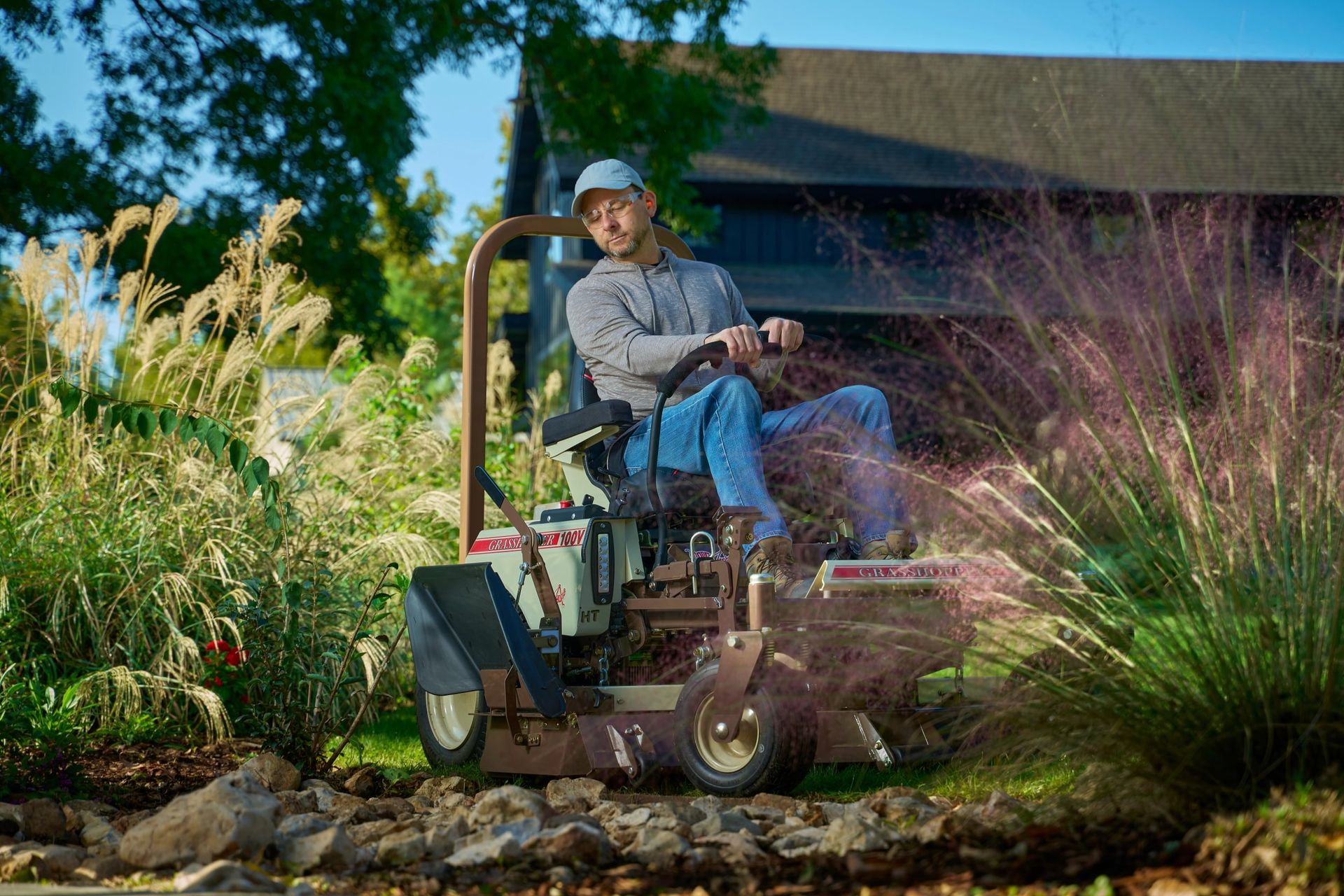
MidMount zero-turn mower
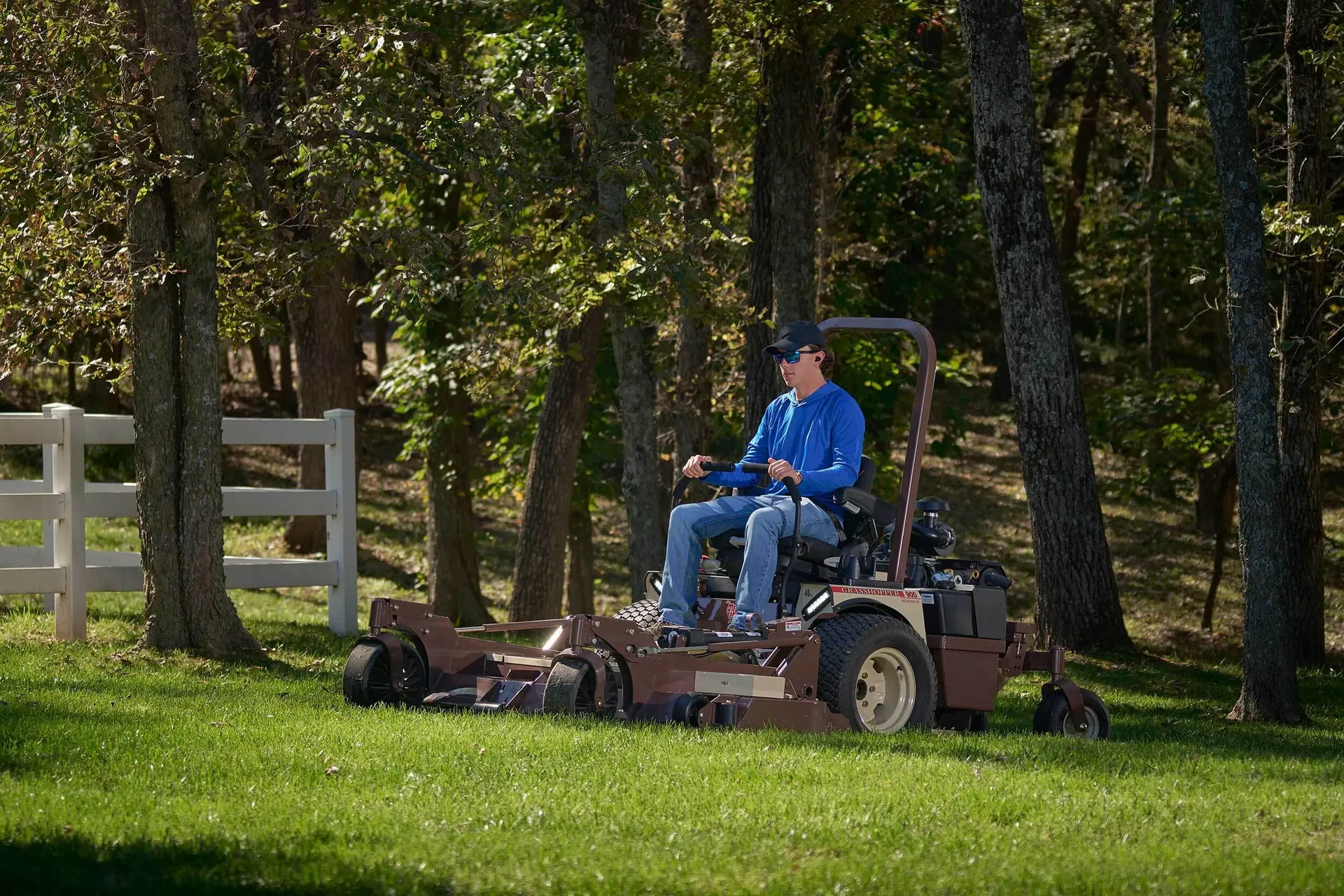
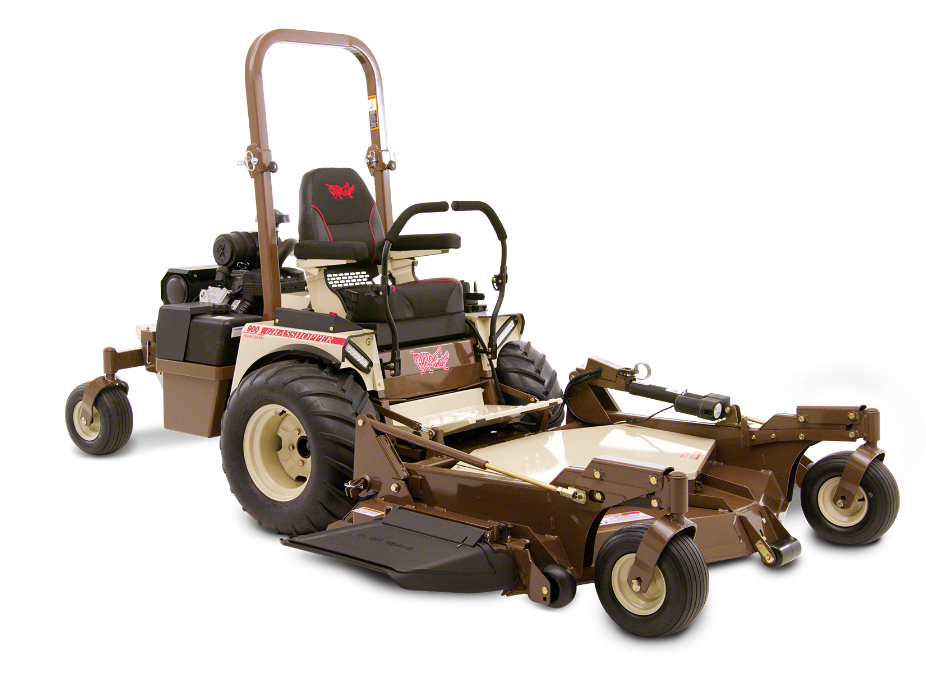
FrontMount zero-turn mower
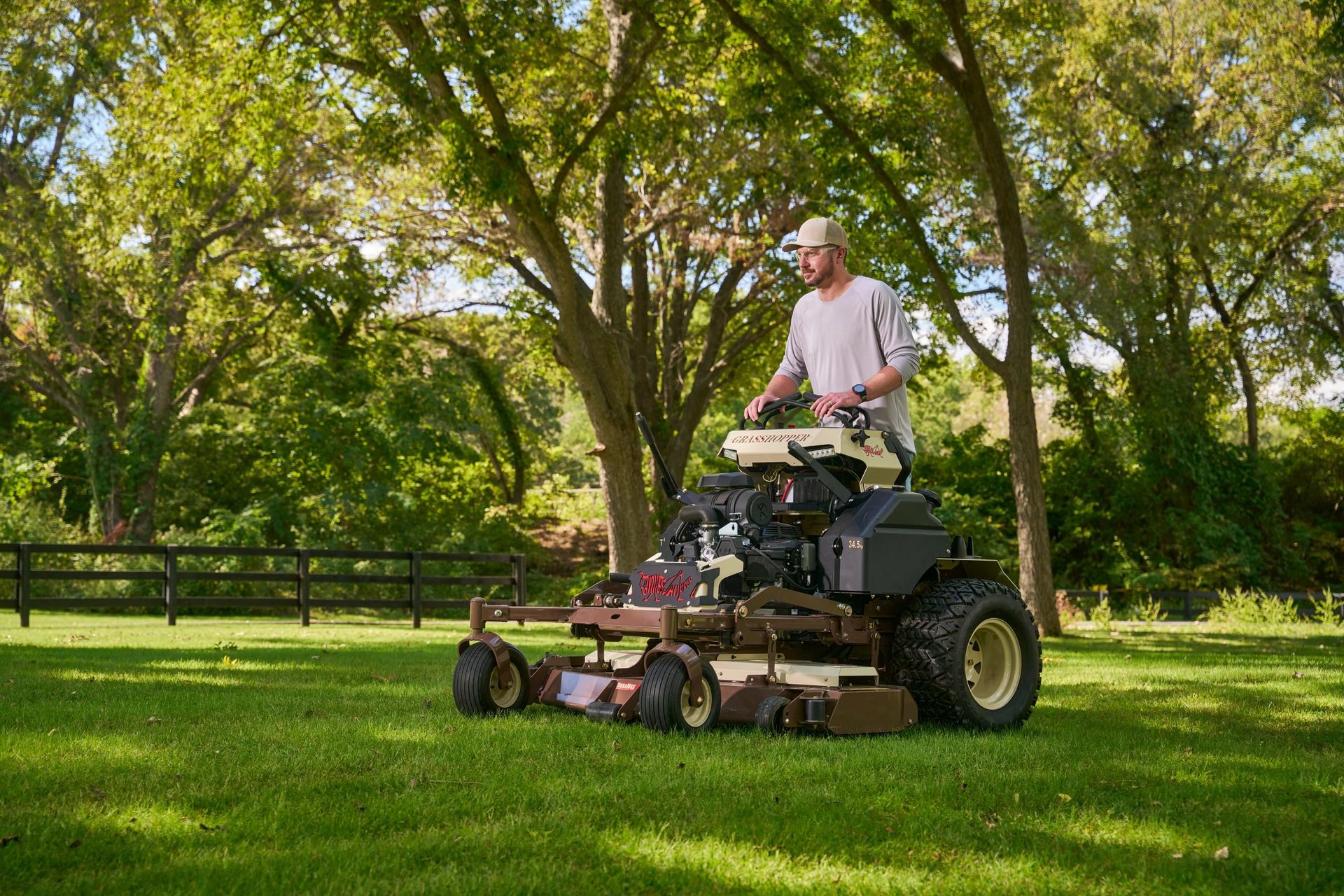
Stand-on zero-turn mower
- Compact footprint
- Maneuverability in tighter spaces and around obstacles
- Easy to store on trailers, in garages, etc.
- Speed in open spaces, especially when discharging clippings
- Can mow under trees, fences, etc. to reduce string trimming
- Lower center of gravity and improved weight distribution enhance operation on slopes
- Floating deck design improves cut quality on uneven terrain
- Can power several year round non-mowing attachments than a mid-mount
- Flip-up deck makes it easy to access blades and keep decks clean
- Extremely compact footprint
- Great maneuverability in tight spaces
- Easier to store in tight spaces
- Enhanced visibility due to standing up
- Easier to get on and off
Consideration | MidMount | FrontMount | Stand-on |
Obstacles and tight spaces | Compact layout helps maneuver around trees and landscaping | Out-front deck provides reach but adds length during mowing | Compact layout helps maneuver in confined areas |
Visibility | Seated view with the deck beneath the operator | Clear view of the deck’s leading edge | Elevated operating position provides a broad view |
Trimming under trees and fences | Reach depends on clearance | Out-front deck extends beneath low branches and fences | Reach depends on clearance |
Storage and transport | Shorter overall layout can simplify storage | A raised PowerFold® deck reduces storage length | Compact layout can save trailer and storage space |
Uneven terrain | Cut quality depends on deck width and how the deck follows contours | Independently floating deck helps follow ground contours | Performance depends on deck design, mower configuration, and ground conditions |
Typical applications | Landscaped properties and open lawns | Properties requiring reach under obstacles, contour following, or compatible attachments | Routes requiring frequent stops, tight access, and efficient trailer use |
Underside deck and blade maintenance to enable efficient grass cutting | Mower must be elevated on a jack or lift, or the deck must be completely removed | Deck can easily be raised up while mower is parked on the ground | Mower must be elevated on a jack or lift, or the deck must be completely removed |
Compare individual models before buying. Overall width, operating weight, deck size, and slope limits vary. A stand-on is not necessarily lighter than a seated mower, and a compact layout does not necessarily mean less ground pressure. Follow the operator manual’s slope restrictions for every configuration.
Should you choose a gas or diesel engine?
There are several factors influencing the decision to choose a gas vs. diesel zero-turn mower.
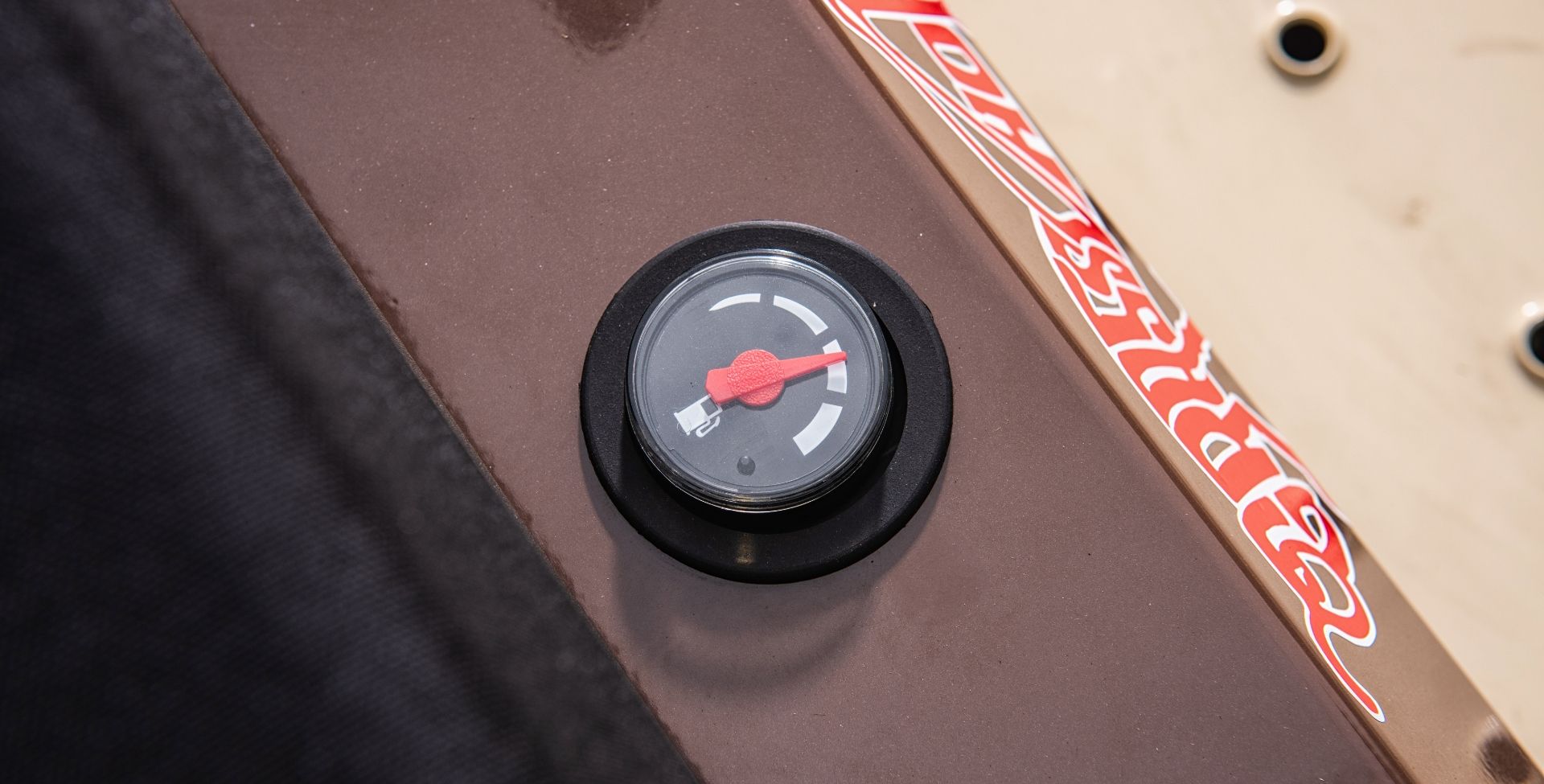
- Amount of use. Diesel engines often last twice as long as gas engines. But they are also more expensive. To see a better return on investment, buyers should anticipate putting well over 2,000 hours on a diesel zero-turn over a period of several years.
- Fuel cost. Diesel is more expensive than gasoline. However, diesel engines burn up to 50% less fuel per hour. Over the course of 1,000 hours, an operator could save upwards of 800 gallons of fuel. See how much money that could equate to at current fuel prices by using the Grasshopper Fuel Calculator.
- Demanding mowing. Diesel engines have up to 50% more power than gas engines, making them a good choice when mowing in challenging conditions. And due to their fuel efficiency described above, diesel engines are a good choice when mowing for long periods (8-plus hours) at a time.
- Engine maintenance. Because diesel is a cleaner and more efficient fuel, emissions are reduced. That’s good for the environment, but it’s also good for the health of the engine. Diesel mowers also have no spark plugs or plug wires, and often require less-frequent filter and oil changes.
What makes a mower commercial-grade, and do you need one?
From the heavier-duty engine and transmission to the heavier-gauge steel frame and deck, a commercial-grade zero-turn mower is designed for more rigorous and frequent use. While they are constructed to last longer than consumer-grade machines, commercial mowers are also more expensive. Buyers must determine if they will be using the mower enough to justify the price premium.
Generally speaking, mowing less than 2 acres weekly may not require the use of a commercial mower because the mower will accumulate less than 100 hours a year. Thus, the mower should last for several years before major problems start to occur. However, for those who want to extend mower life even longer and further reduce the likelihood of breakdowns, an entry-level commercial machine could be the best choice. And for a non-commercial user mowing a 5-acre property weekly, a commercial mower is the best choice due to the rapid accumulation of operating hours and accompanying wear and tear.
Here’s a closer look at some of the key features that make a zero-turn mower commercial-grade.
- Frame and deck: Heavy-gauge, welded steel as opposed to the lighter-gauge, stamped steel you’ll typically find with consumer-grade mowers. The best commercial zero-turn mowers also feature frame and deck reinforcements in high-stress areas. Other components like belts, deck spindles, and blades are also built stronger.
- Engine: Built with heavier-duty internal components, better filtration and cooling systems, and generally produce more horsepower.
- Transmission: Designed to support the larger, heavier and more powerful commercial mowers they are intended to work with. Provide more power and better heat tolerance. Often designed to be more serviceable since they are intended to last longer.
Should you buy a new or used zero-turn mower?
A used commercial-grade mower can be a better investment than a new consumer-grade machine, particularly if the commercial mower has fewer than 1,000 hours on it and has been well-maintained. If that is the case, a used commercial mower may perform better, have more life left in it, and cost about the same. It’s important for buyers to verify operating hours and closely inspect any used mower for signs of excessive wear before finalizing a new purchase.
One thing to keep in mind is that the warranty typically doesn’t transfer to the second owner. So, if you think you’re getting a steal because you found a used mower that’s only a couple of years old with a couple hundred hours on it, slow down a second. You’re assuming all of the risk if something has gone wrong or is about to go wrong with the mower. Inspecting the mower becomes even more important in this situation. You should also confirm parts availability if you ever need to make a repair down the road.
What should you ask the dealer?
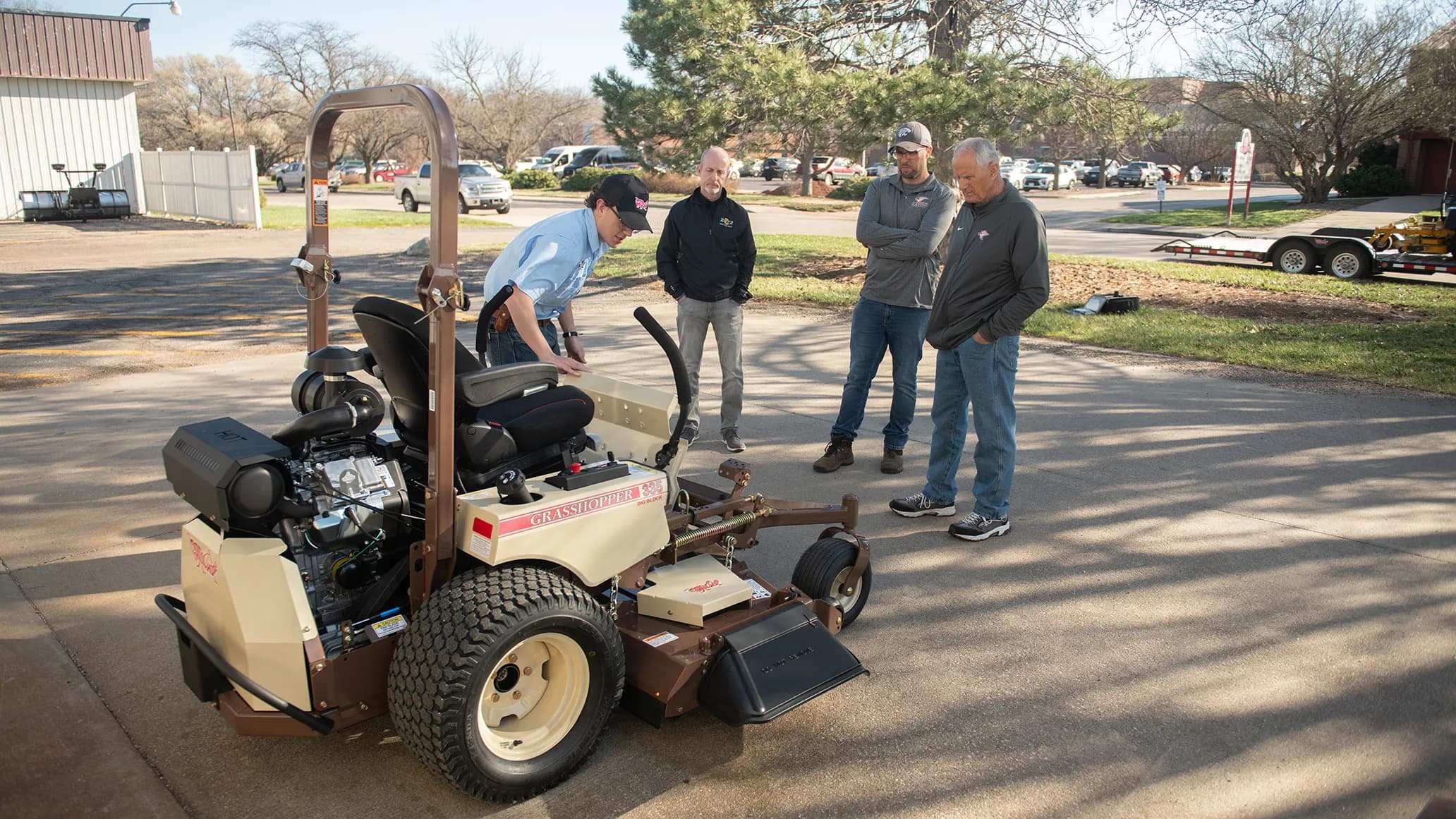
Regardless of which type of zero-turn mower you decide to buy, it’s important to buy it from a servicing dealer. Then you will get the product expertise and service support you need to make a smart purchase and have a good experience with the mower for many years.
Here are some things to discuss with the dealer when considering a zero-turn mower purchase:
- Is the mower a good fit for my lawn’s terrain and landscaping?
- Does the mower do a good job of cutting?
- Is the mower comfortable to ride?
- Is the mower durable?
- Is the mower hard to maintain, and can you assist me with maintenance and repairs?
- Will you have the parts I need when I need them?
- How long will it take you to repair my mower?
- Can the mower power any other attachments?
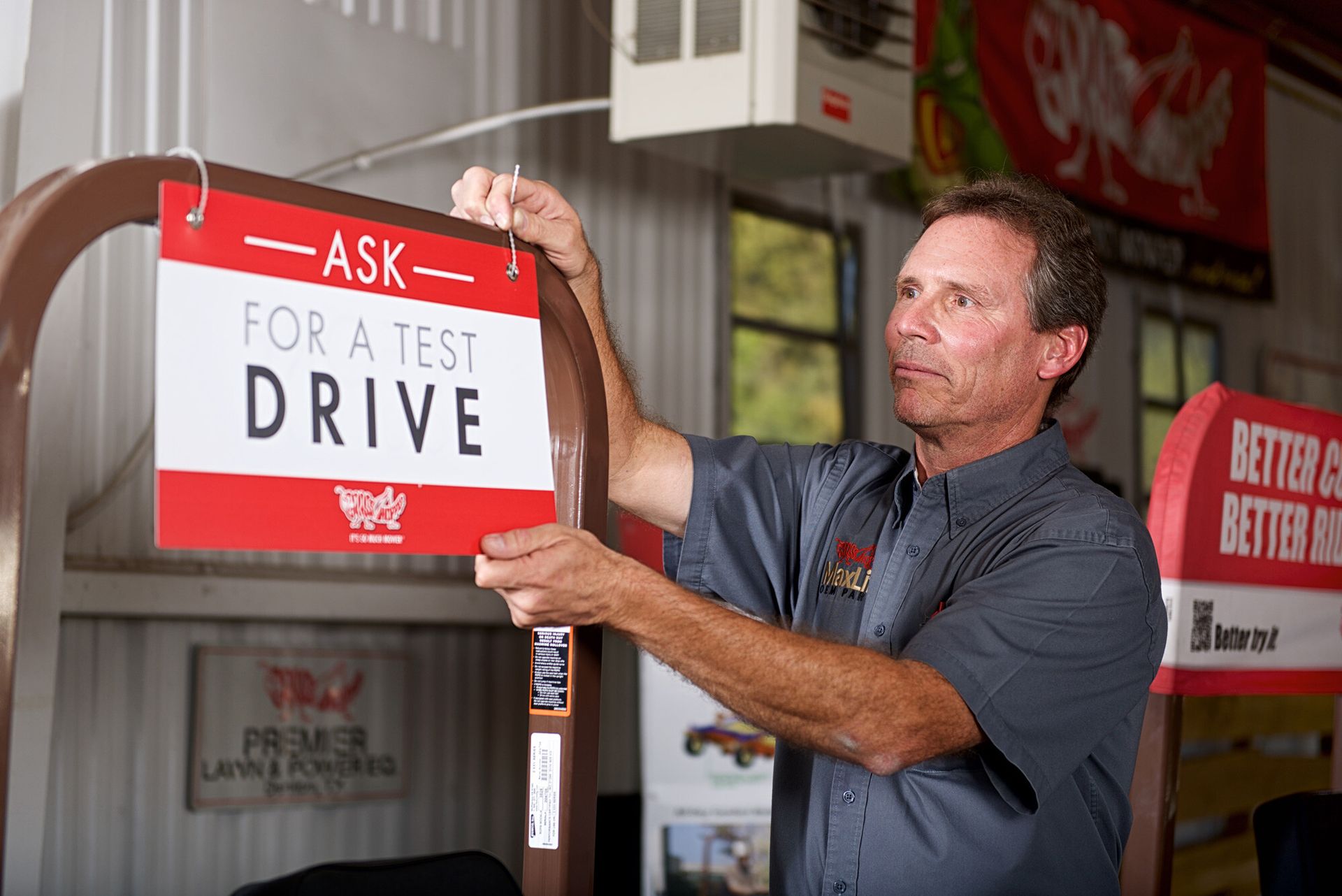
- Can I test drive the mower before making a decision?
- Do you offer pickup and delivery, and is there a charge?
When a zero-turn mower isn’t the right choice
Zero-turn mowers have become the go-to mowing equipment for commercial users and everyday homeowners alike. However, it’s important for a buyer to know when not to buy a zero-turn mower. Following are some telltale signs that another mowing solution may be a better choice:
- Lawn is 1/4 acre or smaller—a walk-behind can often get the job done in a half-hour or so.
- The property has several acres of challenging ground including rough terrain, pastures, brush and overgrown lawns that could be well served by a tractor with the appropriate mowing attachments.
- Learning curve – a tractor with a steering wheel may feel more familiar than a zero-turn with steering levers. That said, operating a zero-turn is much like pushing a shopping cart through the grocery store, and most new users experience short learning curves.
- Purchase price—you can generally get a decent lawn tractor for light residential use for less than a zero-turn, but it ultimately comes down to how much mowing you’ll be doing and how much mower you need.
Model chooser and dealer finder
Grasshopper offers numerous models of MidMount™, FrontMount™, and OutStander® Stand-On mowers in various sizes and engine options. Use the interactive Mower Model Chooser to discover what best fits your needs and preferences.
Grasshopper dealers are also more than willing to help you through the decision-making process. Use the Grasshopper Dealer Locator to find your nearest dealer.
If you’d simply like to do a little more research on your own, check out the Grasshopper Product Literature Library for quick and easy downloads.
Ready to talk to a dealer?
Frequently asked questions
A good zero-turn mower provides the reliability, cut quality, ease of use, and serviceability the operator needs. It’s also a good match for the property the operator will be maintaining, and is sold and supported by a reputable servicing dealer.
The best commercial mower is built to withstand rigorous daily use, delivers exceptional cut quality, is easy to maintain, is sized, and configured perfectly to the application, and is sold and supported by a reputable servicing dealer.
Choosing a zero-turn mower ties to a brand’s reputation for quality and reliability, matching size, and configuration to the type of mowing you’ll be doing. It’s also important to work with a good servicing dealer who will help you evaluate and test drive the different options, and ultimately make the right choice for your needs.
A zero-turn mower may not be the right choice when lawns are very small (under 1/4 acre), are very large and overgrown, have a lot of challenging slopes, or may feel too intimidating due to unfamiliarity with the controls.