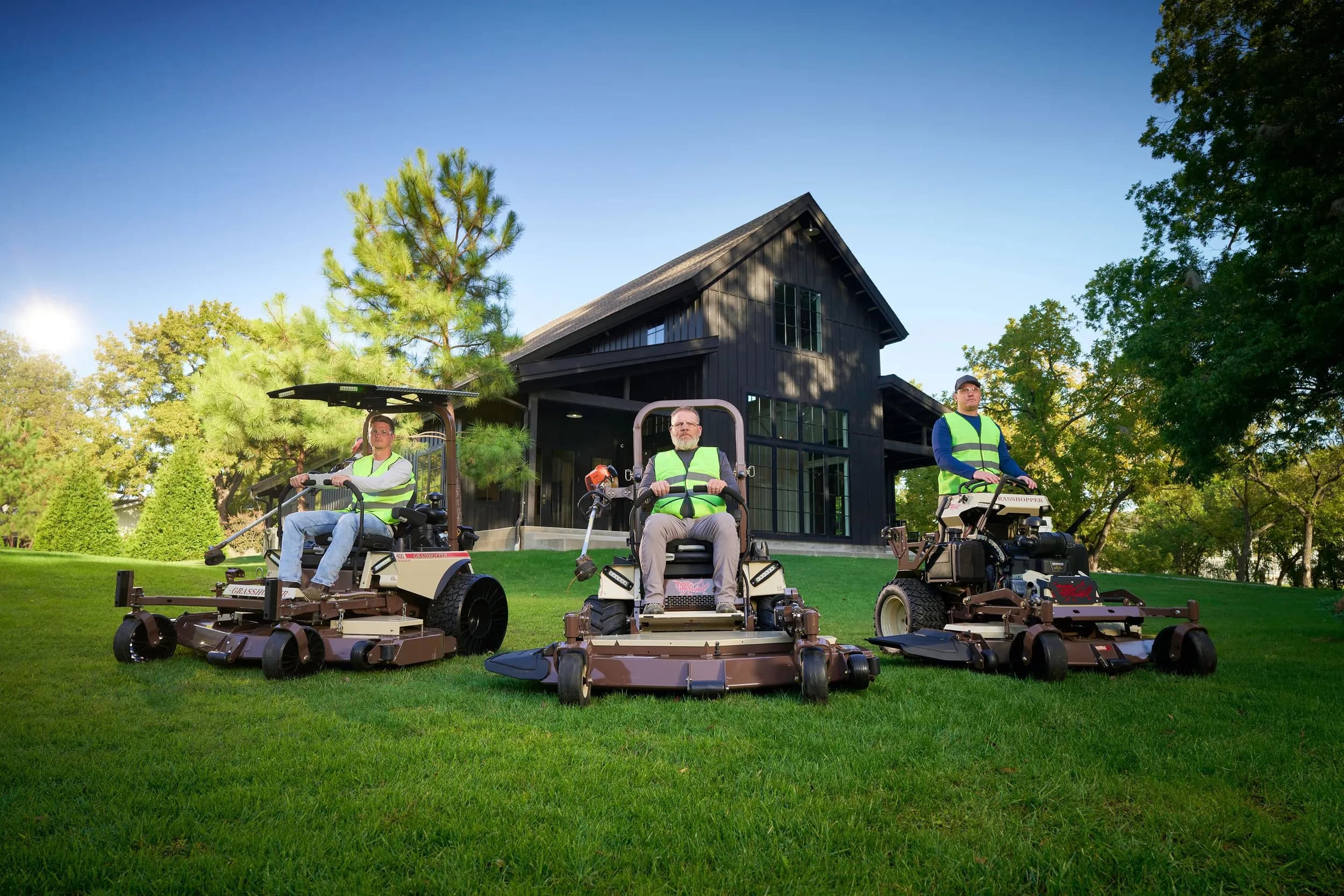
Take our quiz to find the best commercial zero-turn mower or best residential zero-turn mower for you.
Easily compare all riding lawn mower attachments to see how you can get more out of your mower.
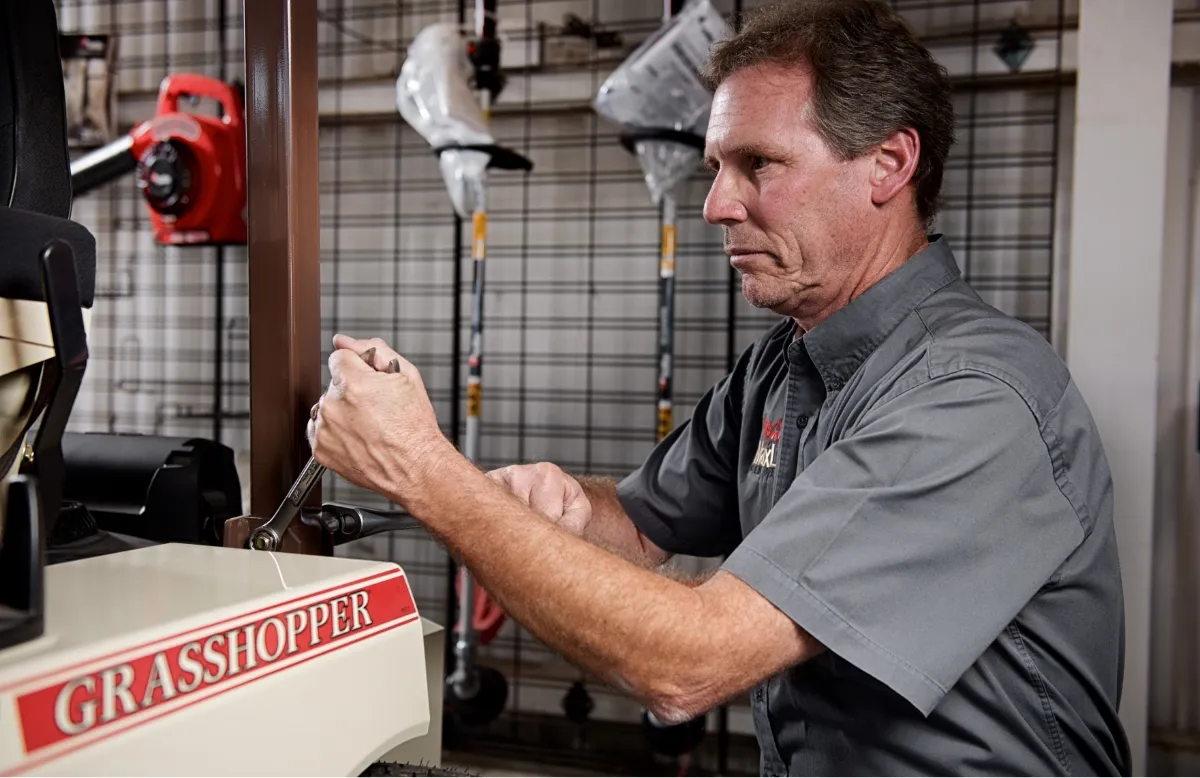
Your local dealer can also offer great service and support for your riding lawn mower. Find the dealer nearest you.
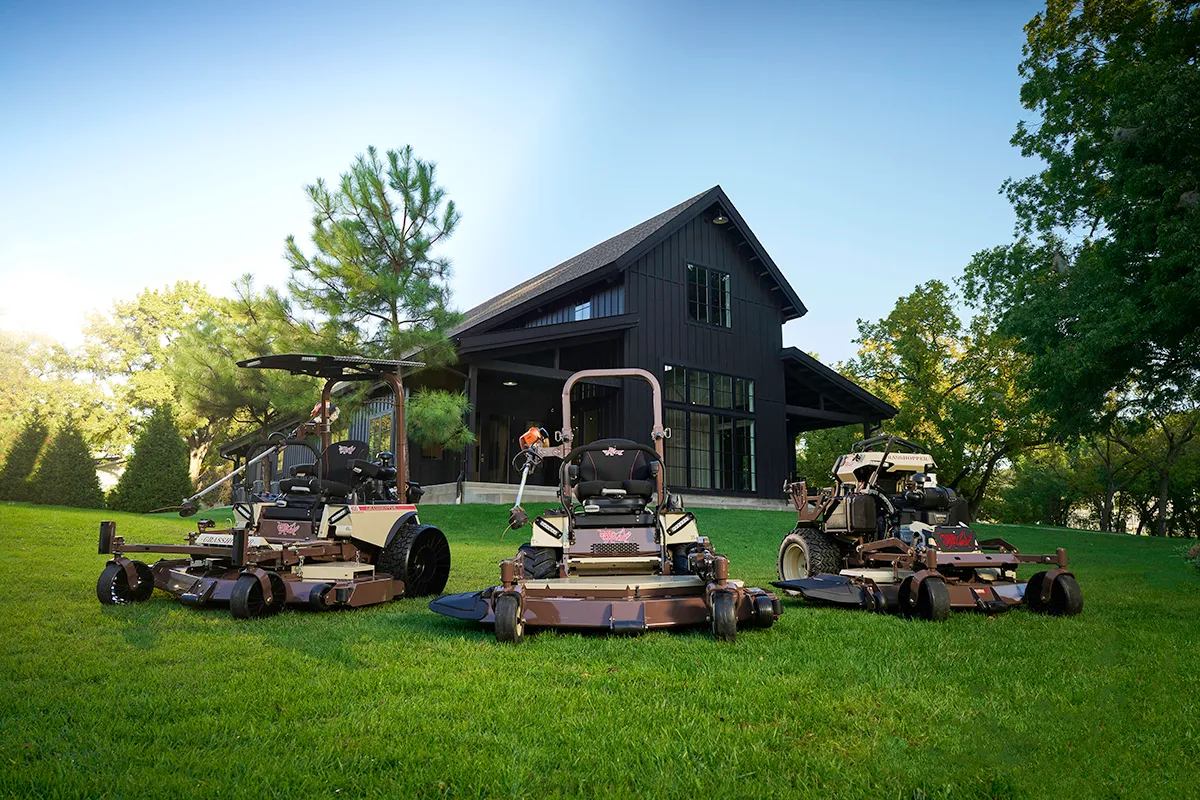
Elite performance doesn't need to cost elite money. Get 0.98% APR financing for 48 months on any new Grasshopper zero-turn mower.
Want to stop buying gas for your mower?
Key takeaways in this article
- Diesel saves on fuel costs: Diesel zero-turn mowers burn roughly 900 fewer gallons than gas models over 1,000 mowing hours.
- Twice the engine life: Grasshopper liquid-cooled diesel engines last about twice as long as comparable air-cooled gasoline engines.
- More power, faster mowing: Diesel engines produce 50% more power than gas and can complete mowing jobs up to 50% faster.
- Lower maintenance without ethanol: Diesel fuel contains no ethanol, eliminating the clogs and component degradation that shorten gas engine life.
- Cleaner emissions than gas or LP: Diesel zero-turn mowers emit lower carbon monoxide and greenhouse gases than gasoline or liquid propane engines.
Looking for a way to save money, minimize maintenance, get more operating hours from your mower engine and maximize your return on equipment investment?
The answer is clean diesel. Stop buying gas for your mower, reduce emissions and feel the reward in your wallet when you choose a diesel Grasshopper.
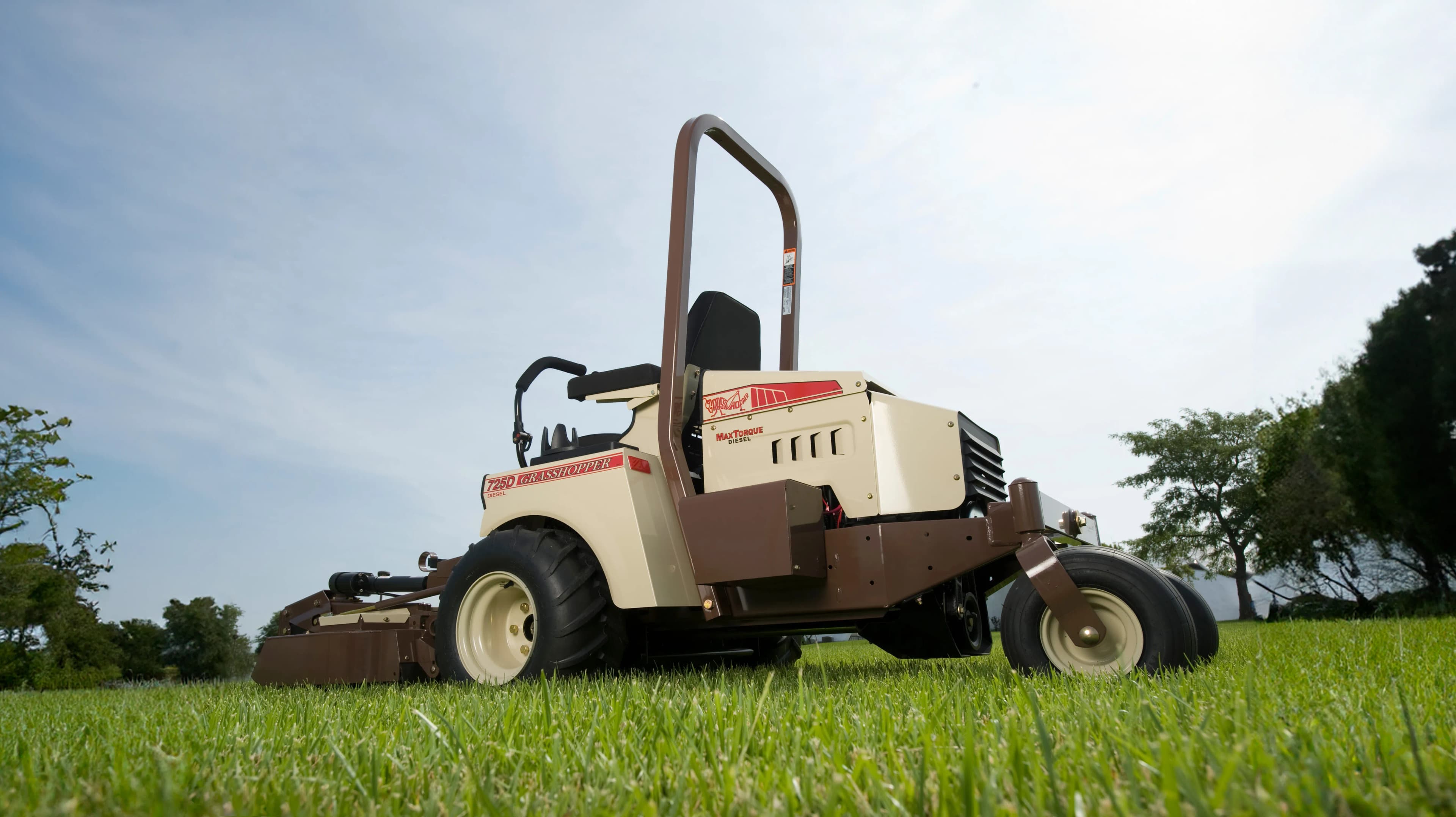
You might wonder whether diesel zero-turn mowers are worth the extra expense. Or, you may have heard that diesel fuel usually costs more at the pump, so you will spend more on fuel for your zero-turn mower. This is not the case. Here, we are going to debunk some myths about diesel-powered mowers and explain why large landowners and professional landscapers are turning to Grasshopper models with a MaxTorque™ clean-burning diesel engine.
Let’s explore the positive impact you can make on the environment, while achieving a high-quality cut, improved performance and reduced cost when you operate a diesel mower, done right.
An emissions advantage
Your love of the land includes a passion for protecting the great outdoors. You can balance a concern for emissions and the need to mow a large property when you choose a diesel-powered engine for your FrontMount™ or MidMount™ Grasshopper mower. Diesel engines are tried-and-true workhorses for commercial equipment engines. So, when the choice is gas vs. diesel for your mower, diesel has a big emissions advantage.
Not to mention, Grasshopper MaxTorque diesel mowers emit lower levels of carbon monoxide and greenhouse gasses than liquid propane (LP) or gasoline engines. This is great news for your land and the environment.
More responsible power, less fuel
Diesel engines put out 50% more power than gasoline, LP or Compressed Natural Gas (CNG), and Grasshopper studies have shown that in mowing conditions requiring a mower workhorse, MaxTorque diesel models complete jobs up to 50% faster than gasoline or alternative fuel models with the same power rating. It’s an ideal choice if you often mow tall grass, and it also operates efficiently (as with other Grasshopper mowers) when using the FrontMount PowerVac™ collection system. In general, you can mow long swaths of grass or deal with rugged conditions with diesel.
Keep in mind, more power doesn’t mean louder. MaxTorque engines are smooth and quiet-running.
Diesel also delivers benefits from a fuel consumption standpoint, according to Grasshopper research. Based on 1,000 mowing hours, a diesel-powered mower will burn 900 gallons less than its gasoline counterpart and the fuel savings are even better compared to LP or CNG.
Check out our fuel calculator and consider the resources and dollars you could save.
Minimal maintenance, longer engine life
Grasshopper liquid-cooled, three-cylinder MaxTorque diesel engines have proven to run twice as long compared to air-cooled models.
Also, diesel engines do not require spark plugs or plug wires, which reduces maintenance.
Another key factor in prolonged engine life and reduced service is removing ethanol from the fuel picture. Fuel with higher concentrations of ethanol can degrade engine components, cause clogs and increase run temperatures. Not only do these symptoms impact mower performance and quality of cut, you’ll likely spend more time maintaining equipment and replacing parts when you could be dedicating that time to mowing or simply enjoying the outdoors. Diesel fuel contains no ethanol.
Lower cost of ownership
Diesel fuel is readily available at service stations, and while you might pay slightly more at the pump, the notable savings you’ll realize with engine efficiency and longevity, reduced maintenance expenses, and overall equipment life make diesel-powered Grasshopper mowers a smart financial move. In fact, land owners who operate our MaxTorque powered models report saving hundreds, if not thousands, of dollars per year in fuel costs and gaining up to two times the equipment life of comparable air-cooled gasoline engines, LP or CNG engines. Basically, this means getting two mower “lives” in one.
Leave gas at the pump
The clean diesel alternative is economical, environmentally responsible and reduces maintenance. You’ll get a longer life from your mower with a MaxTorque diesel engine. Plus, the savings in time, resources and emissions equal a win for land owners who value stewardship and performance.
Ready to talk to a dealer?
Frequently asked questions
Yes, diesel zero-turn mowers are worth the extra upfront cost for landowners and commercial operators who log significant hours. Diesel engines burn roughly 900 fewer gallons than gas over 1,000 mowing hours, last about twice as long as air-cooled gas engines, and require less maintenance — savings that typically add up to hundreds or thousands of dollars per year.
A diesel zero-turn mower burns approximately 900 fewer gallons of fuel than a comparable gas mower over 1,000 hours of use. The savings are even greater compared to liquid propane or compressed natural gas engines. Diesel engines achieve this efficiency because they produce 50% more power per unit of fuel than gasoline, completing jobs up to 50% faster.
Yes, diesel mowers generally require less maintenance than gas mowers for two key reasons: they have no spark plugs or plug wires to replace, and they run on ethanol-free fuel. Gasoline blended with ethanol degrades engine components, causes fuel system clogs, and raises operating temperatures — problems that diesel engines avoid entirely, reducing both service intervals and part replacements.
Yes, diesel zero-turn mowers emit lower levels of carbon monoxide and greenhouse gases than gasoline or liquid propane engines. This emissions advantage comes in part from diesel's greater fuel efficiency — burning significantly less fuel per hour of operation means fewer total emissions over a mowing season, even before accounting for the cleaner combustion characteristics of diesel.
Diesel mower engines last longer than gas engines primarily because they are liquid-cooled and run without ethanol fuel. Liquid cooling keeps operating temperatures more stable than air-cooled gas designs, reducing heat-related wear. Grasshopper's liquid-cooled MaxTorque diesel engines have demonstrated roughly twice the service life of comparable air-cooled gas models, effectively giving owners two equipment lifetimes in one.
.webp&w=3840&q=75)