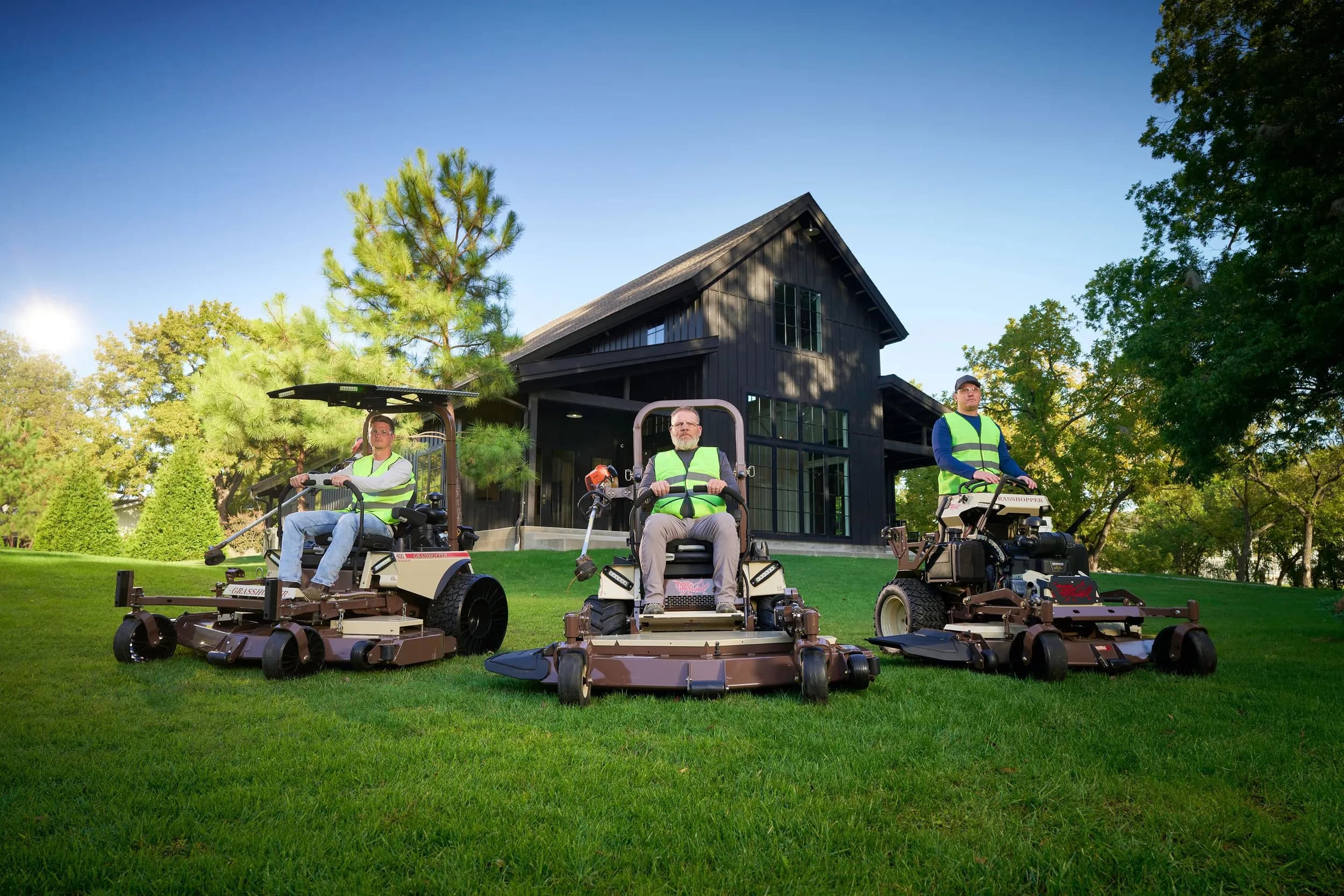
Take our quiz to find the best commercial zero-turn mower or best residential zero-turn mower for you.
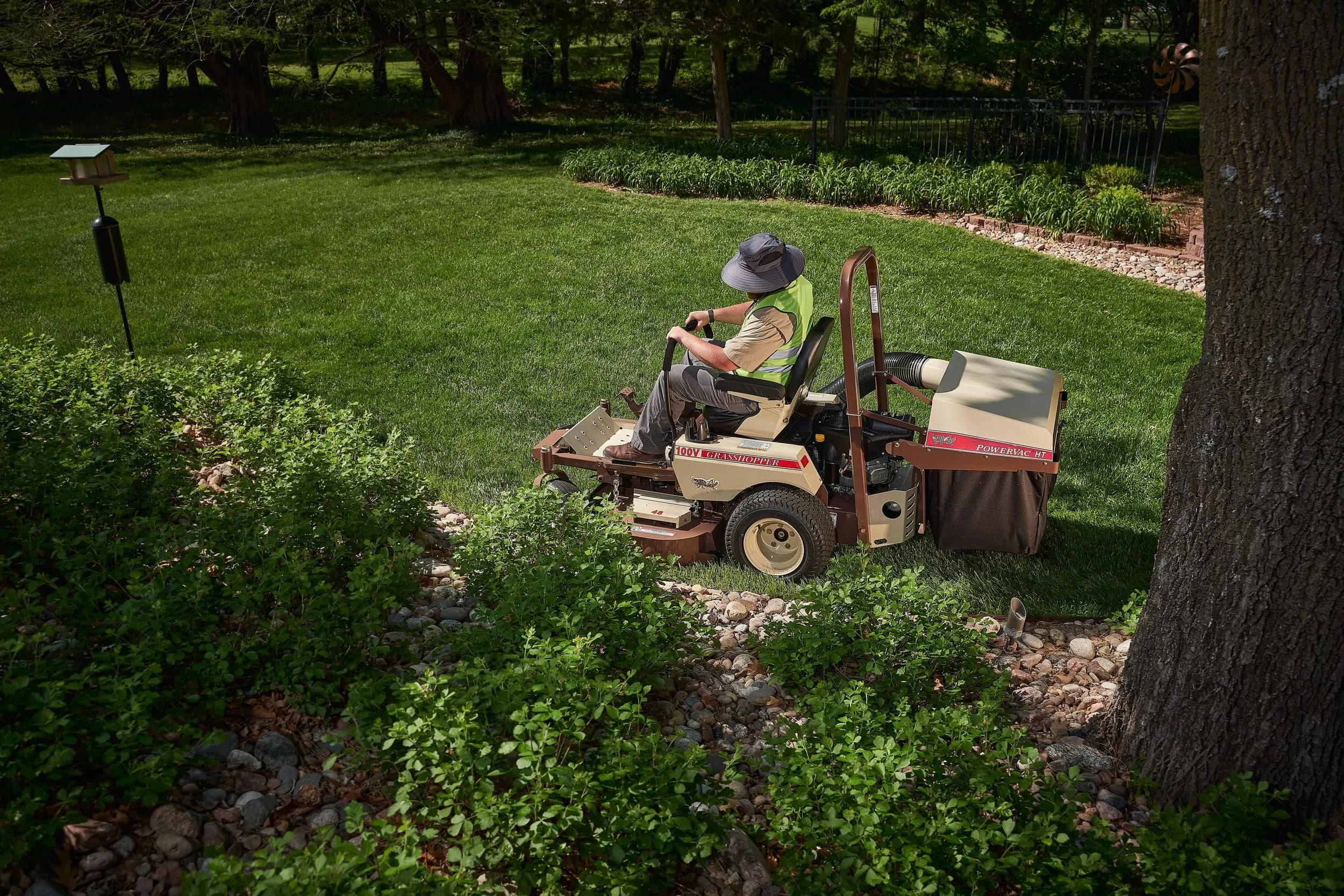
Easily compare all riding lawn mower attachments to see how you can get more out of your mower.
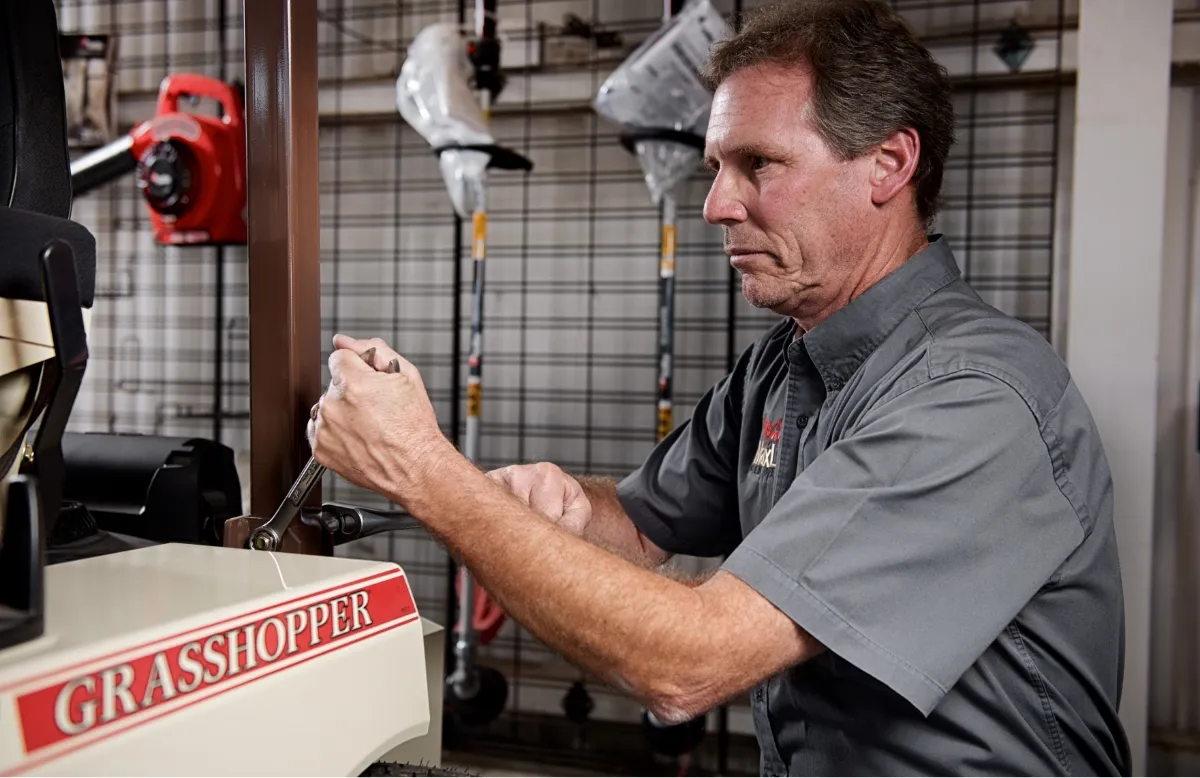
Your local dealer can also offer great service and support for your riding lawn mower. Find the dealer nearest you.
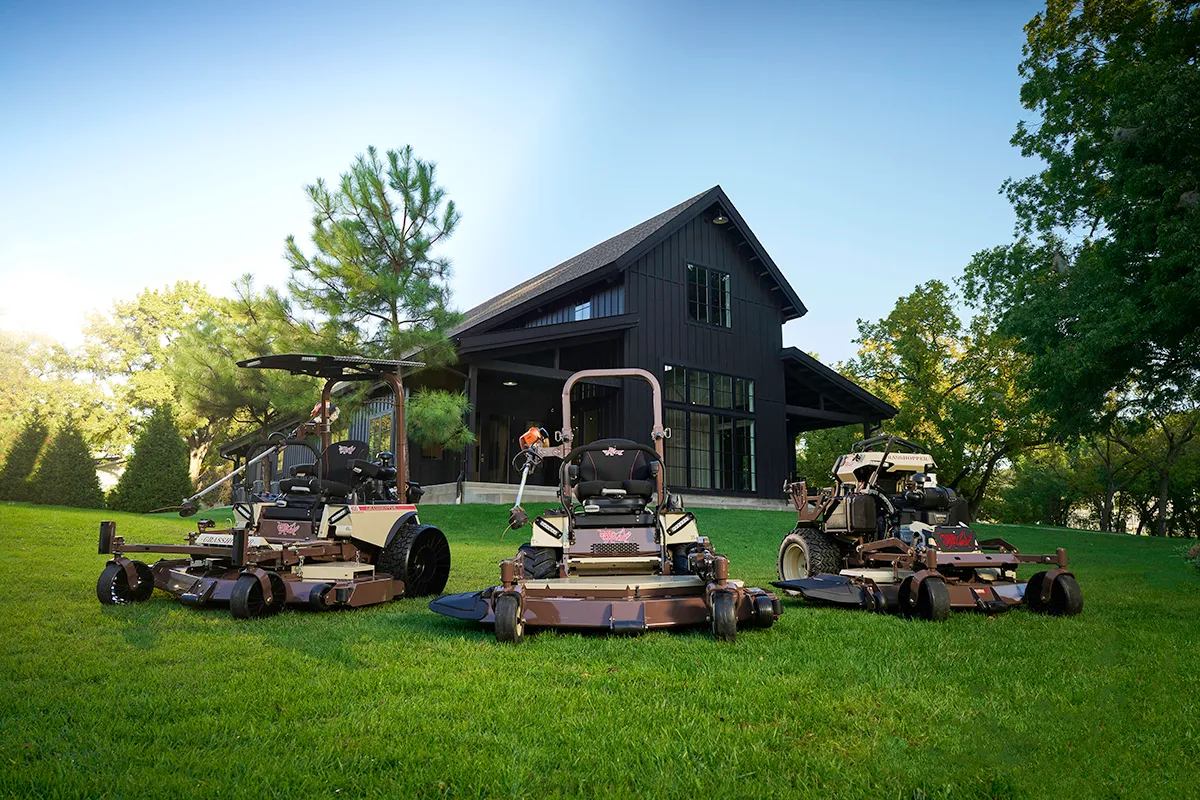
Elite performance doesn't need to cost elite money. Get 0.98% APR financing for 48 months on any new Grasshopper zero-turn mower.
Should you convert your mower fleet to diesel?
Key takeaways in this article
- Clean diesel is a practical fleet choice: EPA Tier 4 Final diesel mowers cut emissions, reduce fuel costs, and pay back their cost within the first year.
- Diesel mowers keep running on ozone action days: clean diesel engines with spark-ignition meet emissions thresholds that ground gas-powered fleets during restrictions.
- Diesel engines last twice as long: liquid-cooled diesel mower engines typically deliver double the service life of comparable air-cooled gas V-twin engines.
- Less maintenance than gas: diesel mowers have no spark plugs or plug wires and require less-frequent filter and oil changes, freeing crews for billable fieldwork.
- Battery mowers aren't ready for heavy commercial work: run-time limits, en-route charging, and battery replacement costs make clean diesel more practical for full-day fleet use.
When you think of diesel engines, do you picture a growling, sooty, old semi-truck roaring down the highway? Do you equate diesel with smelly, smoky fumes and just plain dirty fuel? Or maybe diesel seems complicated—your crews are used to filling up at the gasoline pump, and why change now? Unfortunately, these misconceptions about clean diesel mower engines prevent some fleet managers and landscape professionals from making a switch to a durable alternative that reduces fuel consumption, requires less maintenance over the life of the equipment, and operates with a high level of comfort and rigor required for long days in the field. From environmental benefits to operational excellence—more power, greater efficiency and high quality of cut — clean-burning Grasshopper® diesel mowers deliver many benefits. Let’s walk through the advantages so you can make the best decision for your fleet.
Meet your emissions goals
In today’s heightened environmental regulatory landscape, many local and state governments enact ozone action days, restricting the use of combustion engines such as gasoline-burning mowers and hand-held equipment. However, clean-burning diesel mowers with spark-ignition engines fall within acceptable emissions parameters, so diesel fleets can keep running and generating revenue. Even if you operate in a region that does not currently have ozone action days or emissions regulations in place, taking steps to reduce the carbon footprint is a priority for many operators. Converting a mower fleet to diesel is a responsible choice.
Diesel demystified: Did you know that the elimination of sulfur and other impurities in diesel fuel makes it significantly cleaner than in the past? According to the U.S. Environmental Protection Agency (EPA), because of technological advances and stricter guidelines, clean diesel is one of the cleanest burning fuels available. Grasshopper takes it a step further with EPA Tier 4 Final-compliant, fuel-efficient engines.
A clean alternative to battery power
The commercial-grade battery-powered lawn equipment market has advanced in recent years, and there are machines available that can manage smaller properties. However, converting to battery mowers requires a thoughtful strategy that accounts for run time, power capabilities, en-route charging, battery replacement and return on investment (ROI). We expect the battery market to expand as equipment manufacturers including Grasshopper continue strategic research and development efforts, along with ongoing testing. For now, municipalities and commercial landscape companies have a very real and practical need for reduced-emissions mowers and equipment. Dependable power and durability is also critical. Clean diesel fulfills both demands while providing convenient, cost-effective power and performance.
Diesel demystified: High-torque power is necessary for conditions such as mowing tall grass, wet turf, vacuum collection, mulching, and for maintaining industrial parks or roadside medians. Clean diesel delivers plenty of horsepower without gasoline emissions, increasing mowing efficiency so you can get tough jobs done faster and more responsibly. As for ROI, diesel models deliver a payback during the first year of ownership. Find out the true cost of ownership and check out our fuel calculator and start adding up the savings.
Less service, more engine life
Aside from lower emissions and fuel savings, clean-burning diesel Grasshopper mowers with 3-cylinder, liquid-cooled engines require less maintenance than comparable gasoline-powered engines. Often, MaxTorque™ diesel engines provide twice the service life of an air-cooled, V-twin engine. Also, diesel models have no spark plugs or plug wires to replace. Overall, burning cleaner fuel decreases the frequency of maintenance tasks such as changing filters and oil, freeing up your team to focus on productivity in the field.
Diesel demystified: When gradually converting a mower fleet from gasoline to diesel, some operators and fleet managers are concerned about crew members accidentally filling a diesel tank with gasoline. Awareness and training is the key. We also suggest keeping diesel- and gas-powered equipment on separate trailers until the whole fleet has turned over to diesel.
Dependable, clean power with less burn
Downtime translates to revenue loss when you’re managing a fleet or running a landscape operation. Consider the hard-working equipment across industries that is powered by clean diesel to reduce emissions and power through demanding tasks: tractors, construction equipment, buses and heavy trucks.
Diesel demystified: With the fuel savings and additional revenue potential, a Grasshopper MaxTorque™ diesel mower increases productivity (and profitability), while easing the stress on the environment.
Interested in more clean fuel insight and helpful mowing tips from the Grasshopper pros? Check out our library of how-to videos, or sign up for our newsletter. Thinking about a new mower? Our team can help you choose the best model for your needs.
Ready to talk to a dealer?
Frequently asked questions
Yes — clean diesel outperforms gasoline for commercial mowing on fuel efficiency, engine life, and emissions. EPA Tier 4 Final-compliant diesel engines burn significantly cleaner than older diesel and gasoline engines, thanks to the elimination of sulfur and other impurities from modern diesel fuel. The high-torque output also handles demanding conditions — wet turf, tall grass, vacuum collection — more effectively than comparable gas engines.
Yes — clean diesel mowers with spark-ignition engines fall within the acceptable emissions parameters set during ozone action days, so diesel fleets can continue operating and generating revenue when gasoline-powered equipment is restricted. Many local and state governments enforce these restrictions during high-ozone periods, making a diesel fleet a practical compliance advantage for landscape companies that can't afford unplanned downtime.
Diesel mower engines typically last twice as long as comparable air-cooled, V-twin gas engines. Liquid-cooled 3-cylinder diesel engines run at lower operating temperatures and burn cleaner fuel, which reduces internal wear and extends the service interval. The longer engine life, combined with first-year fuel-cost payback, gives diesel mowers a lower total cost of ownership over the life of the equipment.
Yes — diesel mowers generally require less maintenance than gas-powered models. Diesel engines have no spark plugs or plug wires to replace, and burning cleaner fuel reduces the frequency of filter and oil changes. Less time spent on maintenance means crews spend more hours on productive fieldwork, which directly improves profitability for landscape operations running tight schedules.
Not yet for most full-day commercial operations — battery mowers currently have run-time limits, en-route charging requirements, and battery replacement costs that make them impractical for large properties or long shifts. The commercial battery market is improving, and manufacturers continue R&D, but for municipalities and landscape companies that need dependable all-day power, clean diesel remains the more practical reduced-emissions option today.
.webp&w=3840&q=75)