Take our quiz to find the best commercial zero-turn mower or best residential zero-turn mower for you.
Easily compare all riding lawn mower attachments to see how you can get more out of your mower.
Your local dealer can also offer great service and support for your riding lawn mower. Find the dealer nearest you.
Elite performance doesn't need to cost elite money. Get 0.98% APR financing for 48 months on any new Grasshopper zero-turn mower.
How to grow a landscaping business from one crew to two without losing control
Key takeaways in this article
- Know when you're ready: Add a second lawn care crew only when your first is booked full, demand supports another full crew, and profit is planned.
- Target $140K per crew: A lawn maintenance company should generate at least $70,000 per employee annually, so a two-person crew needs roughly $140,000 in revenue.
- Plan for rising costs: Adding a second crew means higher insurance premiums and more unbillable time, so make sure those added costs are accounted for in your pricing.
- Standardize for efficiency: Standardizing equipment across crews can simplify training, parts inventory and maintenance, speed up repairs, and help keep equipment costs under control.
- Protect quality with a crew leader: You won't be on every property, so document your standards and put a trusted, trained crew leader on the second crew.
“I was happier when it was just me and a buddy.”
That phrase, or something similar, has been spoken by many landscape company owners after finding out bigger isn’t always better. These owners ultimately determined that the additional stress associated with having more customers, employees, and equipment wasn’t worth the modest increase in profit their companies generated.
On the other hand, there are many stories of contractors who started on their own, often in college or even high school, and eventually found themselves running multi-million-dollar companies with dozens of employees and upward of a dozen crews.
In both of those scenarios, the first step of adding a second crew proved pivotal. That’s when a contractor is really forced to start wearing their owner’s hat. When you have a second crew, lawn care business management becomes essential.
The inability or unwillingness to wear the owner’s hat is what separates the two types of contractors referenced above. But sometimes it’s just a matter of bad timing, and oftentimes a matter of inadequate planning.
When is a lawn care business actually ready to add a second crew?
A lawn care business is ready to add a second crew when the first crew is booked to capacity, there is sufficient customer demand to support a second crew working at full capacity, and the business itself has developed a plan to ensure the profitable deployment of the second crew.
There are several key areas to focus on during the planning phase:
- Estimating sales potential
- Budgeting and pricing
- Insurance
- Unbillable time
- Administrative help
- Cash flow
- Profit goals
- Standardization and quality control
Estimating sales potential
Forecasting sales potential can be relatively easy when you’re already turning additional work away. It’s helpful to keep track of those deferred opportunities so you can quantify how much additional work is really out there.
You also have to analyze the “quality” of that potential new work. Some potential clients are looking for a good service provider and are willing to pay for it. In many instances, they are referred by your existing clients. On the other hand, some potential clients are simply price shopping. Do you really want to add a second crew that’s reliant on clients that will drop you at a moment’s notice, regardless of the service quality you’re providing?
You should also analyze where this new business will be located. If the properties are outside of your current service area, you’ll want to make sure there are enough of them to establish an efficient route. Paying that second crew to ride around in a truck more than an hour or two a day is not ideal.
When you’ve done the proper due diligence and determined there’s enough “quality” work to support another crew, you can start giving it some serious thought.
As a general rule, a lawn maintenance company should generate at least $70,000 per employee annually. So, a two-person crew should generate at least $140,000 in revenue. This, of course, is dependent on an individual company’s unique circumstances, i.e., labor costs, equipment costs, overhead, and how much profit they want to make. This leads to another important consideration when thinking about adding a second mowing crew.
Budgeting and pricing
Adding a second crew means you’re doubling the amount of employees and equipment you have. Other overhead costs start to increase too. It’s crucial to have a good budget that accounts for every cost in the business. That budget will drive your pricing so the work this second crew performs is actually profitable.
There are some things to pay close attention to when adding a second crew.
Insurance. Worker’s comp will go up because you’re adding employees. Auto and equipment premiums will go up because you’re adding assets. General liability premiums will go up because your revenue and payroll are increasing.
Unbillable time. The hours you pay your employees to load and unload equipment, drive to jobs, dispose of trash, maintain equipment, take part in training, etc. all double now. This can amount to a significant amount of money over the course of a season. Even if you’re in the northern part of the country and have a seven-month season, four employees could end up accumulating over $17,000 in unbilled time (assuming 40-hour workweeks, 20% unbillable, and an $18/hour wage). It’s important to understand this cost and have a way of recovering it in your pricing.
Administrative help. With a second crew, you have double the customers and double the employees. If you’re still leading the first crew in the field, you may find that you need some administrative help. Even if that help is on a part-time basis, that adds more overhead to your budget that needs to be recovered in your pricing.
Cash flow. One administrative task you could use some help with is managing cash flow. With two crews, your payroll is much higher and you’re having to buy more fuel, parts, and supplies. You also have twice as many clients to collect payment from. It can be hard to keep track of the money flowing in and out of the business. But cash flow becomes crucial at this point so you can continue to make payroll and pay all your other bills.
Profit goals. Why add a second crew if your company isn’t going to make more money? Profit margins vary dramatically in the lawn mowing business, ranging anywhere from just a few percent to well over 10%. You need to decide how much profit you want your business to make at the end of the year and make it part of your budget, which then guides your pricing.
Standardization and quality control
When you add a second crew, you aren’t going to be on every property anymore. You’ll need someone you can trust to run that second crew.
In many instances, that buddy who’s been working alongside you is going to be the leader of the second crew. But whomever it is, they must understand your quality standards and standard operating procedures. It’s important to document all of that so it’s easier to train new employees and hold people accountable.
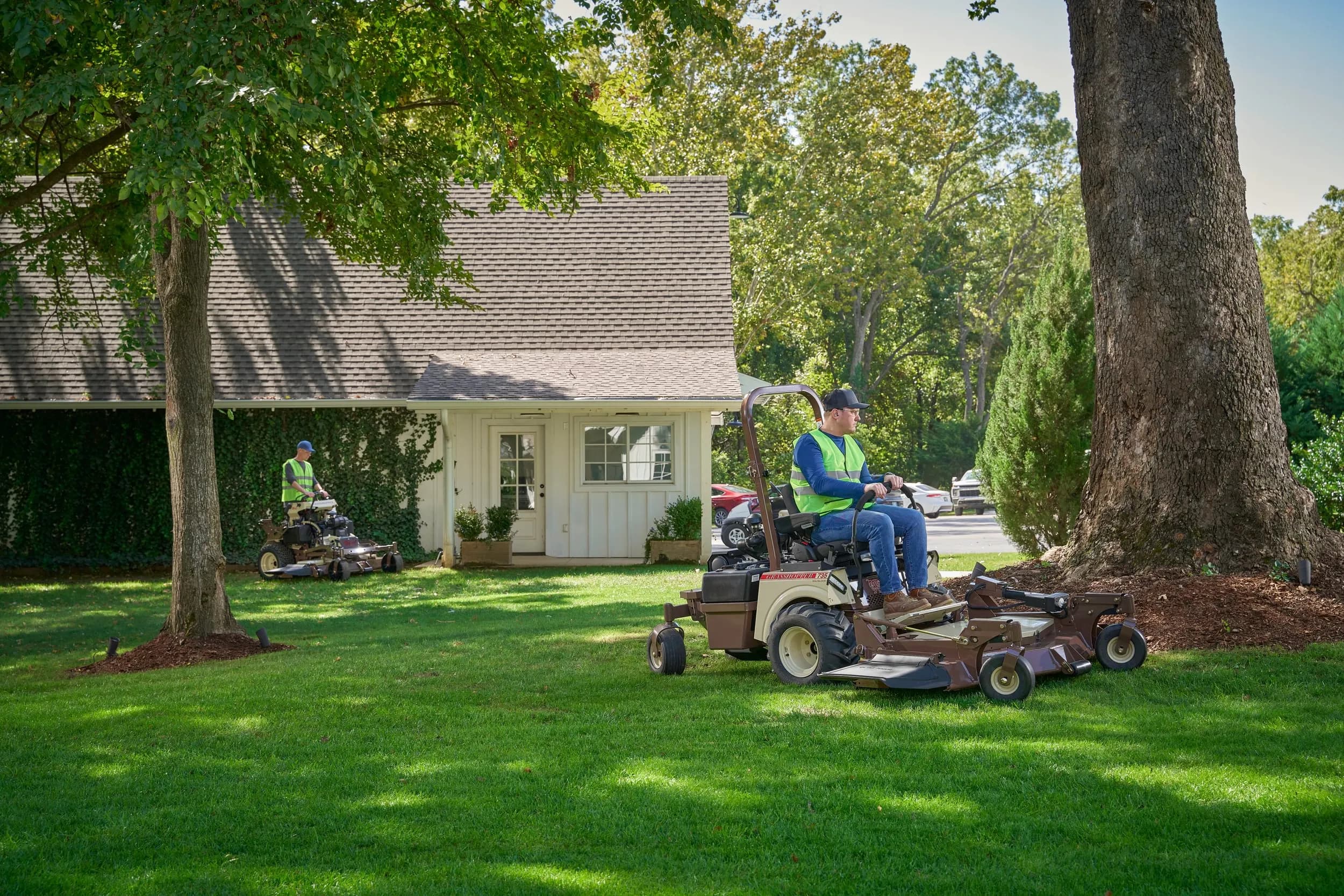
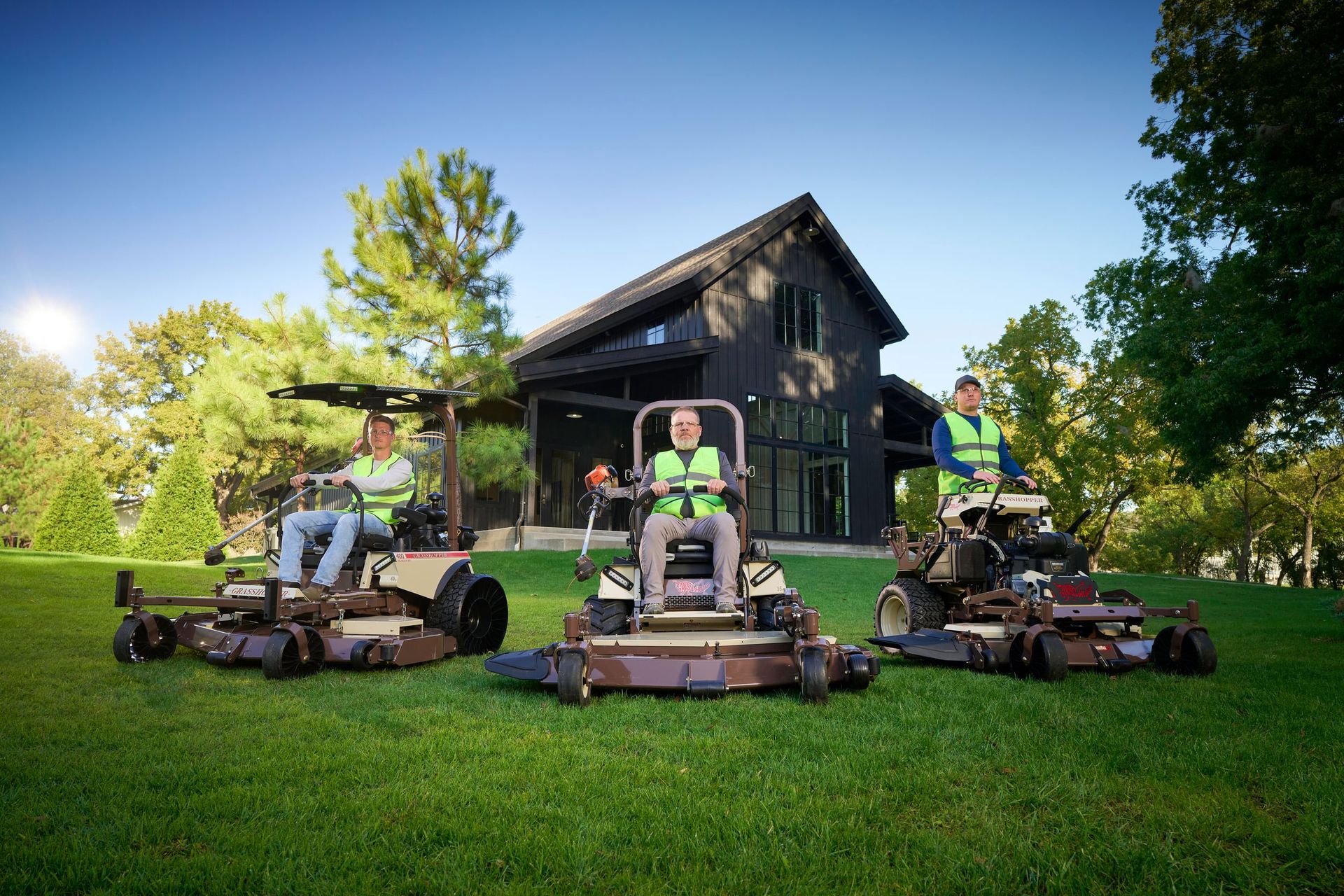
To that point, standardizing equipment across both crews makes it easier to train operators, and overall helps create the kind of consistency you're looking for when expanding. Standardizing can also help you keep equipment costs under control. Focusing on a small number of brands and models helps to streamline parts inventory, simplify maintenance scheduling, and speed up repairs. Grasshopper, for instance, is known for having a high degree of parts commonality across models.
It’s also important to set your new crew leader up for success. A really good lawn maintenance technician doesn’t always make a good leader. It’s important to support that person with the training and encouragement needed to make the transition.
Customer service
It’s also a good idea to have a plan for maintaining a high level of customer service when adding a second crew. It’s likely that some customers may be uneasy about not having the owner of the company on their property anymore. It’s important to make sure your customers meet the crew leader and establish a line of communication to help put their minds at ease.
You’ll also want to remind customers that you’re still the owner of the company and are still available if they have a question or concern. After all, you can’t forget what helped make you successful as a one-crew company when taking the leap of adding a second crew. With the proper planning, you can be even more successful.
Ready to talk to a dealer?
Frequently asked questions
A lawn care business is ready for a second crew when its first crew is fully booked, demand can keep a second crew working full-time, and there's a plan to deploy it profitably. Adding a crew before all three conditions are met risks paying that crew to ride around below capacity.
Keep service quality consistent by documenting your standards and standard operating procedures, then putting a trusted, trained crew leader in charge of the second crew. Once you add a crew, you won't be on every property, so the leader must understand your quality standards, and a strong technician still needs training and encouragement to lead well.
Adding a second crew raises insurance costs across the board—worker's comp, auto, equipment, and general liability premiums all increase. Worker's comp rises as you add employees, auto and equipment premiums rise as you add assets, and general liability rises as your revenue and payroll grow. Build these higher premiums into your budget so your pricing recovers them.
As a general rule, a lawn maintenance company should generate at least $70,000 per employee, so a two-person crew should bring in at least $140,000 in revenue. The right target depends on your labor costs, equipment costs, overhead, and target profit margin, which in the lawn mowing business ranges from a few percent to well over 10%.