Take our quiz to find the best commercial zero-turn mower or best residential zero-turn mower for you.
Easily compare all riding lawn mower attachments to see how you can get more out of your mower.
Your local dealer can also offer great service and support for your riding lawn mower. Find the dealer nearest you.
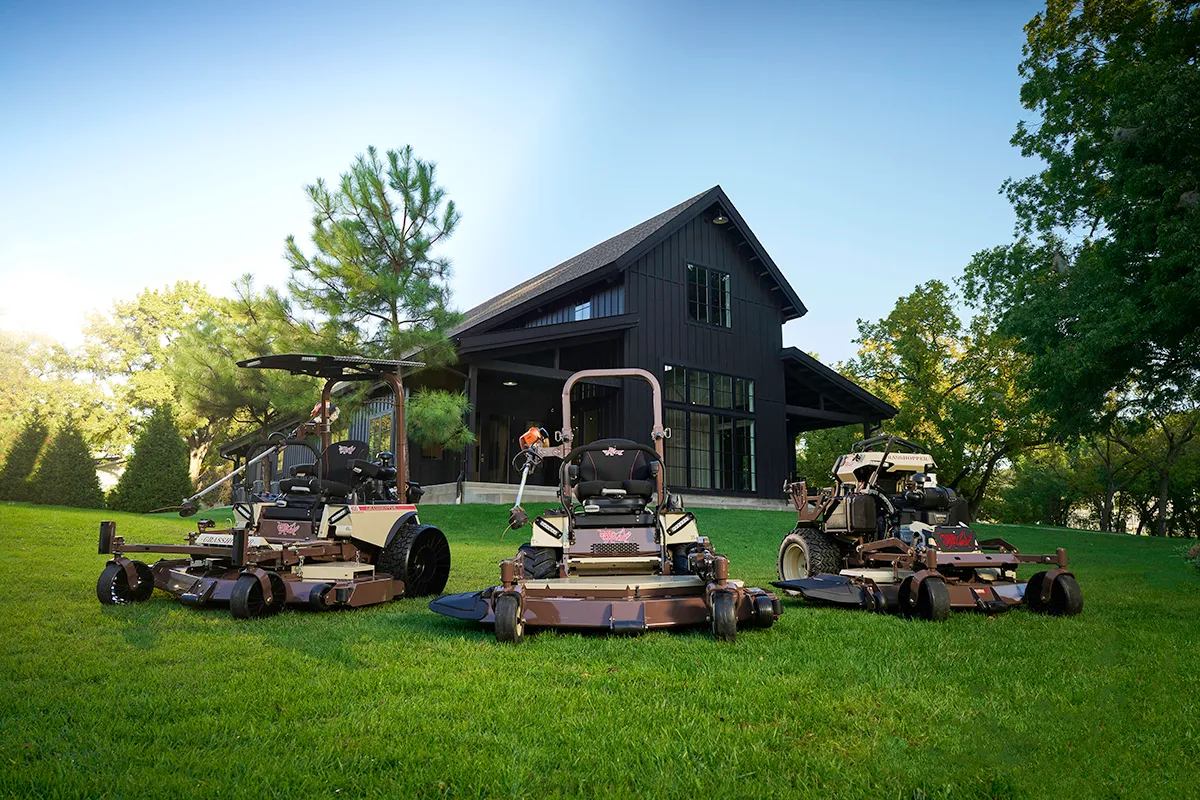
Elite performance doesn't need to cost elite money. Get 0.98% APR financing for 48 months on any new Grasshopper zero-turn mower.
Take a load (on) and off — safe trailer onboarding for every type of mower
Key takeaways in this article
- Load a mower onto a trailer backward: align the tail wheels to the ramp and slowly reverse up for best stability.
- Keep weight over the front axle: whether loading forward or backward, centering weight toward the front axle keeps the mower stable.
- Always engage the parking brake before stepping off: stop the engine and pull the parking brake before dismounting to prevent rollaway.
- Tie-down hook locations vary by mower type: front-mount hooks are on the rear sides; stand-on hooks sit on platform sides and near the front wheels.
- Release the parking brake once straps are secured: after ratcheting all tie-downs tight, release the parking brake to reduce stress on the drivetrain during transport.
There is a right and wrong way to load a mower onto a trailer safely, and while the process might seem simple, there is potential for injury and damage to the machine if not handled with care. From missing the ramp to tipping a mower, common slip-ups can result in casualties for operators and equipment.
Properly tying down a mower after loading is equally important. Serious accidents can occur on the road when an unsecured mower rolls off a trailer and into oncoming traffic. If a tie-down loosens while you’re pulling the trailer and the mower jostles and bangs against rugged trailer sides, you can end up back at the shop for repairs.
For all these reasons, reviewing how to load, tie down and unload any mower type properly is a best practice any landscaper should revisit on a regular basis.
Properly loading and unloading your mower backward onto a trailer
Even for experienced operators, you can never be too careful — and even those who are most comfortable loading mowers onto trailers can let their guard down in a push for efficiency, get distracted and miss an important step. A wise rule of thumb is to treat every time you load and unload your mower onto a trailer like the first time, exercising caution and ensuring proper safety protocols. Here is some guidance:
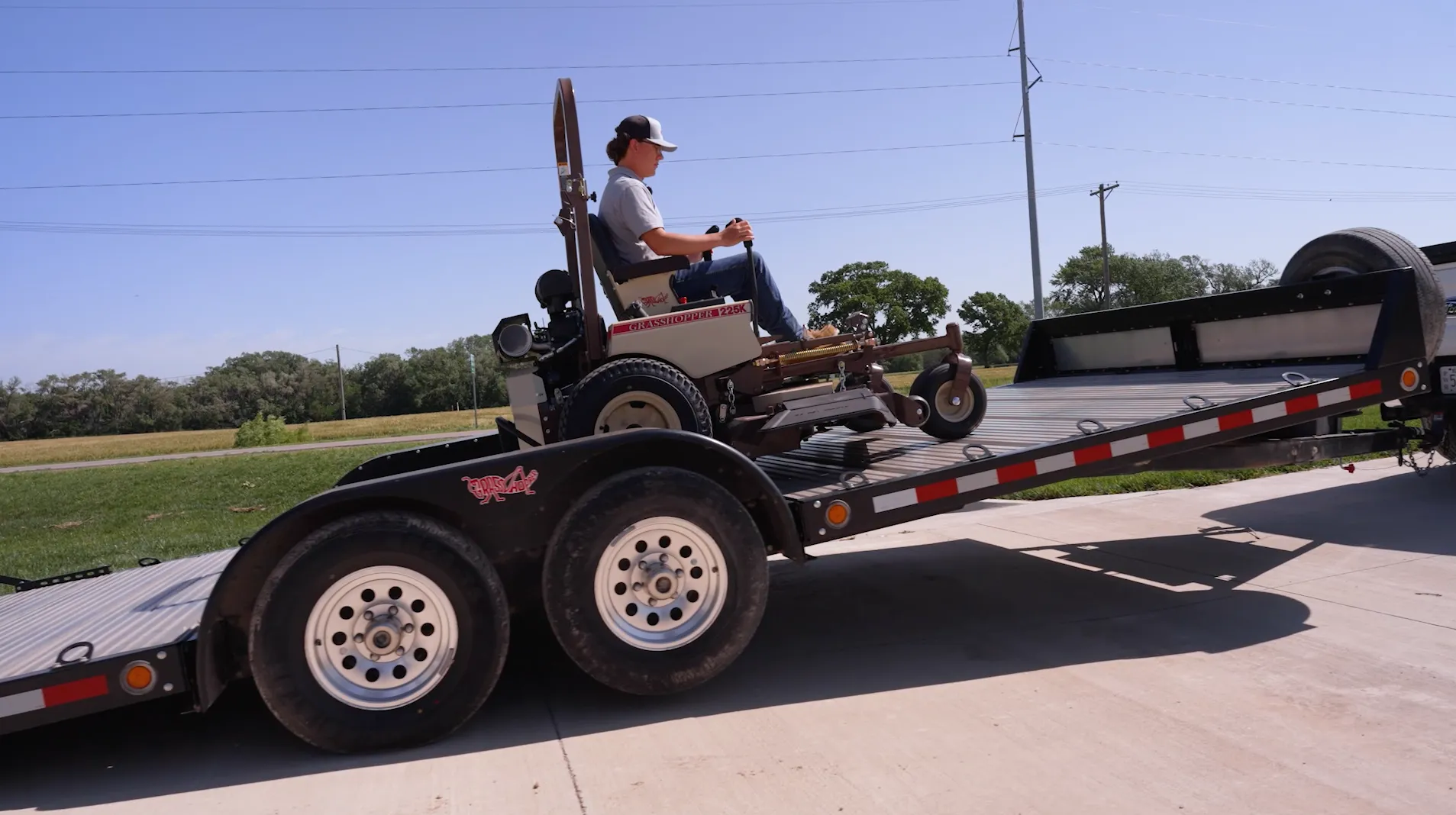
- While seated with the seatbelt fastened, rotate the machine 180 degrees
- Align tail wheels to the trailer ramp
- Slowly back onto the trailer, putting the majority of your weight toward the front axle
- Stop the machine and pull the parking brake
- Turn off the engine
- Safely step off the trailer
- Fasten the mower to the trailer (see steps below)
- Repeat these steps in reverse to unload the trailer
Safely loading and unloading your mower forward onto a trailer
If your trailer ramp isn’t too steep, you can also drive your mower forward onto the trailer. When forward-loading a mower, follow similar steps as backward loading, also making sure to position most of your weight toward the front axle to keep the mower stable on the trailer as you haul it down the road.
- Forward-load a mower onto a trailer by first fastening your seat belt and releasing the parking brake
- Position tires at the tailgate of the trailer
- Drive forward, slowly ease the machine onto the trailer while centering your weight over the front axles
- Activate the parking brake and turn off the machine
- Fasten the mower to the trailer (see steps below)
- To unload the trailer in forward gear, reverse these steps
The correct way to secure a mower to a trailer
Once your mower is carefully loaded onto the trailer, you must securely strap it down to prevent accidents, injury to others and damage to the machine. While a mower falling off a trailer is a worst-case scenario, even loose straps can harm your equipment if it shifts during transport. As with loading/unloading protocols, it’s always a good idea to review proper methods for securing equipment with operators regularly and inspect all straps for wear and/or damage, replacing them when necessary.
Front-mount mower: Hooks are located on the rear sides of the mower. Simply hook in the straps, pull to tighten and ratchet them down securely. Repeat the steps for the front caster hooks. Mid-mount mower: Hooks are located on the rear sides of the mower and under the footrest in the front of the mower. Repeat the steps to strap in the mower securely. Stand-on mower: Tie-down hooks are located on either side of the platform, with front hooks located near the front wheels. Repeat the steps to secure your stand-on mower.
Regardless of the type of mower, we recommend releasing the parking brake once it is securely strapped down.
Ask the Safety Experts at Grasshopper
Reviewing safe mower loading, tie-down and unloading protocols for any type of mower is important whether you’re a veteran operator or just starting a landscape business. Lean on Grasshopper Mowers as a ready resource for mowing tips, maintenance pointers and best practices to improve your performance.
We invite you to test-drive a Grasshopper Mower at one of our servicing dealers, and remember to ask about financing offers. Our library of how-to videos and newsletter provide helpful information. Thinking about a new mower for your fleet? Our team can help you choose the best model for your needs.
Ready to talk to a dealer?
Frequently asked questions
The recommended method is to back a mower onto a trailer, aligning the tail wheels to the ramp and reversing slowly. Backward loading keeps more weight toward the front axle, which improves stability on the trailer during transport. Forward loading is also acceptable when the ramp isn't too steep, using the same front-axle weight principle.
To tie down a mower on a trailer, hook ratchet straps to the mower's designated tie-down points, pull them taut, and ratchet them down securely at both the front and rear. Hook locations vary by mower type: front-mount and mid-mount mowers have hooks on the rear sides and near the front; stand-on mowers have hooks on either side of the platform and near the front wheels. Once strapped, release the parking brake.
No — once a mower is fully secured with tie-down straps, the parking brake should be released for transport. The correct sequence is to engage the parking brake immediately after stopping on the trailer (before stepping off), then release it only after all straps are ratcheted down tight. Leaving the brake on while strapped can put unnecessary stress on the drivetrain.
An improperly secured mower can roll off the trailer into oncoming traffic, creating a serious road hazard and risk of injury. Even loose — but not detached — straps can allow the mower to jostle and bang against the trailer sides during transit, causing equipment damage that sends it back to the shop for repairs. Inspecting straps for wear before every haul is a recommended safety practice.
Yes — operators should have their seatbelt fastened while seated on the mower during trailer loading and unloading. The safety protocol calls for buckling up before rotating the machine and beginning the approach to the ramp, whether loading forward or backward. Loading and unloading are among the highest-risk moments in mower operation, which is why treating each instance with the same caution as the first time is advised.
.webp&w=3840&q=75)