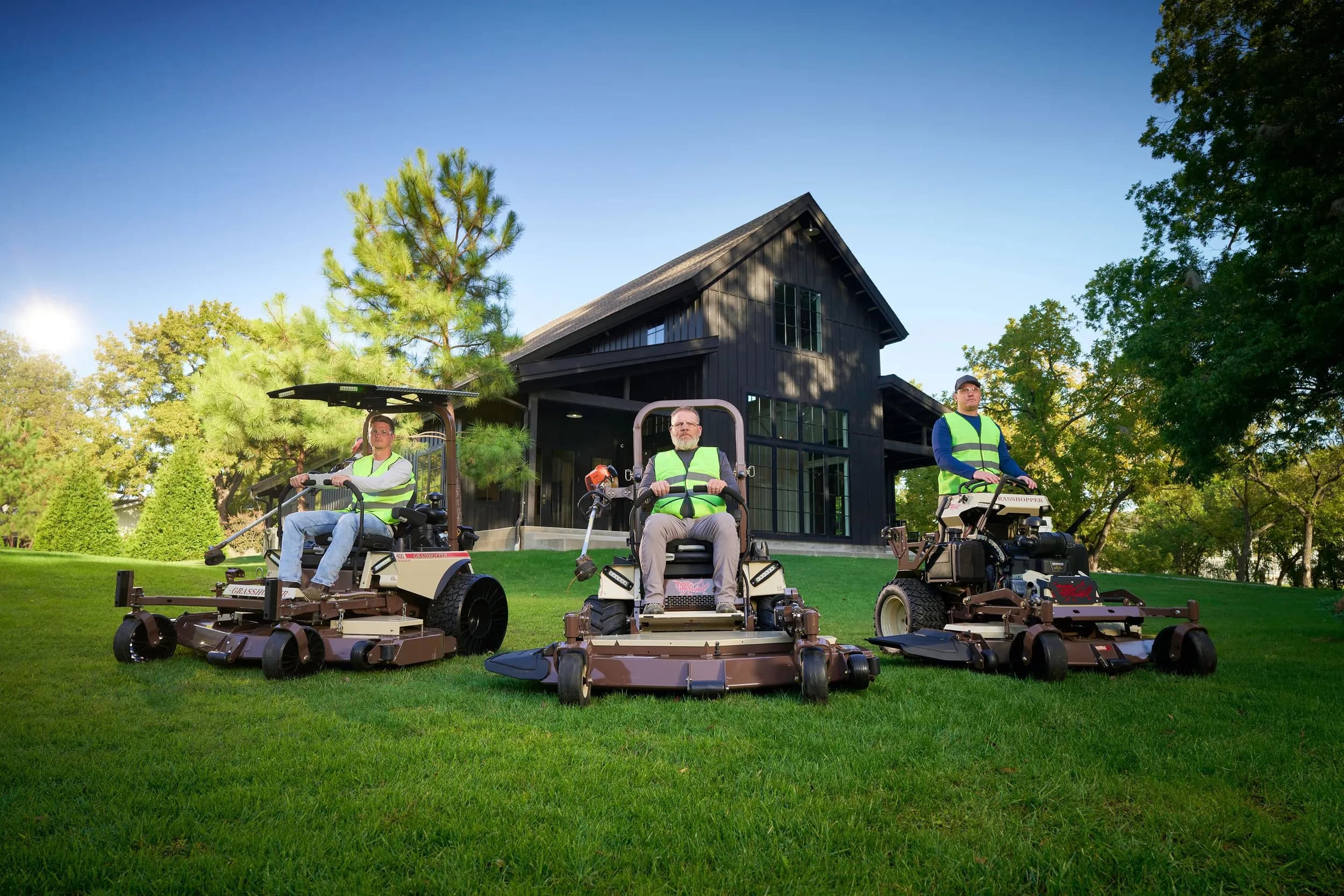
Take our quiz to find the best commercial zero-turn mower or best residential zero-turn mower for you.
Easily compare all riding lawn mower attachments to see how you can get more out of your mower.
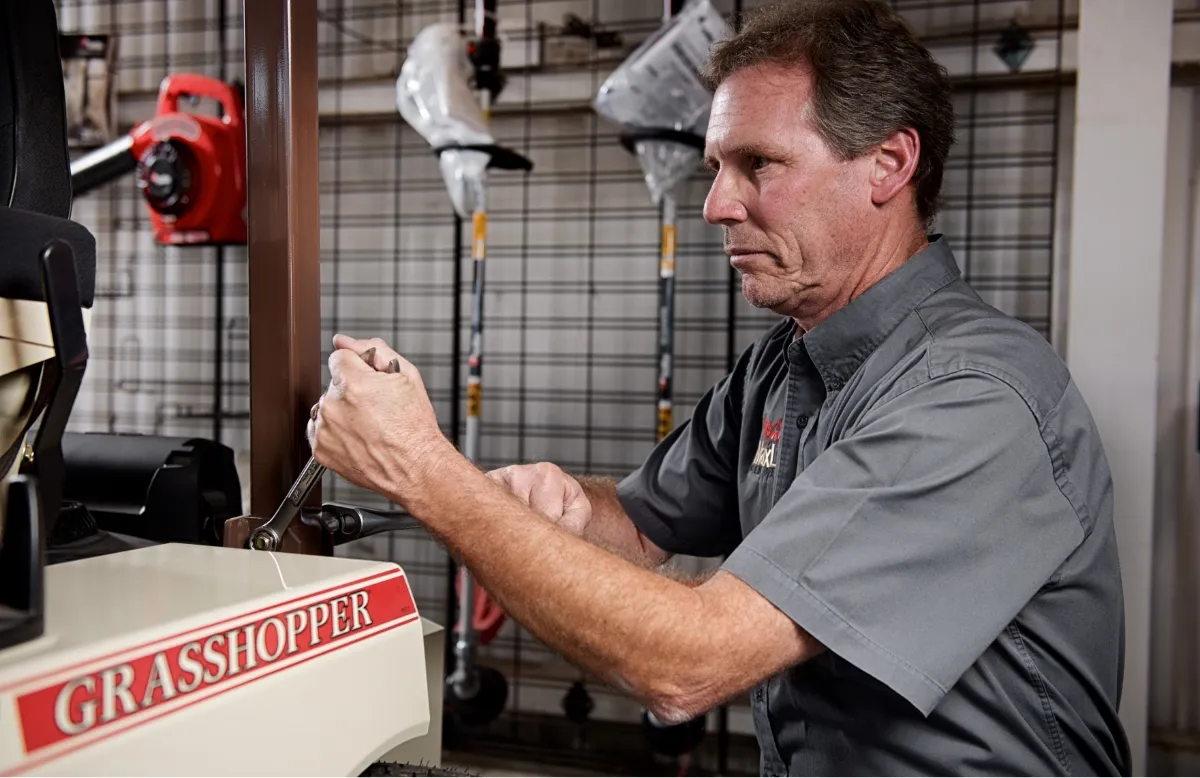
Your local dealer can also offer great service and support for your riding lawn mower. Find the dealer nearest you.
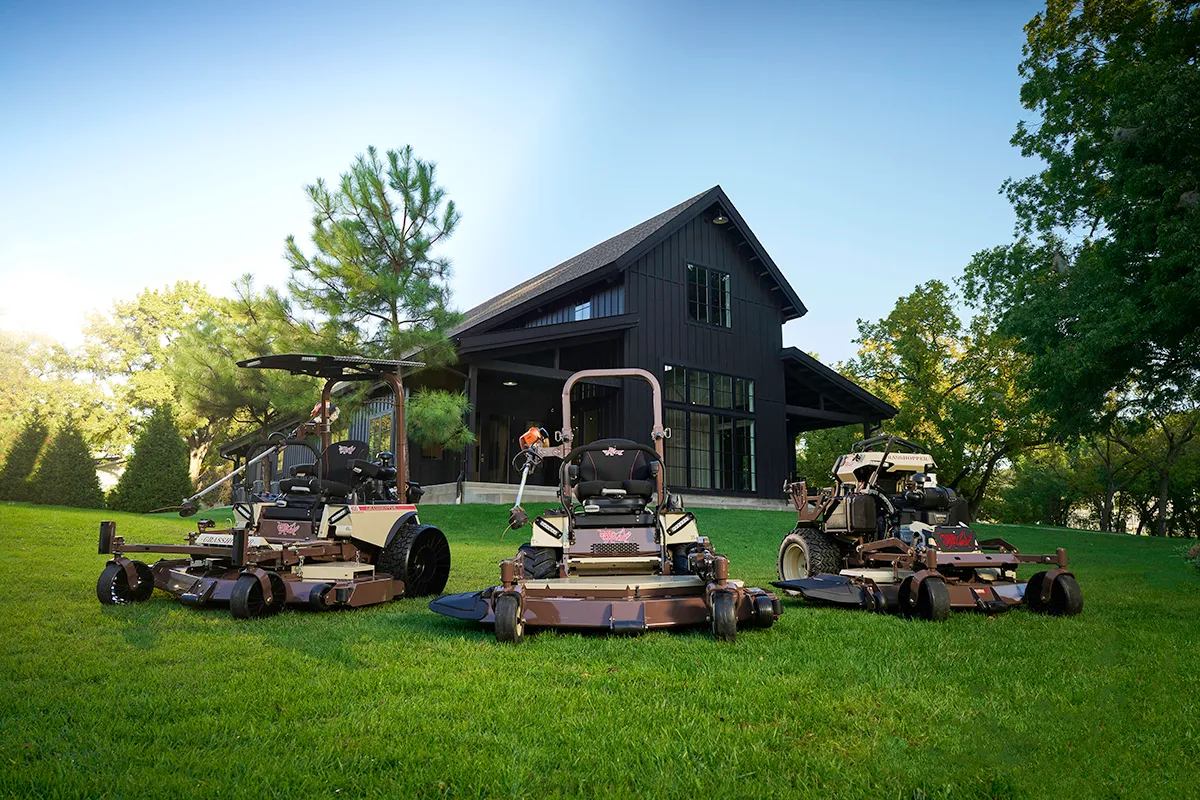
Elite performance doesn't need to cost elite money. Get 0.98% APR financing for 48 months on any new Grasshopper zero-turn mower.
Mowing into retirement and beyond

Key takeaways in this article
- Mowing as retirement income: Mowing lawns in retirement can generate flexible supplemental income on a schedule you fully control.
- Word-of-mouth grows the business: Starting with a few neighbors' lawns can organically expand into a steady local lawn care business.
- Volunteer mowing gives back: Retirees can offer free mowing to local churches, schools, or seniors who qualify for municipal yard-care programs.
- Attachments unlock year-round revenue: Snow throwers, aerators, and leaf-collection systems let a single mower earn income across all four seasons.
- Ergonomic zero-turn mowers suit aging operators: Commercial-grade zero-turn mowers with ergonomic controls let retirees mow comfortably well into their later years.
If you love cutting the lawn and you’re thinking about the next chapters of life, mowing is a great way to spend time outdoors, volunteer your efforts and make a little extra money.
Heading into retirement, you might be wondering how you can fast-forward to this milestone—or save some extra money to fund the hobbies you enjoy once you have more time to take it easy. Also, if you’re used to decades of a work schedule, finding fulfilling ways to spend a few hours is important to many of us. If you’ve always loved the outdoors and the satisfaction of mowing your lawn, there’s a real opportunity to volunteer your efforts and even make extra money.
Why not mow a bit more?
You can generate a second income before retirement to build up savings or create a low-key lawn care business that produces enough revenue so you can sustain your lifestyle well into the future. Plus, mowing is great physical activity, it’s relaxing, you’re not stuck at a desk or behind a cash register, and it’s a helpful way to give back to local organizations like churches and schools on a volunteer basis. Plus, you can mow well into your golden years with ergonomic, commercial-grade zero-turn and riding mowers that run smoothly.
Here are a few ways to mow into retirement and maximize the financial and feel-good benefits of spending time outdoors cutting lawns.
Mowing To Supplement Retirement Income
Maybe you’re looking ahead to retirement and realize that you don’t want to dig into your nest egg to travel, go hunting and fishing, or spend on some home projects you’ve been wanting to tackle for years. You’re not interested in part-time employment or a remote freelance gig that would only feel like you’re back to work again. Mowing is an appealing alternative.
Or, perhaps you’re nearing retirement and looking for a way to get there faster. You love mowing your lawn, so why not mow a little more for extra income? You can set your own hours, decide how many (or few) mowing jobs to manage, and deliver an in-demand service. There are many community members who could use help with cutting their grass. Even when the economy is in a slump, yard work doesn’t go away and busy families need a break.
Another benefit of mowing into and during retirement is the income potential. You can decide to mow a few extra lawns a week or grow a local mowing business when word of mouth passes that you’re available for hire. You decide. Plus, you can choose attachments like snow throwers and supplement your retirement income year-round.
Giving Back By Mowing Local Lawns
If income isn’t your main motivator, mowing lawns can help out community organizations like churches and schools. And many municipalities offer maintenance services for seniors free of charge like clearing snow or yard work. Your mowing can be a real help to those in need.
Connect with local groups to find out if you can help out by mowing their lawns. As for flexibility, since you are offering a volunteer service, you will likely be able to cut grass when your schedule allows. All the while, you’ll get to spend time outdoors in the fresh air—and you know you’re delivering a service that these groups and individuals will really appreciate.
Get More Out Of Your Mower
When you invest in a comfortable, efficient mower that’s high-quality and you know will last, you can gain even more ROI by using the machine more often. So, now that you’re retired, why stop at mowing just your yard? Plus, with convenient attachments, you can offer more to neighbors and friends—plus manage more maintenance on your own property.
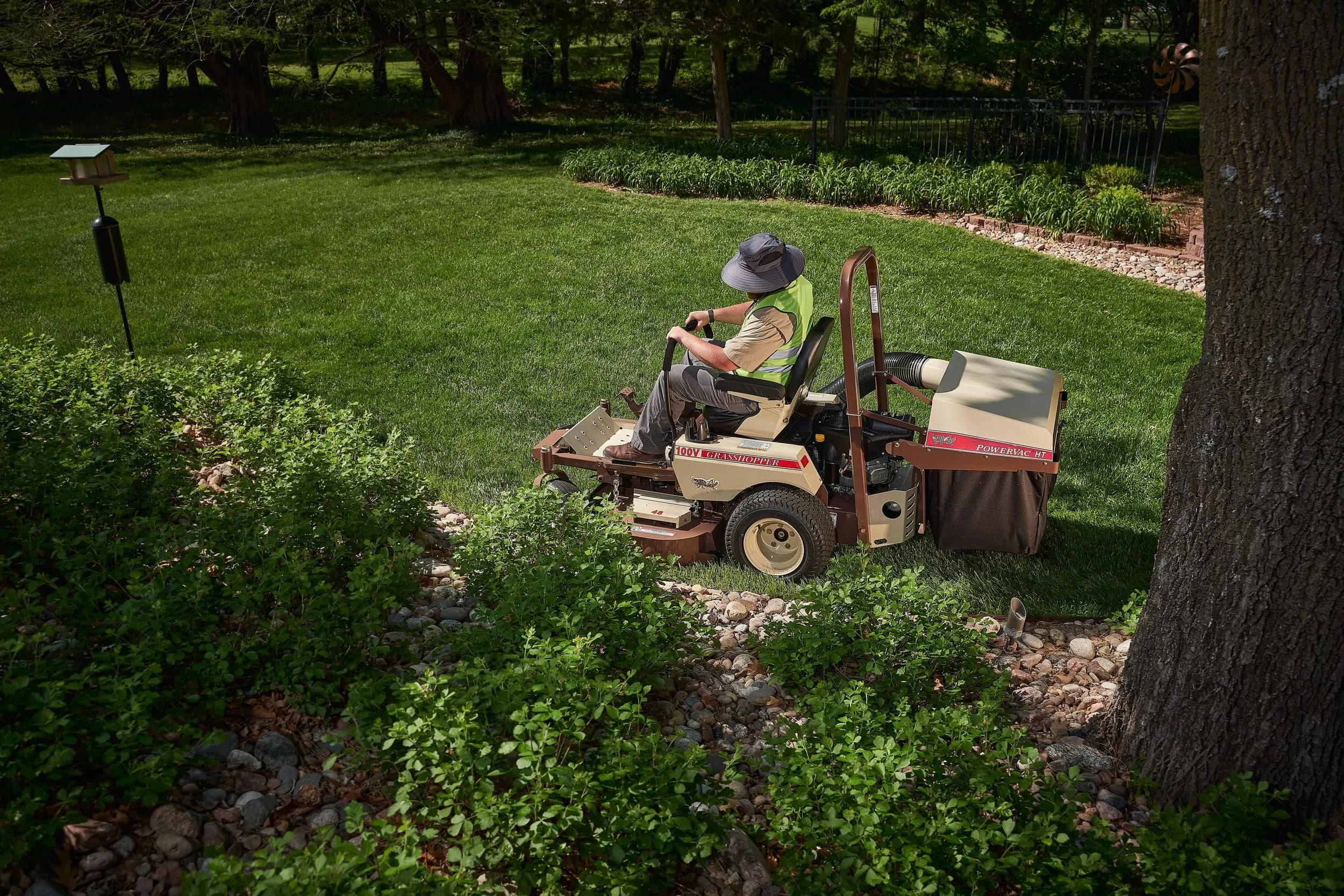
Rather than renting a core aerator, an AERA-vator™ implement gets a tough job done effortlessly. You can maximize this investment by offering aeration to friends and local businesses in town. PowerVac™ systems take the elbow grease out of raking lawns. As you enjoy your retirement years, you can comfortably collect leaves without excessive physical exertion. And during winter, you can save neighbors from shoveling and clear your own driveway and walkways, and theirs too, with a mower that works all four seasons and includes snow removal attachments.
Find The Right Mower For You
Who will use your mower, and how much grass do you plan to cut? Will retirement mowing focus on neighbors’ and friends’ residential properties, or do you plan on helping out local organizations with larger lawns to maintain? When choosing a mower, also think about how often you plan to mow.
Ready to talk to a dealer?
Frequently asked questions
Yes, retirees can earn meaningful supplemental income mowing lawns by taking on a few extra yards per week on a schedule they set themselves. Yard care is in demand regardless of economic conditions, and word-of-mouth referrals can grow a small operation over time. You decide how many jobs to take and can scale up or down to match your lifestyle.
Starting a retirement lawn mowing business is as simple as mowing a few neighbors' or friends' yards and letting word of mouth do the marketing. There's no requirement to take on more clients than you want — you can keep it to a handful of weekly accounts or expand as demand grows. A quality, commercial-grade mower is the primary investment needed to operate reliably and efficiently.
A commercial-grade zero-turn or riding mower with ergonomic controls is the best choice for a retirement lawn care business, as it delivers comfort, efficiency, and durability across many hours of use. The right model depends on the size of properties you'll be mowing — residential lots require different specs than the larger grounds of a school or church. Choosing a mower that supports attachments gives you more versatility for different jobs.
Yes, retirees can earn lawn care income year-round by adding seasonal attachments to their mower — snow throwers for winter clearing and leaf-collection systems like a PowerVac for fall. This lets a single mower investment generate revenue across all four seasons rather than only during the mowing months. Aeration services using an AERA-vator implement can also be offered to neighbors and local businesses as an additional revenue stream.
Retirees can volunteer their mowing services by connecting directly with local churches, schools, and community organizations to offer free lawn maintenance on a flexible schedule. Many municipalities also run programs that provide free yard work — including mowing — to seniors in need, which retirees can support. Because it's volunteer work, you can typically mow when your schedule allows rather than committing to fixed appointments.
.webp&w=3840&q=75)
.webp&w=3840&q=75)