Take our quiz to find the best commercial zero-turn mower or best residential zero-turn mower for you.
Easily compare all riding lawn mower attachments to see how you can get more out of your mower.
Your local dealer can also offer great service and support for your riding lawn mower. Find the dealer nearest you.
Elite performance doesn't need to cost elite money. Get 0.98% APR financing for 48 months on any new Grasshopper zero-turn mower.
Are you sharpening your blades like you should be?

Key takeaways in this article
- Sharpen every 8–12 hours: Mower blades should be sharpened every 8–12 run-time hours — or sooner when mowing sandy, overgrown, or debris-heavy turf.
- Dull blades damage turf: Dull mower blades tear grass rather than cut it, weakening the root system and leaving turf vulnerable to weeds, disease, and insects.
- Always balance after sharpening: An unbalanced mower blade causes vibration that stresses the mower deck and frame, so check and correct balance after every sharpening.
- Sharpen at 30 degrees: Match the factory edge angle — most commonly 30 degrees — using smooth, even passes in one direction from blade tip to where the angle stops.
- Spot the warning signs: Torn clippings, uneven cuts, or uncut strips of turf are reliable indicators that mower blades have gone dull and need immediate sharpening.
Sharp, balanced mower blades are important for a lawn’s health along with productivity in the field, and reducing unnecessary wear and tear on the machine. Imbalanced blades cause vibration that leads to unnecessary stress on the mower deck and mower frame itself.
Also, dull blades tear at grass rather than delivering a clean cut. Turf then becomes more vulnerable and brittle and the vicious cycle continues with a reduced ability to take up nutrients and water, which eventually affects the root system. You end up with weak turf that is more susceptible to weeds, disease and insects. However, clean and even cuts from sharp, balanced blades allow turf to heal quickly from mowing, promoting turf health. Plus you’ll achieve a manicured appearance and get the job done faster because sharp blades cut grass with ease.
Sharpening and balancing mower blades is a relatively quick process that goes a long way toward achieving a high-quality cut and reducing machine maintenance while increasing the return on your equipment investment. An acceptable timeframe for sharpening intervals is following every 8 to 12 hours of run time. However, pay close attention to mowing conditions. Blades will wear out sooner than 8 hours when mowing overgrown yards, properties with sandy soil and striking objects like downed sticks, exposed tree roots and golf balls. Watch for tell-tale signs of dull blades: torn or shredded clippings, uneven cuts and/or uncut strips of turf.
Many landscape contractors who are mowing all day during peak season change blades daily to maintain fresh cuts. For efficiency’s sake, they sharpen the blades they remove back at the shop then put them back into the rotation.
Mower blade sharpening pointers
First, examine the blade to determine if it is overly worn or warped. If so, it can become dangerous so you should discard it and replace the blade with a new one. If the blade is still in good condition, then proceed with sharpening and balancing.
Always clean the blade first to remove debris buildup. We also recommend checking the blade balance at this point to determine if it is straight or bent before proceeding with blade sharpening. Different types of balancers are available, depending on your preference, from inexpensive table-top cone balancers to wall-mounted magnetic balancers with gauge rods to check straightness. If the blade is straight, you can proceed to blade sharpening. As with blade balancers, there are several methods for sharpening blades, ranging from an angle grinder and a vice to a vertical belt grinder to specially designed sharpening kits with pre-set angles for precision sharpening.
Safety gloves and eye protection are a necessity. The most common angle for the cutting edge is 30 degrees, but you should always match the angle to the factory edge. Sharpen the blade with smooth, even passes in one direction while applying gentle pressure. Only sharpen the cutting edge of the blade, moving from the blade tip to where angling stops.
After you sharpen the blade, proceed to balancing. If you notice one side is heavier, return to sharpening until the blade is balanced.
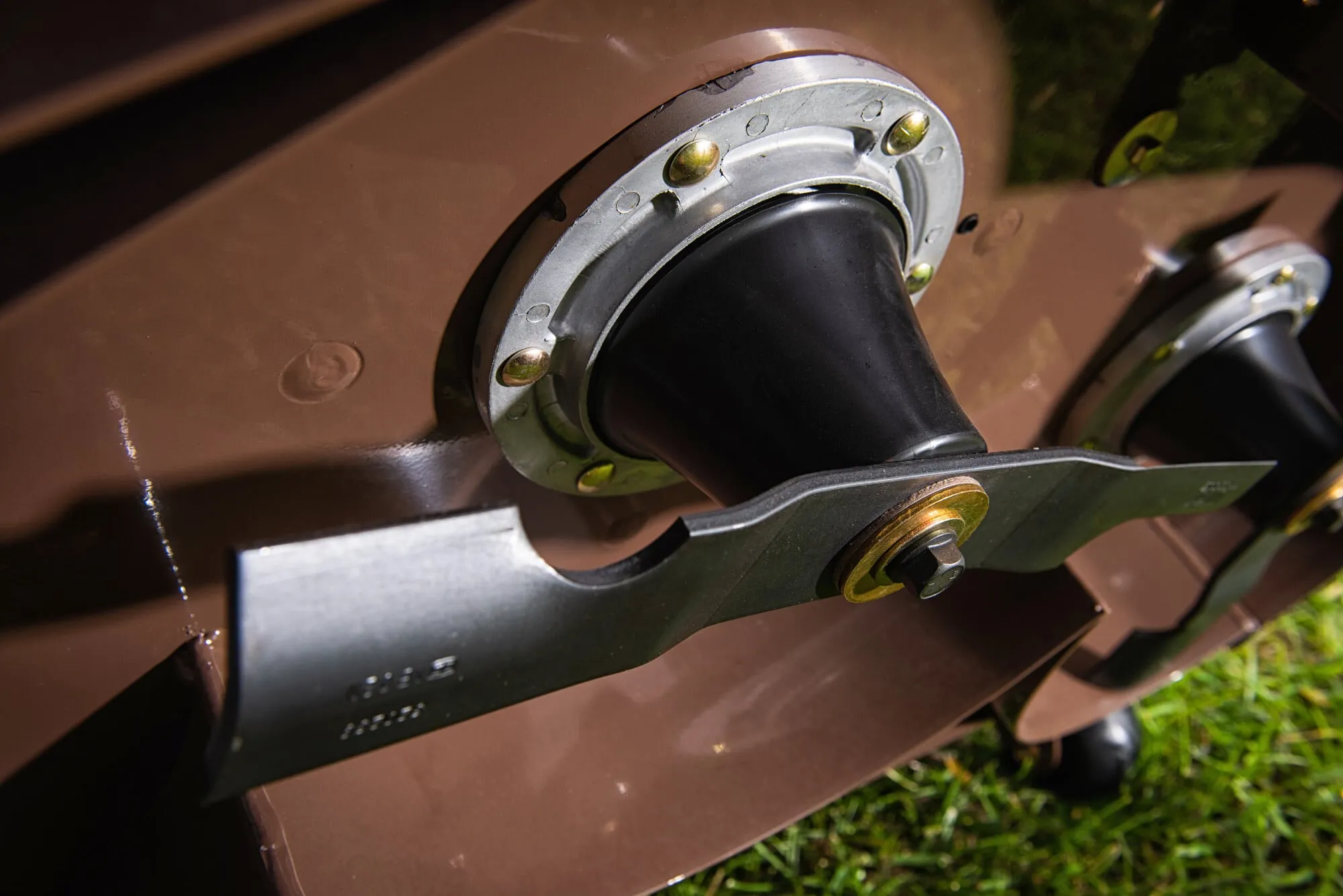
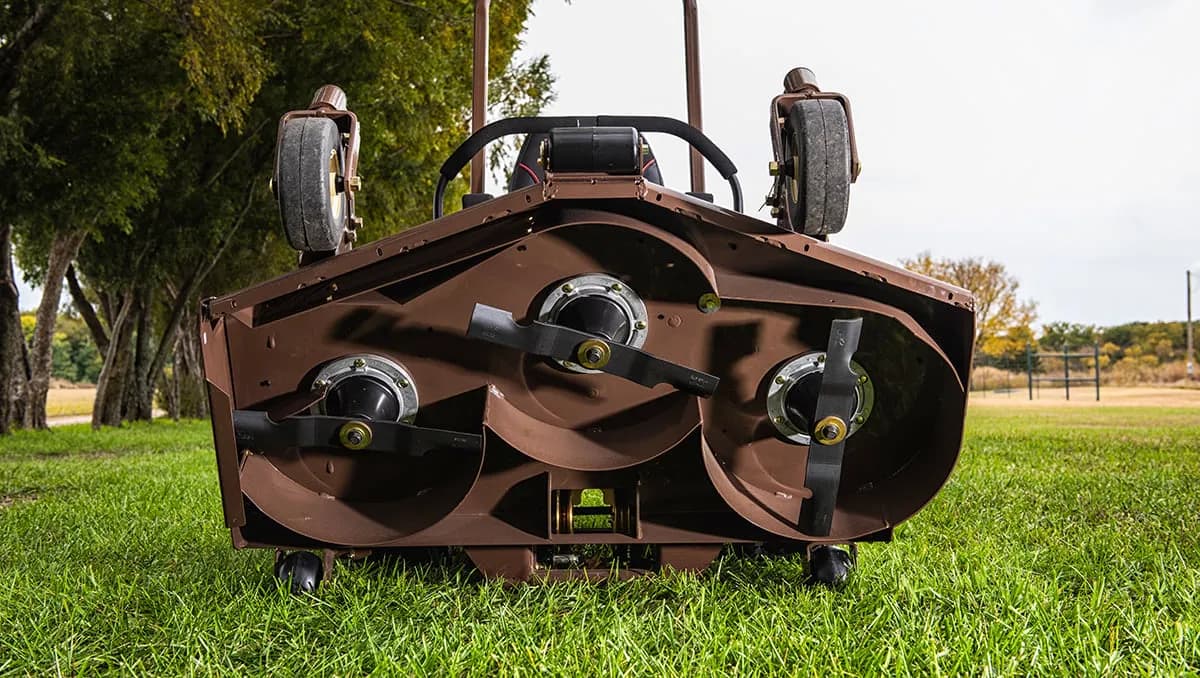
When purchasing a mower or adding to your fleet, pay close attention to the blade type because the material can make an impact on how long a blade will hold its edge. GrassMax is the only blade system in the world manufactured to meet the precise design specifications incorporated into every Grasshopper DuraMax deck. The cutting edge MARBAIN blades are proven to hold their edge longer than aftermarket blades and deliver a longer life span.
How to properly sharpen mower blades, step by step
Now that you understand why sharpening and balancing your mower blades is crucial for the health of turf and your mower, follow these steps to complete the job:
- Wear work gloves and protective glasses before beginning.
- Carefully pass the blade center across the grindstone to remove debris. A file can also be used if a grindstone is not available. Repeat for the other side.
- Once clean, check to see if the blade is straight and not bent by placing it on the balancer and giving it a gentle spin. If the blade is warped, it will wobble unevenly, and if it sinks to one side, it is unbalanced.
- Begin sharpening a straight blade by setting the sharpener to the factory angle (most common angle is 30 degrees).
- Evenly pass the angled blade edge across the sharpener, or pass your angle grinder across the blade in one direction from the tip until where the angle stops. Repeat this step, stopping to check blade sharpness by examining the cutting edge.
- Flip the blade and sharpen the other cutting edge in the same manner, repeating with even passes across the blade in one direction.
- Once sharpened, check blade balance to ensure both cutting edges are the same thickness. Place the blade on the balancer. If it tips toward one side, you’ll know this heavier edge requires more sharpening. Repeat the sharpening and balancing process until the blade is even and cutting edges are straight.
Deliver an uncompromised quality cut with Grasshopper
Routine blade sharpening and ensuring mower blades are balanced reduces maintenance over the life of your mower, preserves your equipment investment, and delivers the quality cut you expect.
Interested in some mowing tips from the pros at Grasshopper? Our library of how-to videos and newsletter provide helpful information. Thinking about a new mower? Our team can help you choose the best model for your needs.
Ready to talk to a dealer?
Frequently asked questions
Mower blades should be sharpened every 8 to 12 hours of run time. That interval shortens when mowing overgrown yards, properties with sandy soil, or areas with debris like sticks and exposed roots. Many professional landscapers change blades daily during peak season and sharpen the removed blades back at the shop before rotating them back in.
Dull mower blades produce three tell-tale signs: torn or shredded grass clippings, an uneven cut height across the lawn, and narrow strips of uncut turf left behind. If any of these appear after mowing, the blades need sharpening. Inspecting the clippings right after a cut is the quickest check — clean, uniform pieces mean the edge is still sharp.
The most common sharpening angle for mower blades is 30 degrees, but the correct approach is always to match the factory edge angle on the specific blade. Set your sharpener to that angle, then make smooth, even passes in one direction — from the blade tip to where the bevel stops — applying gentle, consistent pressure throughout.
Balancing mower blades after sharpening is essential because an unbalanced blade creates vibration that puts unnecessary stress on the mower deck and frame, accelerating wear. After sharpening, place the blade on a balancer — if it tips to one side, that heavier edge needs more material removed. Repeat sharpening and balancing until both cutting edges are even.
Dull mower blades tear grass instead of cutting it cleanly, leaving ragged edges that make turf brittle and reduce its ability to absorb water and nutrients. Over time, this weakens the root system and creates conditions that favor weeds, disease, and insect damage. Sharp blades produce clean cuts that let grass heal quickly and maintain a healthy, manicured appearance.
.webp&w=3840&q=75)