Take our quiz to find the best commercial zero-turn mower or best residential zero-turn mower for you.
Easily compare all riding lawn mower attachments to see how you can get more out of your mower.
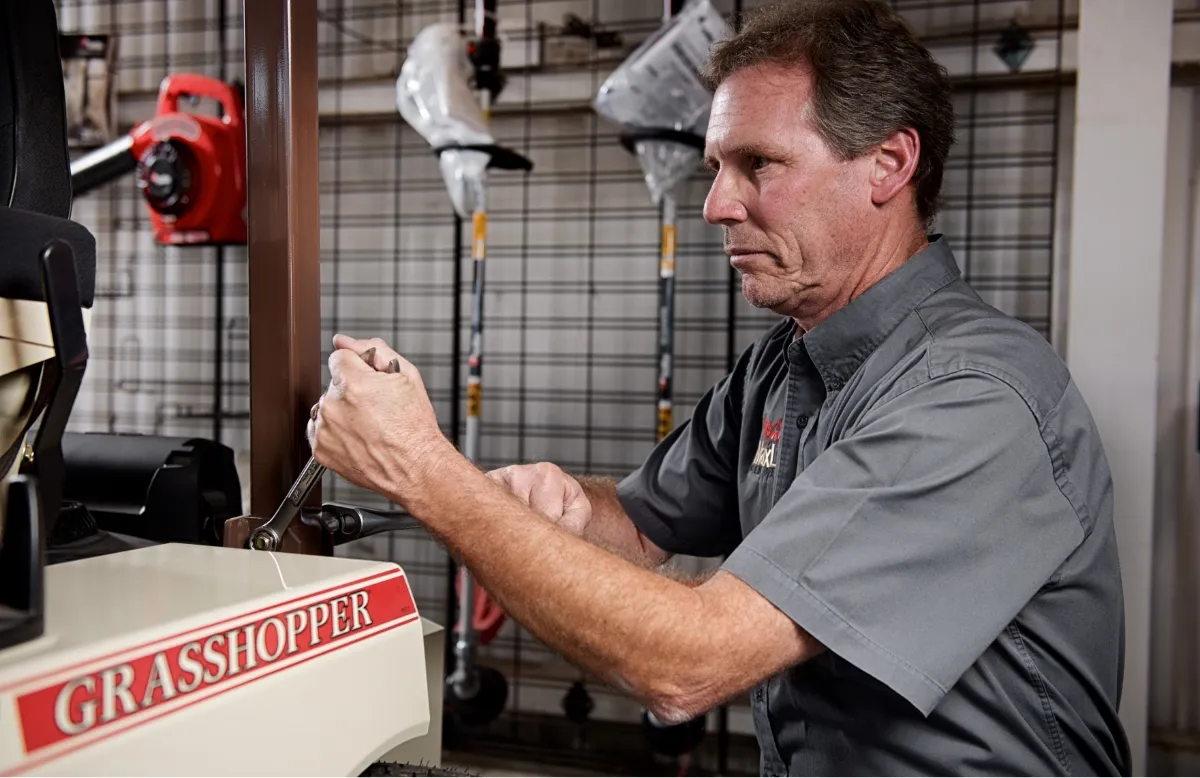
Your local dealer can also offer great service and support for your riding lawn mower. Find the dealer nearest you.
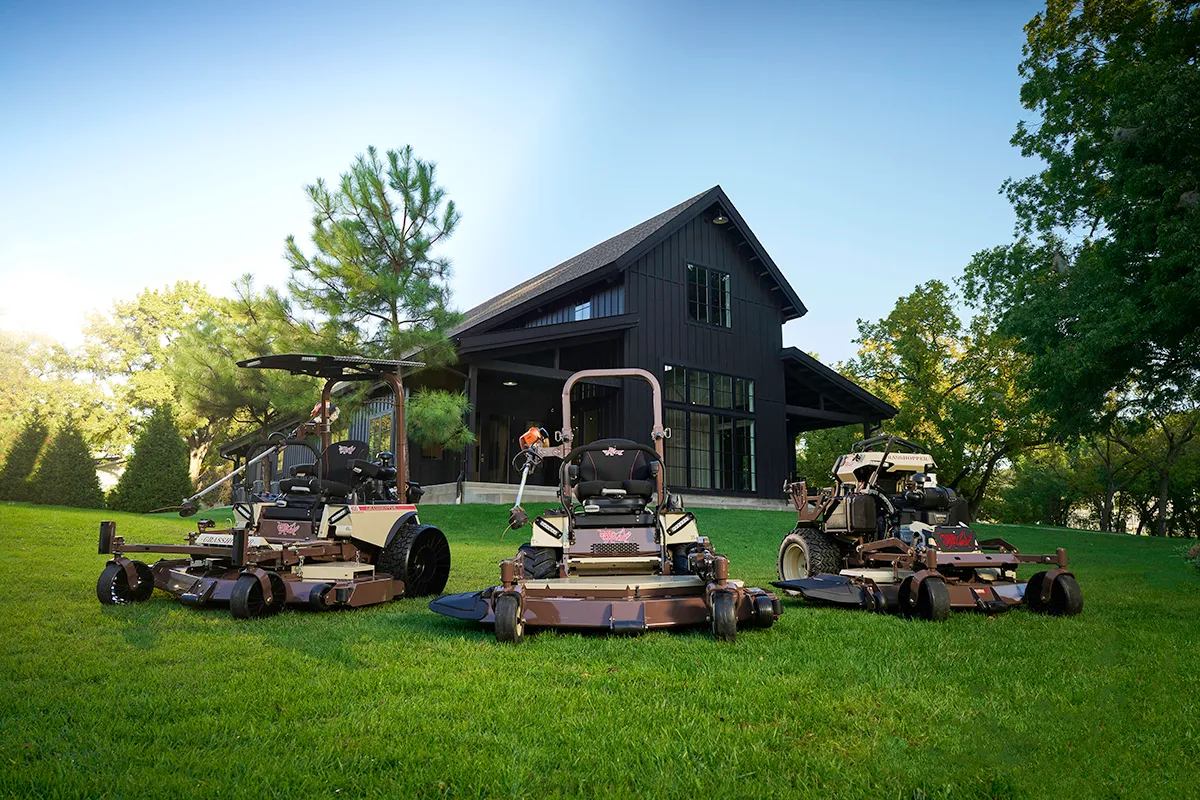
Elite performance doesn't need to cost elite money. Get 0.98% APR financing for 48 months on any new Grasshopper zero-turn mower.
Why buying off a contract can save you time and money
Key takeaways in this article
- Guaranteed discounts, no membership fee: Cooperative purchasing contracts give government agencies vetted vendor pricing without any cost to join the co-op.
- Research done for you: Co-ops compile all product specs and vendor information, freeing purchasing agents from hours of lawnmower research.
- No bid solicitation required: Cooperative contracts eliminate the bid solicitation process entirely — the co-op negotiates pricing and sets terms on members' behalf.
- Pre-vetted vendors only: Manufacturers on co-op contracts must prove product quality, reliable distribution, and after-sale service before being approved.
- Agencies stay in control: Individual agencies make their own equipment selections and can consult vendors directly, even when buying through a cooperative contract.
Purchasing agents for government agencies and other nonprofits have a difficult job to do, particularly when it comes to buying equipment like lawnmowers.
On the one hand, it’s important to choose mowing equipment that will be productive, durable and reliable. At the same time, most purchasing agents are not blessed with unlimited budgets to buy whichever mowers they want at whatever prices are being asked. With hundreds of lawn mower makes and models out there, gathering and analyzing all of the necessary information to find the optimal balance of specifications, performance, and value can be a difficult task.
Wouldn’t it be nice if there was a way to greatly reduce the time and effort required to research lawnmowers and solicit bids? Wouldn’t it be even nicer if you were also guaranteed the absolute best pricing on the best lawnmowers you could buy?
There is.
Cooperative purchasing organizations create economies of scale by leveraging the collective buying power of their members. These groups then establish contracts with various vendors—contracts that ensure discounted pricing for all of their members. In exchange for their across-the-board discounted pricing, vendors benefit by gaining seamless access to a large pool of potential customers.
There are hundreds of cooperative purchasing organizations out there, many of which cater to federal, state and local government agencies and other nonprofits. Here’s a look at the top five ways an individual agency can benefit from purchasing through a cooperative contract.
1. Secure the best pricing
As touched on, a cooperative purchasing organization leverages its collective buying power to negotiate discounted pricing from vendors. These lower prices are granted to all members of the co-op, regardless of how many mowers they are looking to buy. Under normal circumstances, smaller agencies may not qualify for a “volume discount” if they are only buying a small number of mowers. But when part of a co-op, even the smallest of agencies can save money, too.
2. Save time researching
Cooperative purchasing organizations gather all of the necessary product information for purchasing agents to make sound buying decisions. With as many lawn mower manufacturers as there are, this can be an incredibly time-consuming task for a purchasing agent. Now all of the time normally spent doing product research can be allocated to other tasks.
3. Save time soliciting
Co-ops also help eliminate the step of soliciting bids, which can be an equally time-consuming process for a purchasing agent. The co-op sources the vendors, negotiates the pricing and establishes the contracts. All an individual co-op member has to do is choose from the available options.
4. Product-quality peace of mind
Because vendors have been thoroughly researched and vetted through the co-op, individual agencies can be confident about the products they are buying.
In order to make their products available, manufacturers like Grasshopper must demonstrate the ability to not only provide an excellent product, but also support that product with reliable distribution and after-sale service. That gives purchasing agents peace of mind that they will obtain the mowers they need, and that the mowers will provide the performance and durability they require.
Over the past 25 years, Grasshopper has established relationships with several cooperative purchasing organizations that specialize in government and nonprofit agencies. Furthermore, Grasshopper continues to make its entire product offering available, as opposed to just a selection of certain models, sizes or engine options. That complete range of options means agencies can always choose the best mower for their particular application.
5. Maintain control over purchases
Even though the co-op takes care of the product research, bid solicitation, contract creation and transaction, individual agencies still make their own buying decisions. On that note, agencies are free to confer with vendors to seek information to help make better product selections.
Grasshopper is one of just a few lawn mower manufacturers that have a dedicated bid department to support the purchases made by government agencies. Additionally, all mower sales to government agencies are facilitated through Grasshopper’s nationwide network of independent sales/service dealers. Dealers are available to answer questions, set up and deliver mowers, and provide any initial start-up training as necessary. As importantly, Grasshopper dealers are ready to support all mower sales with ongoing parts and service.
When you get down to it, a cooperative purchasing organization is really there to shoulder a lot of the laborious burden a government purchasing agent has to deal with when procuring new equipment. There is typically no cost to join one. And because they must go through a rigorous vetting and registration process of their own, co-ops are typically well respected and trustworthy. Factor in the discounted pricing that applies to every purchase, and the upside of buying mowers off a co-op contract becomes pretty obvious.
Ready to talk to a dealer?
Frequently asked questions
Cooperative purchasing is a method where government agencies and nonprofits pool their collective buying power through an organization that negotiates discounted contracts with vendors on their behalf. Member agencies then purchase directly off those pre-negotiated contracts without going through a separate bid process. The co-op handles research, vendor vetting, and pricing — members simply choose from the approved options and buy.
There is typically no cost for a government agency to join a cooperative purchasing organization. Membership is generally free, with co-ops funded through the vendor side of the arrangement — vendors gain access to a large pool of buyers in exchange for offering guaranteed discounted pricing. This means agencies of any size can access volume-level discounts without paying a membership fee.
Buying off a cooperative contract saves time in two major ways: it eliminates the need to research products independently and removes the bid solicitation process entirely. Both tasks — gathering specs across dozens of makes and models, then soliciting and evaluating vendor bids — are handled by the co-op before a contract is ever offered to members. Purchasing agents skip straight to selecting from pre-approved options.
Cooperative purchasing organizations vet vendors thoroughly before awarding contracts, requiring manufacturers to demonstrate product quality, reliable distribution, and dependable after-sale service. Vendors that cannot meet those standards don't make it onto the contract. Agencies also retain the right to consult directly with vendors before purchasing, so they can ask questions and confirm the equipment fits their specific application.
Government agencies do not lose purchasing control when buying through a cooperative contract — individual agencies still make all of their own buying decisions. The co-op handles the research, negotiation, and contract administration, but each member agency independently decides what to buy, which model or configuration to select, and when to purchase. Agencies can also speak directly with vendors to get the information they need before committing.
.webp&w=3840&q=75)