Take our quiz to find the best commercial zero-turn mower or best residential zero-turn mower for you.
Easily compare all riding lawn mower attachments to see how you can get more out of your mower.

Your local dealer can also offer great service and support for your riding lawn mower. Find the dealer nearest you.

Elite performance doesn't need to cost elite money. Get 0.98% APR financing for 48 months on any new Grasshopper zero-turn mower.
Three common lawn pests and how to spot them
Key takeaways in this article
- Know the big three lawn pests: Moles, grubs, and chinch bugs are the most common lawn pests, and each leaves distinct early warning signs you can spot before damage spreads.
- Chinch bug damage mimics drought: Chinch bug damage starts as irregular purple-tinged patches and ends in yellow and brown grass that is often mistaken for drought stress. A closer look at the blades reveals the tiny sap-sucking insects themselves.
- Spongy turf means grubs: Grub damage in a lawn progresses from wilted grass to large brown, dying patches, and the final sign is spongy turf that lifts easily from the soil as the c-shaped pests devour grass roots.
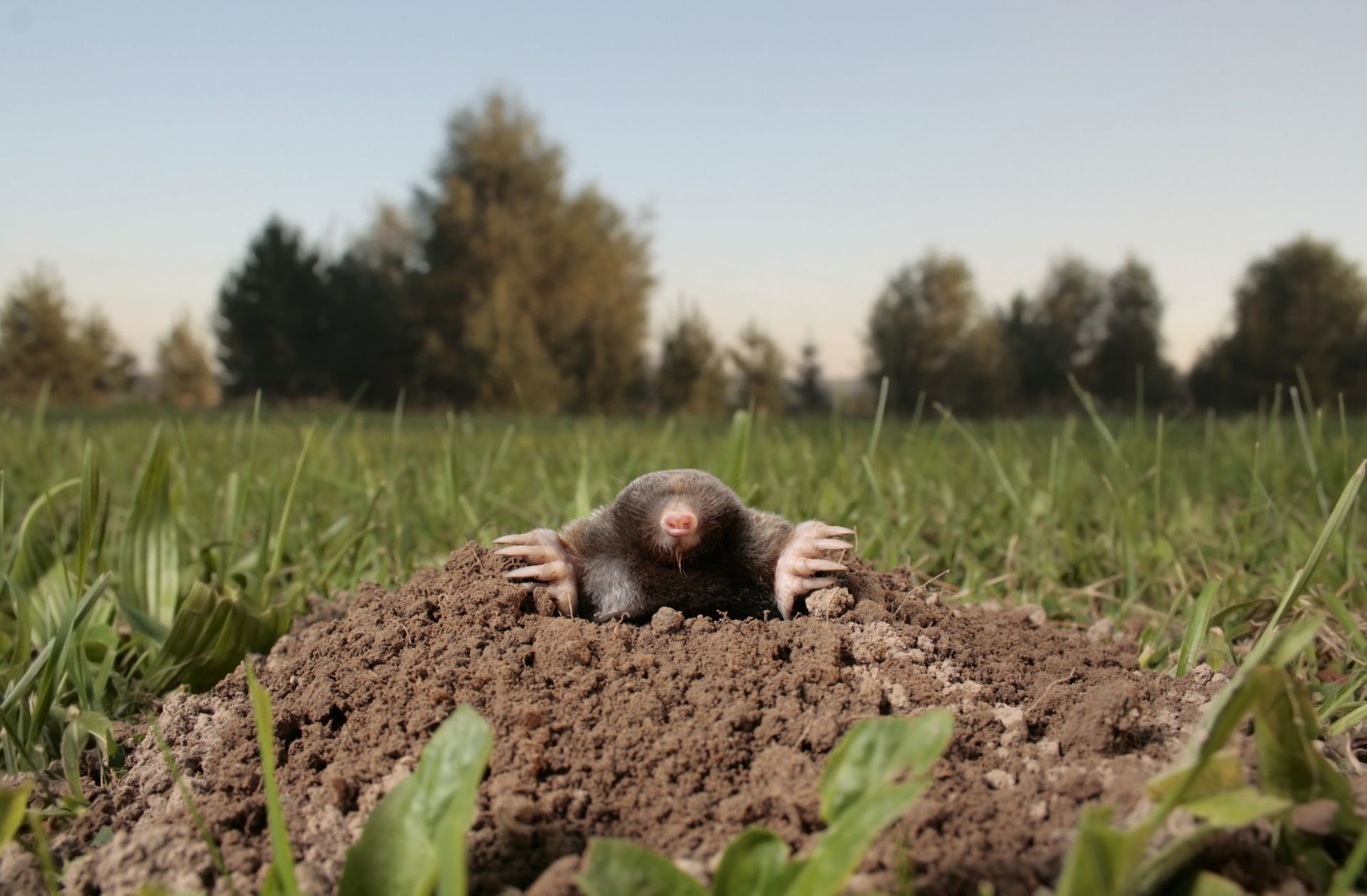
- Mounds and ridges mean moles: Volcano-like soil mounds and raised ridges running across the turf are the signature signs of moles, which favor overwatered lawns with damp, easy-to-dig soil.
- Watch the seasonal windows: Moles are most active in spring and fall, grubs from spring through early fall, and chinch bugs from June to September. Checking the lawn during these windows catches infestations at the early-warning stage.
For us mowing fanatics there is no greater source of pride than a thick, lush lawn—and no bigger embarrassment than a patchy, wilted one. We want a sea of emerald green, not a sickly splattering of brown and yellow. That’s why it’s an absolute necessity to stay knowledgeable on the various lawn pests that threaten your turf. Read on for more info regarding three common lawn pests and how to spot them.
1. Moles
Perhaps the most infamous of the bunch, moles are the most common lawn and garden pest around. Moles tend to prefer overwatered lawns due to the damp, easy-to-dig soil and are more active during the spring and fall seasons. The volcano-like mounds of soil they leave behind are their signature identifier. And, while moles prefer to stay deep underground, if you start to spot a string of raised ridges running all across your turf that’s another surefire sign that the moles have arrived.
2. Grubs
Among the most ruinous of all lawn pests, grubs are commonly found in the Northwest, Midwest, and Southwest regions. These c-shaped pests lurk just beneath the soil surface feeding on grass roots and are most active during the spring, summer, and early fall. Grub damage starts with wilted grass and ends with large patches of brown, dying turf as they continue to devour the roots of your grass. Finally, the last sign of a grub infestation is spongy turf that easily lifts from the soil of your lawn.
3. Chinch Bugs
These tiny sap-sucking insects feed on the juices of individual grass blades, leaving behind an anticoagulant that forces grass to stop absorbing water as they go. Chinch bugs prefer lawns in sunny areas and are most active from June to September. Chinch bug damage begins with irregular patches of purple-tinged turf, followed by wilting and ends with large patches of yellow and brown grass. Often mistaken for drought stress due to the wilting and dryness of the damage, a closer look will reveal these pesky insects as the true wrongdoer.
Protect your lawn by staying knowledgeable on the common pests that threaten your perfect sea of emerald green.
Ready to talk to a dealer?
Frequently asked questions
The main signs of moles in your yard are volcano-like mounds of soil and raised ridges running across the turf. Moles stay deep underground, so these surface clues are usually how an infestation reveals itself. They're most active in spring and fall and favor overwatered lawns with damp, easy-to-dig soil.
Chinch bug damage starts as irregular patches of purple-tinged turf, followed by wilting, and ends with large patches of yellow and brown grass. Because the wilting and dryness mimic drought stress, the damage is often misdiagnosed — a closer look at the grass blades will reveal the tiny sap-sucking insects themselves. Damage is most common in sunny areas from June to September.
Signs of grubs in your lawn progress from wilted grass to large patches of brown, dying turf as the grubs devour grass roots. The final telltale sign is spongy turf that lifts easily from the soil because the roots are gone. Grubs are most active in spring, summer, and early fall.
Grubs are c-shaped pests that lurk just beneath the soil surface and feed on grass roots. They're among the most ruinous lawn pests and are commonly found in the Northwest, Midwest, and Southwest regions. Left unchecked, their root feeding turns healthy turf into large patches of brown, dying grass.
Moles are attracted to overwatered lawns because the damp soil is easy to dig and tunnel through. They're the most common lawn and garden pest and are most active during the spring and fall seasons, which is when their soil mounds and raised surface ridges typically start appearing.
.webp&w=3840&q=75)