Take our quiz to find the best commercial zero-turn mower or best residential zero-turn mower for you.
Easily compare all riding lawn mower attachments to see how you can get more out of your mower.
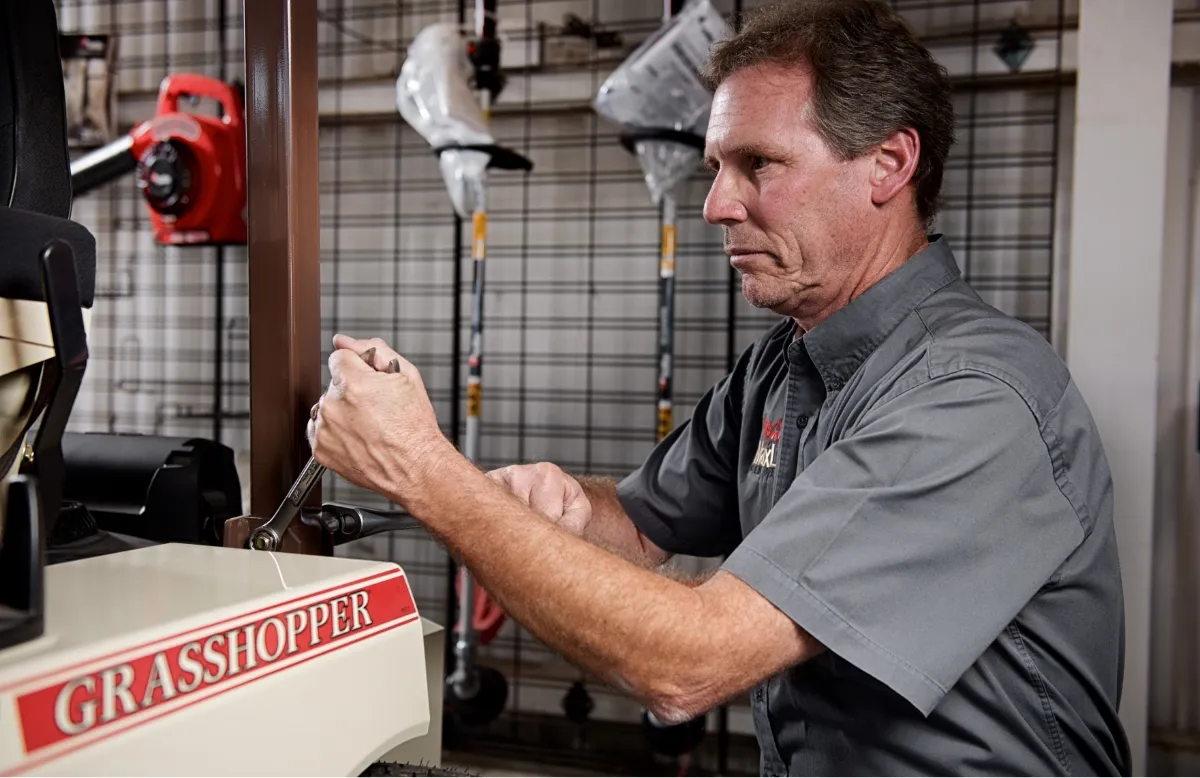
Your local dealer can also offer great service and support for your riding lawn mower. Find the dealer nearest you.
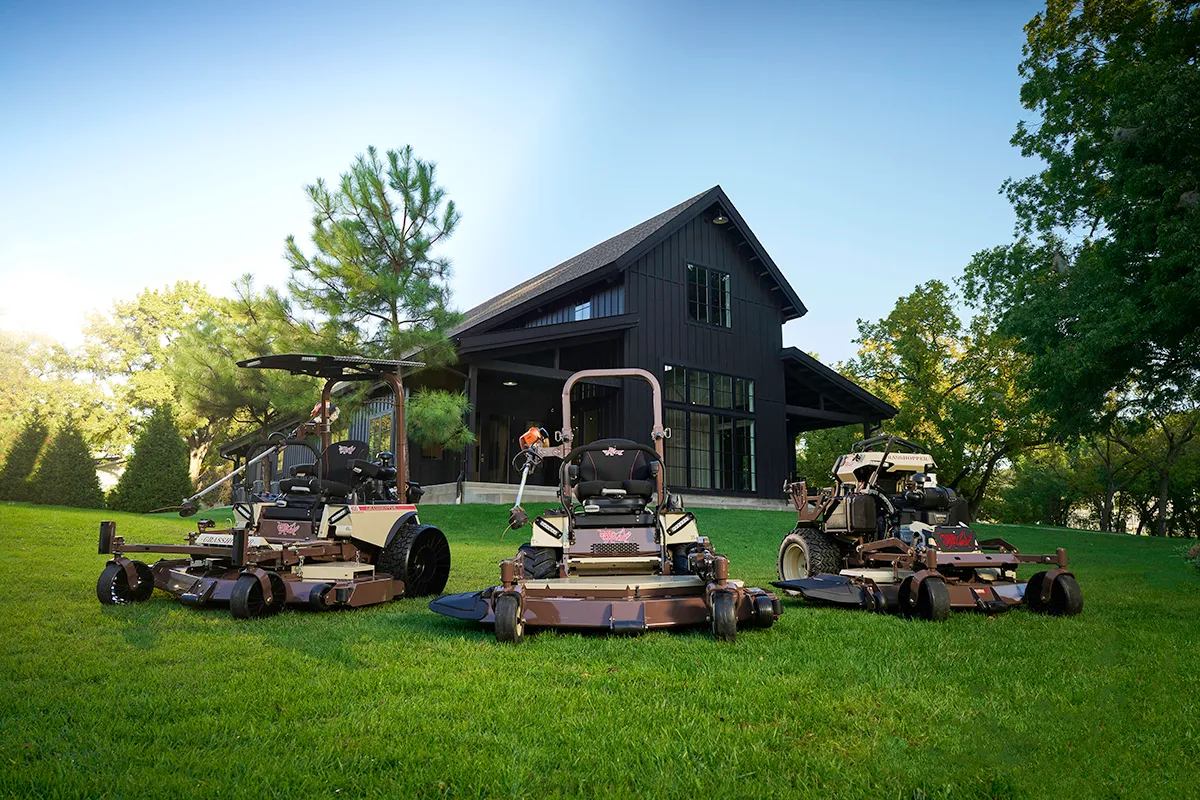
Elite performance doesn't need to cost elite money. Get 0.98% APR financing for 48 months on any new Grasshopper zero-turn mower.
The go-to guide for starting a lawn care business
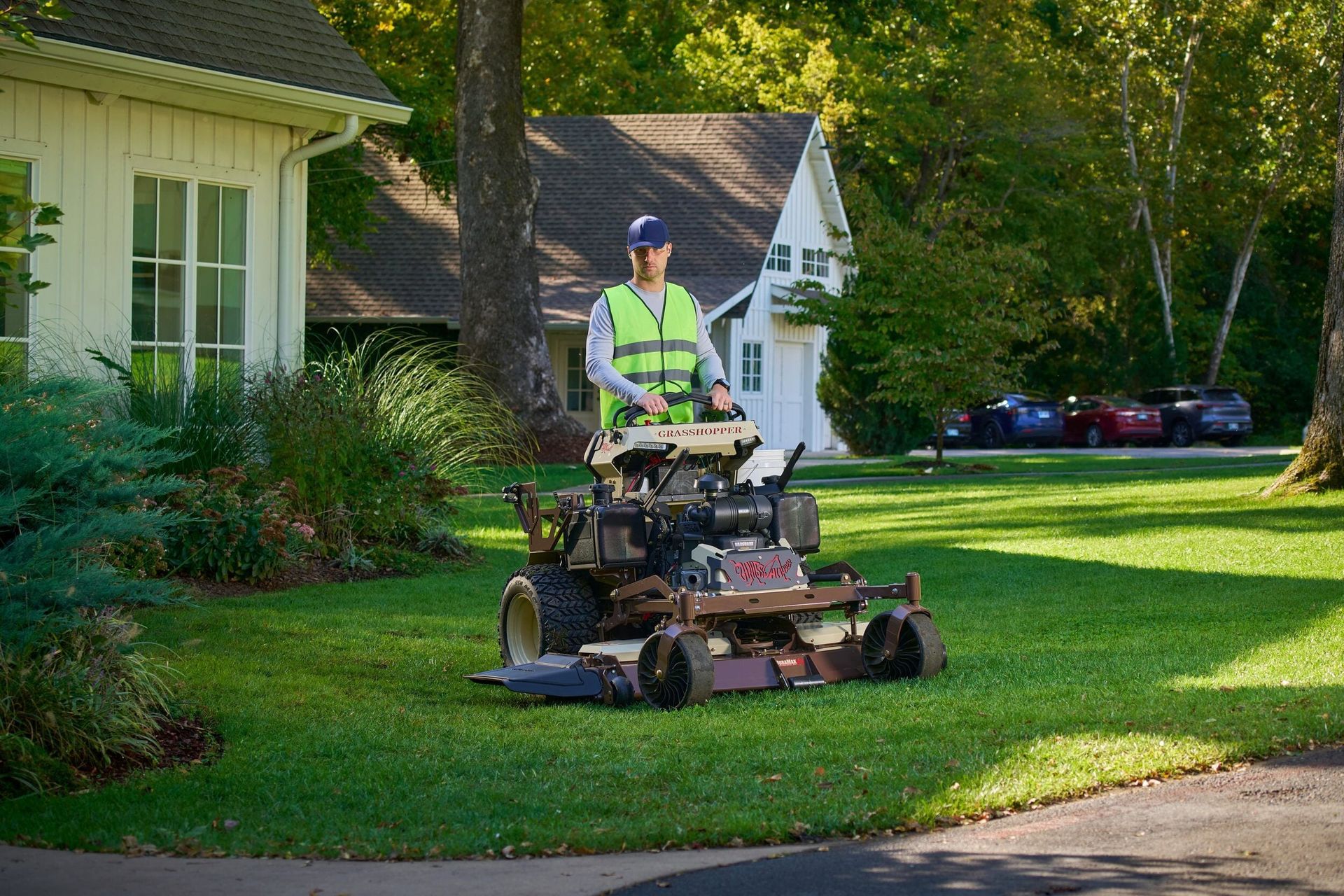
Key takeaways in this article
- Build a real business: a professional lawn care setup beats fly-by-night operators in the $153-billion U.S. market.
- Lead with mowing: mowing is always in demand, and adding services like pruning and cleanup increases value.
- Insure before you mow: general liability coverage is essential, and applying fertilizer or pesticides usually requires licensing.
- Buy through a servicing dealer: durable, service-friendly mowers and dealer support cut maintenance and aid financing.
- Sell at a profit: charge above break-even, then market cheaply through free online profiles before a website.
You thrive in the outdoors, take pride in a job well done, and are ready to take a career leap and start your own lawn care business. There is a lot of opportunity in this steadily growing, $153-billion U.S. industry. There is also plenty of competition, so you’ll want to take the proper steps to set up a legitimate business that is positioned to deliver quality service to customers in your market.
You might have heard about fly-by-night landscapers who go into “business” with a truck, mower and little insight into the financials, insurance, marketing or logistics of running a successful lawn care operation. Many eventually fail because they’re not making a profit and losing customers to more reputable companies. Ready to take a professional approach?Set your lawn care business up for success with this step-by-step guide.
Meet the market demand: decide on service offerings
Determine the lawn care services you will offer based on homeowners’ needs in your area. Survey the market by asking neighbors and community members what types of landscape services and projects they would hire a professional to handle. Mowing is always in demand, and this service includes edging and cleanup. But by diversifying your service mix to include additional landscape maintenance offerings, you can offer more value and convenience to customers. For instance, you might also provide tree and shrub pruning, mulching, and spring and fall cleanup. Other lawn care services include lawn installation, and planting annuals and perennials. Some customers are interested in establishing pollinators and including native plants in their landscapes. You might decide to offer lawn care services such as fertilization and weed control. If so, be sure to check your state and local municipality’s licensing requirements. Identifying your service mix will help you determine what equipment is necessary.
Set up shop officially: legal, insurance and licensing
Check on business licensing requirements in your area. If you’ll focus on mowing services only, you might not need a license. However, licensing and certifications are generally required if you will apply pesticides, herbicides and fertilizer. Also consider necessary insurance to protect your business and personal assets. Talk to an insurance professional about the services you will offer and the equipment you will purchase. General liability insurance is a must, and if you will hire employees, you will likely need a workers’ compensation policy. Business equipment protection coverage can cover equipment. Remember your vehicle, too, and ask about a commercial auto policy. The bottom line: Reduce exposure to risk by taking into account all of the what-ifs that can happen when running a business. It’s also a good idea to consult with an attorney or an accountant to properly set up a legal business entity. Take these important steps to get your house in order before stepping foot on a customer’s property.
Invest in lawn care equipment: partner with a servicing dealer
As a lawn care professional, you’ll spend hours in the field operating equipment. Consider an average workweek and the number of hours you will spend on a mower. You need equipment that is built tough and delivers a high quality of cut, while also providing unmatched comfort with ergonomic features.
Equipment maintenance is also an important factor. Service-friendly equipment with fewer grease points and easy access to belts and filters reduces maintenance so you can spend your time more profitably—in the field caring for clients’ lawns.
A servicing dealer can guide you when selecting equipment so you purchase exactly what your business requires. Sure, dealers sell equipment. But reputable servicing dealers are a valuable business partner. They can offer education, equipment maintenance advice and information about financing so you can build a fleet.
Your dealer can also help you explore ways to improve productivity and profitability. For example, mower implements allow you to efficiently deliver additional services while saving labor.
Curious about alternative fuels? A Grasshopper dealer can walk you through the advantages of clean diesel and the benefits of air-cooled and liquid-cooled gas mowers. This way, you will understand all the options before you invest in a commercial-grade machine or fleet.
Sales and marketing: pricing and your target audience
You’re in business to make a profit, not just break even. To sustain a successful lawn care operation, you must price services accurately. What are reputable competitors in your market charging for services? Conduct some market research and ask around. Remember, there’s a cost to doing business that includes your equipment, maintenance, parts, fuel and vehicles.
Your pricing also should factor in overhead expenses, along with labor and related costs if you will hire employees or an administrator to handle bookkeeping and invoicing. It’s a good idea to consult with an accountant if you’re not sure how to establish a fair price that will produce a profit. Your target customer also factors into pricing. Will you provide residential or commercial services? What is the average size of your ideal customer’s property and the price range of their home? What are your customers’ pain points? What services are they willing to pay for?
By identifying your target audience and aligning pricing to the market, you can focus on reaching the ideal customer for your business. Social media platforms allow you to create an online presence for your business. Engage on community platforms such as Nextdoor, and start free Yelp and Google Business profiles so you can collect positive reviews from your customers.
All of these steps can precede a business website if you’re not ready to take that step. Also, enter the market with a professional appearance by designing a logo for marketing materials, T-shirts, hats and decals for your truck. Free tools like Canva allow you to create a logo without any design experience. While marketing today is largely digital, flyers and business cards are a cost-effective way to canvas neighborhoods in your target market and get the word out about your business.
Plan for growth: fuel your business with equipment and resources
What’s next for your new lawn care business? Always think ahead. Sustaining and growing a successful landscape business requires a dedicated equipment partner that can support your expansion with the tools and resources you need to thrive.
Lean on Grasshopper Mowers as a ready resource for business insights, mowing tips, maintenance pointers and best practices to improve your performance.
We invite you to test-drive a Grasshopper Mower at one of our servicing dealers, and remember to ask about financing offers. Our library of how-to videos and newsletter provide helpful information. Thinking about starting a lawn care business? Our team can help you choose the best model for your needs.
Ready to talk to a dealer?
Frequently asked questions
You can start a lawn care business with no formal experience by following a clear set-up process: choose your service offerings, register your business, get liability insurance, invest in commercial-grade equipment, and price your services to cover costs and earn a profit. Mowing is the most accessible entry point — it may require no license in your area. Partnering with a servicing equipment dealer gives you guidance on machine selection, financing, and maintenance from day one.
Whether you need a license to start a lawn care business depends on the services you offer. Mowing-only operations may not require a license in many areas, but applying pesticides, herbicides, or fertilizer typically requires state and local licensing or certification. Check your specific municipality's requirements before advertising those services, and consult an attorney or accountant to set up a proper business entity that protects your personal assets.
A lawn care business needs at minimum general liability insurance, which protects against property damage or injury claims on a client's property. If you hire employees, you will also likely need a workers' compensation policy. Additional coverage to consider includes business equipment protection for your mowers and tools, and a commercial auto policy for your vehicle and trailer. Talk to an insurance professional about your specific service mix before stepping onto your first customer's property.
To price lawn care services for profit, calculate all your costs first — equipment, maintenance, parts, fuel, vehicles, and overhead — then research what reputable competitors in your market charge. Your price must cover those costs plus labor, and still produce a margin above break-even. Factor in your target customer's property size, the going rate in their neighborhood, and whether you're serving residential or commercial accounts. Consulting an accountant is worthwhile if you're unsure how to build a profitable pricing model.
Market a new lawn care business by combining free digital tools with local outreach: set up a Google Business profile and a free Yelp listing to collect reviews, engage on neighborhood platforms like Nextdoor, and create social media profiles for your business. For local reach, distribute flyers and business cards in your target neighborhoods. A professional logo — which you can design for free with tools like Canva — on your truck, shirts, and printed materials signals credibility before you've said a word.

.webp&w=3840&q=75)
.webp&w=3840&q=75)