Take our quiz to find the best commercial zero-turn mower or best residential zero-turn mower for you.
Easily compare all riding lawn mower attachments to see how you can get more out of your mower.
Your local dealer can also offer great service and support for your riding lawn mower. Find the dealer nearest you.
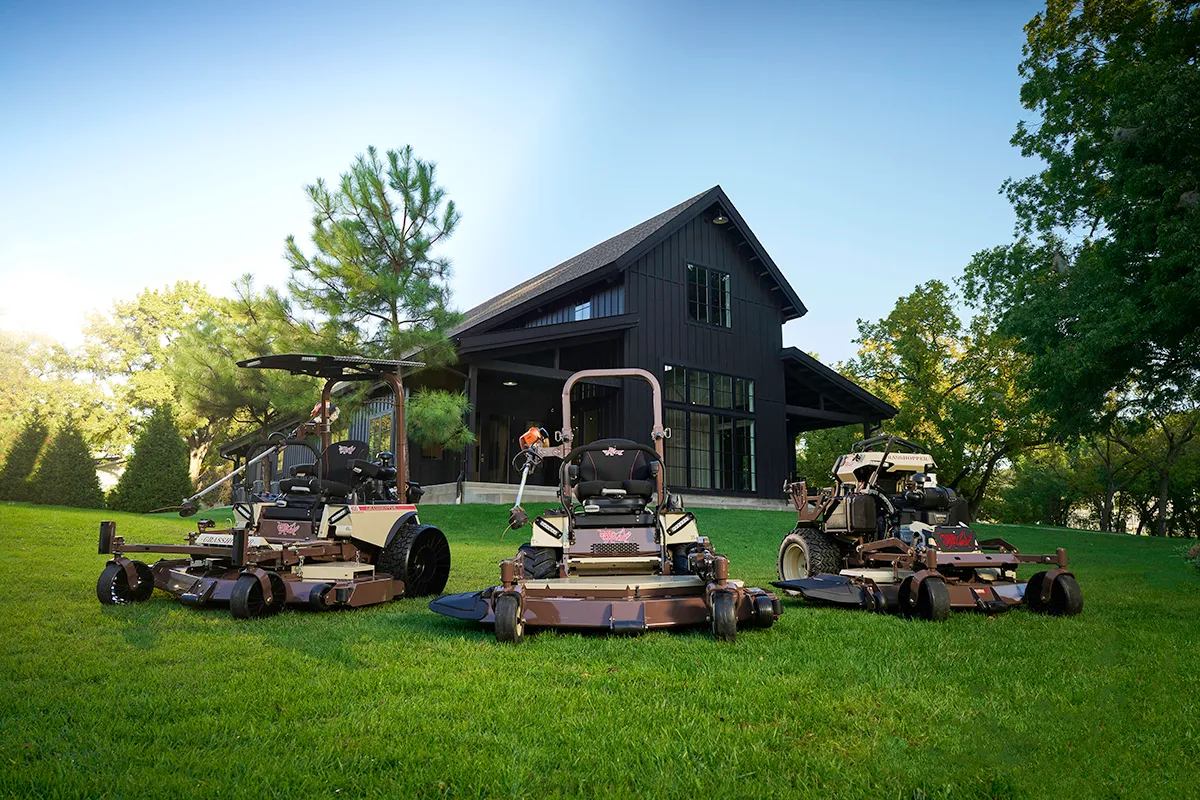
Elite performance doesn't need to cost elite money. Get 0.98% APR financing for 48 months on any new Grasshopper zero-turn mower.
Five tips to revive dead spots in your grass
Key takeaways in this article
- Fix dead spots in five steps: Repair lawn dead spots by clearing dead grass, loosening the soil, seeding, fertilizing, and watering.
- Keep new seed damp: Water newly seeded spots lightly early in the day so midday heat doesn't evaporate the moisture.
- Loosen compacted soil first: Grass seed won't take root in hard, compacted soil, so loosen it with a trowel or hoe.
- Fix the root cause: Dead spots stem from hydration issues, grubs, disease, or pet urine—diagnose the cause to stop them recurring.
- Don't over-fertilize: Use fertilizer made for new grass, but avoid overdoing it, which draws nutrients away from the seeds.
So it’s springtime—and you’re chomping at the bit to get mowing. But then you see them. Dead spots in your grass, creating a yellow scar on your otherwise velvety lawn. Yes, they’re any true mower’s worst nightmare. But don’t worry. We have several possible fixes to whip your lawn into shape.
1. Clear Out Matted Grass
Remove the dry, dead grass from any unsightly spots. You want a clear patch of soil before seeding.
2. Loosen Up the Soil
If your soil is hard and compacted, your grass seed won’t take root. Loosen it up with a trowel or garden hoe and top it off with compost or topsoil if the terrain is particularly rough.
3. Time To Seed
Pick a good quality grass seed and spread it over the freshly loosened soil. Give it a light raking to embed the seeds, then tamp the ground to ensure good seed-to-soil contact.
4. Add Fertilizer
Encourage seed growth by finishing off the spot with lawn fertilizer formulated for new grass. But be careful not to overdo it, or you could cause fertilizer burn, which draws nutrients away from the seeds.
5. Get On A Watering Schedule
Dry seeds don’t grow well. Keep them damp, watering the area lightly early in the day before the midday heat evaporates it. Depending on your climate, as well as your soil and grass type, you’ll need to adjust the amount of water accordingly.
These tips will help you get rid of those patchy polka dots in your lawn—but a good rule of thumb is to get to the root of the problem if you want them gone for good. There are many possible reasons for the dead spots, including hydration issues, grubs, lawn disease, pet and animal urine, and more. Contact your local lawn pro to diagnose the issues if they persist.
Sources:
https://www.bobvila.com/articles/brown-grass/https://www.greenviewfertilizer.com/articles/how-to-fix-dead-patches-in-lawn/
Ready to talk to a dealer?
Frequently asked questions
Water new grass seed lightly and often enough to keep the soil consistently damp, applying it early in the day before the midday heat evaporates the moisture. Dry seeds don't grow well. Adjust how much and how often you water based on your climate, soil type, and grass type.
Prepare the soil by first removing the dry, dead grass so you have a clear patch of bare soil, then loosening any hard, compacted ground with a trowel or garden hoe. Top particularly rough terrain with compost or topsoil. Grass seed won't take root in soil that stays hard and compacted.
Dead spots in a lawn have several possible causes, including hydration issues, grubs, lawn disease, and pet or animal urine. Because the causes differ, fixing the surface without addressing the underlying problem often lets the spots come back. If they persist, have a local lawn pro diagnose the issue.
Seed a bare spot by spreading a good-quality grass seed over freshly loosened soil, then lightly raking it in to embed the seeds. Afterward, tamp the ground to create good seed-to-soil contact, which helps the seed take. Loosen and prepare the soil first so the new seed can root.
Yes. Applying too much fertilizer to newly seeded areas can cause fertilizer burn, which draws nutrients away from the seeds and works against new growth. Use a lawn fertilizer formulated for new grass to encourage the seeds, but apply it carefully instead of overdoing it.
.webp&w=3840&q=75)