Take our quiz to find the best commercial zero-turn mower or best residential zero-turn mower for you.
Easily compare all riding lawn mower attachments to see how you can get more out of your mower.

Your local dealer can also offer great service and support for your riding lawn mower. Find the dealer nearest you.
Elite performance doesn't need to cost elite money. Get 0.98% APR financing for 48 months on any new Grasshopper zero-turn mower.
Beyond the cut: 4 things to remember as you prep for the fall season
Key takeaways in this article
- Four fall tasks: aerate, overseed, fertilize, and water your lawn to build thick, healthy, picture-perfect striped turf.
- Overseed in fall: cooler nights and mild daytime temps create the ideal conditions for grass seed germination.
- Aerate on a schedule: yearly for high-traffic or heavy clay soil, otherwise every two to three years minimum.
- Fertilize in two rounds: a batch in late summer, a lighter feeding late fall, and never overfeed.
- Keep watering in fall: water early morning and deep-soak weekly to train roots to grow deeper.
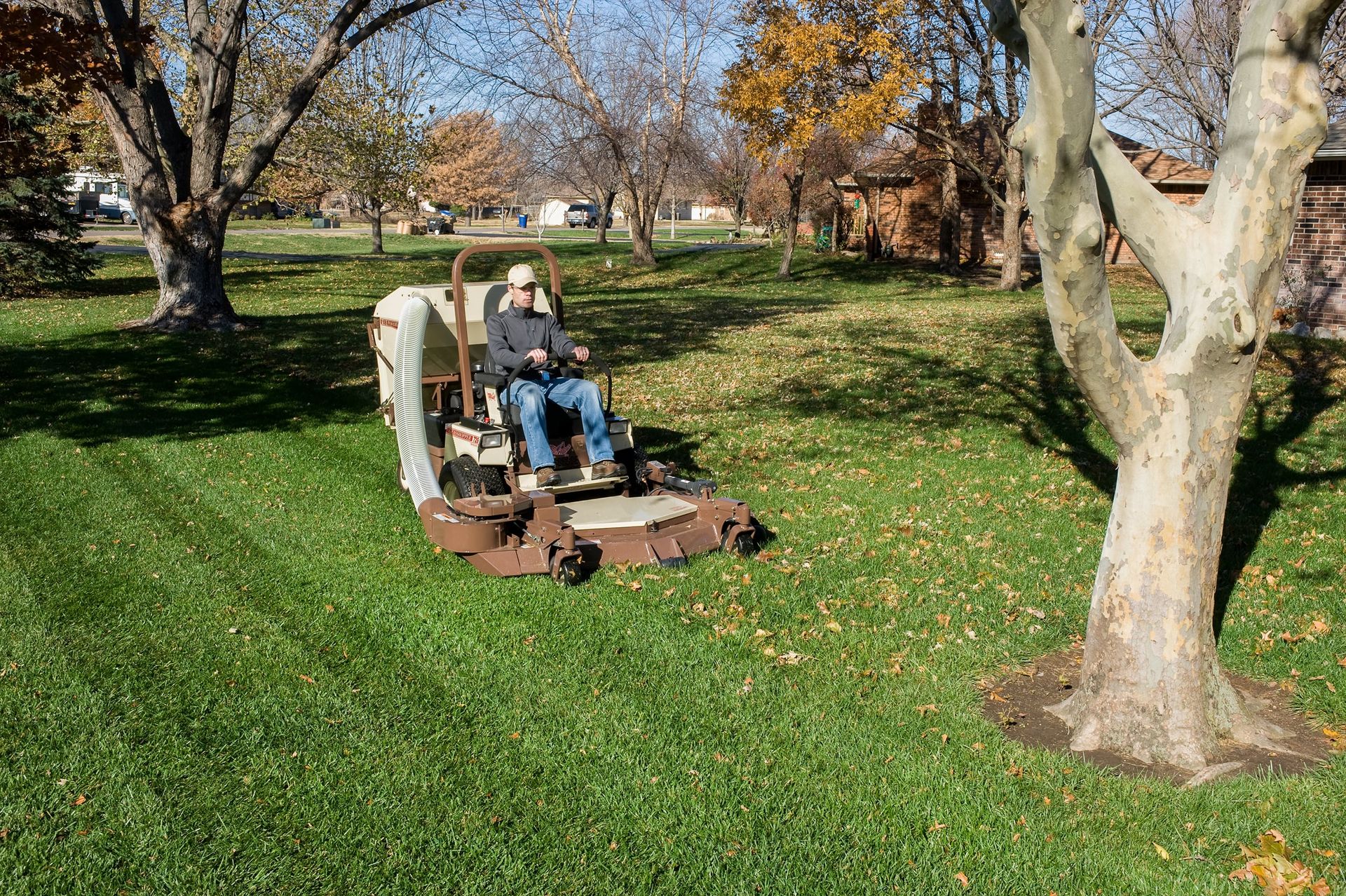
As the seasons change and the temperature drops, every lawn lover around the country eagerly counts down the seconds until their favorite autumn pastime is here. But, before the fall mowing season kicks off remember these four tips if you want thick, healthy grass and picture-perfect stripes.
Aerate your soil
One of the most important fall lawn care tasks on the list, aerating can do wonders to alleviate the stress of a harsh summer and set your turf up for long-term health. Aeration helps counteract the damage of heavy-foot traffic, relieving compacted turf and creating extra pore space in your soil. This will allow your turf to be more receptive of nutrients, water, and air. How often should you aerate your lawn? Well, it depends. If you have high-traffic turf or heavy clay soil, you’ll want to make aerating an annual habit. If your lawn is typically lush and growing well when the fall season rolls around, you should be fine to hold off until next year—but don’t wait too long. You’ll want to be sure you are aerating every two to three years at the very least.
Overseed thin or bare spots
There’s no better time to overseed thinning or bare turf than the fall, as the season’s cooler nights and mild daytime temps provide the ideal conditions for seed germination. Overseeding will not only help restore your turf to its previous glory, but with new varieties of grass emerging every year, it is a great opportunity to integrate your turf with a species of grass that boasts resilient characteristics like resistance to drought, disease, and insects. When overseeding make sure you use grass seed that is designed for either shade or full sun depending on the area you are treating, and always be sure to apply the seed evenly across the thinning patch.
Fertilize for the future
With the summer season coming to an end, it’s once again time to start game planning your fall fertilization schedule. While the exact science of fertilization varies depending on your climate, weather conditions, and soil type, a good rule of thumb is to apply one batch in late summer before following up with a lighter feeding in the closing moments of fall. Avoid overfeeding your lawn as too much fertilizer can be damaging to your turf and mess with your soil’s pH levels.
Know when to water
Just because the heat is finally letting up doesn’t mean it’s time to discontinue sprinkling or putting any other water supply on your turf. Fall is a crucial growth period for cool-season grass—which makes it a crucial watering period for most lawn lovers. Adequate water supply is key for growing strong roots and repairing damage brought on by the dog days of summer. For optimal results, water your grass in the early morning and consider adopting a deep watering approach where you give your lawn a week’s worth of water in one gulp instead of spreading it across multiple sporadic sessions. This method will teach your grass to send its roots deeper into the turf for water supply every few days instead of staying close to the surface for daily watering. The deep watering method will prove greatly beneficial when the dry days of summer come around again. Keep these four lawn care tasks top of mind as you gear up for another fabulous fall mowing season and, as always, don’t forget to check back here for monthly advice on the dos and don’ts of turf care.
Resources https://www.scotts.com/en-us/library/scotts-way/how-aerate-dethatch-your-lawn https://www.thespruce.com/fall-lawn-overseeding-2152905 https://www.thespruce.com/fall-lawn-watering-2130940
Ready to talk to a dealer?
Frequently asked questions
Fall is the best time to overseed a lawn, because cooler nights and mild daytime temperatures create ideal conditions for seed germination. Overseeding then restores thinning or bare turf and lets you introduce newer grass varieties bred for drought, disease, and insect resistance. Match the seed to sun or shade and spread it evenly across the patch.
How often you aerate your lawn depends on its condition: aerate annually if you have high-traffic turf or heavy clay soil, and at least every two to three years otherwise. Aeration relieves compacted soil and creates pore space so turf takes in more nutrients, water, and air. Lush, healthy lawns can hold off a year, but do not wait longer.
Apply fall fertilizer in two rounds: one batch in late summer, followed by a lighter feeding in the closing weeks of fall. Exact timing varies with your climate, weather, and soil type. Avoid overfeeding, since too much fertilizer can damage the turf and throw off your soil pH levels.
Yes, keep watering your lawn in the fall, because fall is a crucial growth and watering period for cool-season grass. Adequate water grows strong roots and repairs damage from summer. Water in the early morning and try deep watering, giving a weeks worth of water in one session, to train roots to grow deeper.
Fall lawn care comes down to four tasks: aerate the soil, overseed thin or bare spots, fertilize, and water correctly. Together these relieve summer compaction, thicken the turf, feed the roots, and set up cool-season grass for strong growth. Done right they deliver thick, healthy grass and clean mowing stripes.
.webp&w=3840&q=75)