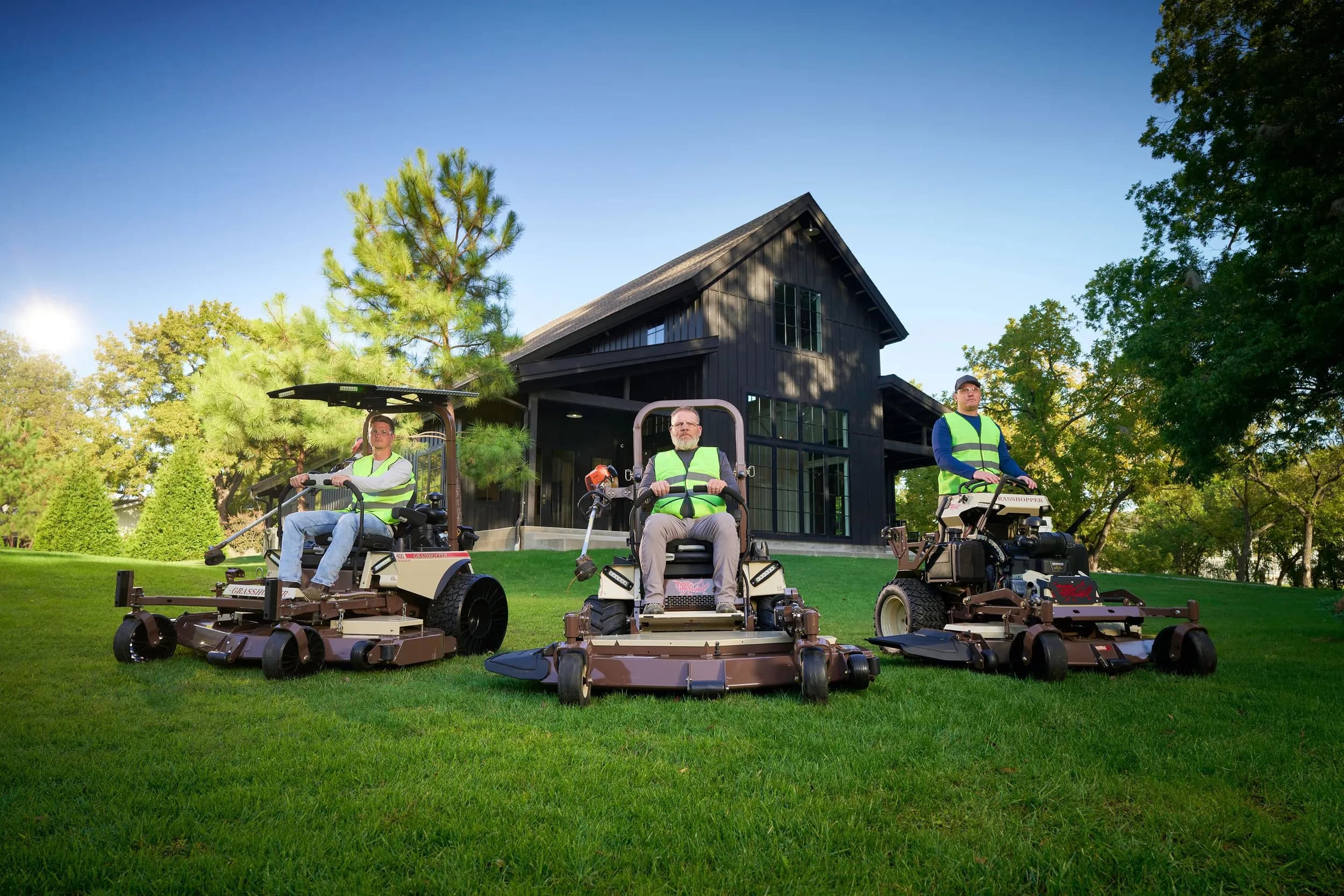
Take our quiz to find the best commercial zero-turn mower or best residential zero-turn mower for you.
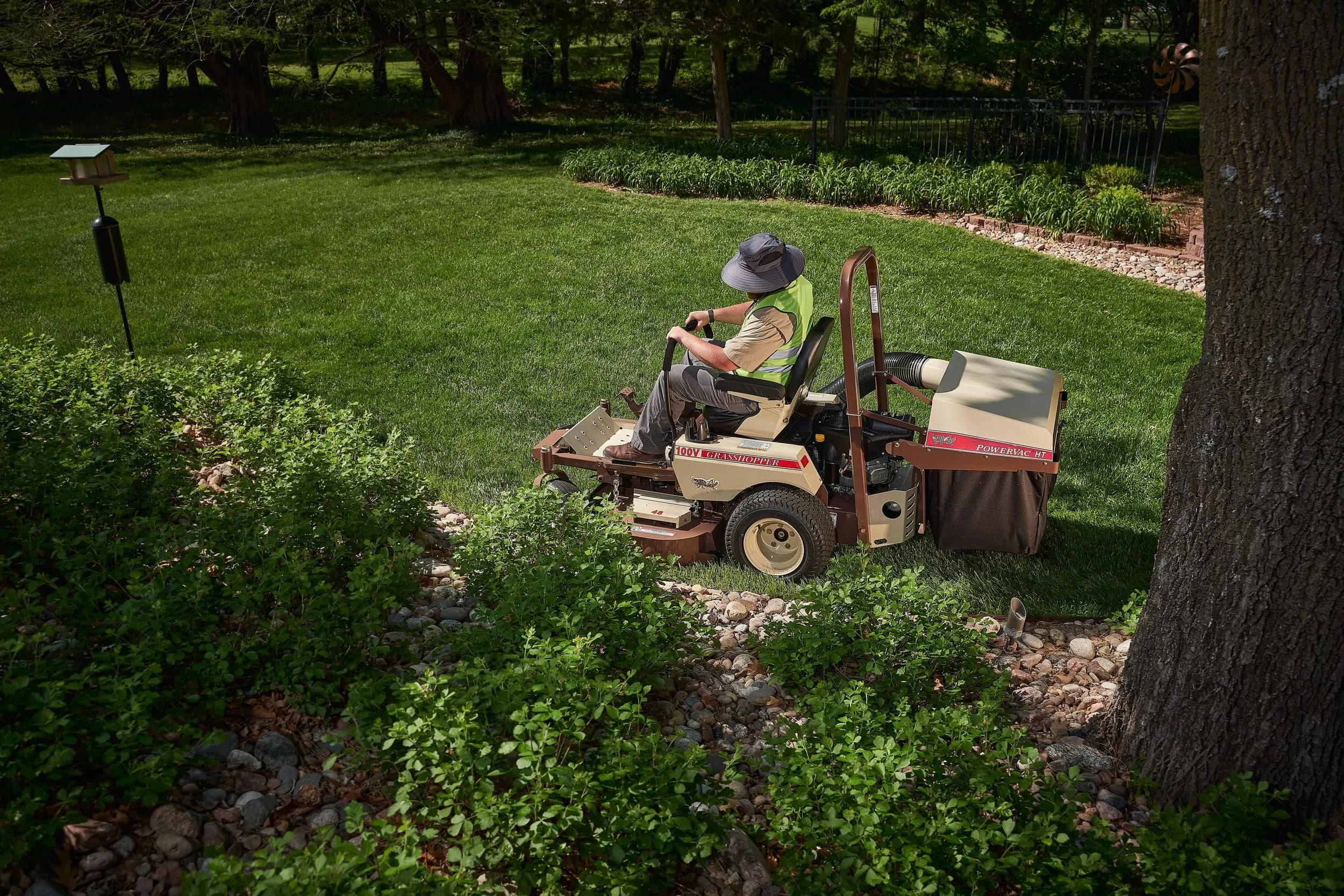
Easily compare all riding lawn mower attachments to see how you can get more out of your mower.
Your local dealer can also offer great service and support for your riding lawn mower. Find the dealer nearest you.
Elite performance doesn't need to cost elite money. Get 0.98% APR financing for 48 months on any new Grasshopper zero-turn mower.
The DIYer’s guide to fertilizing a lawn
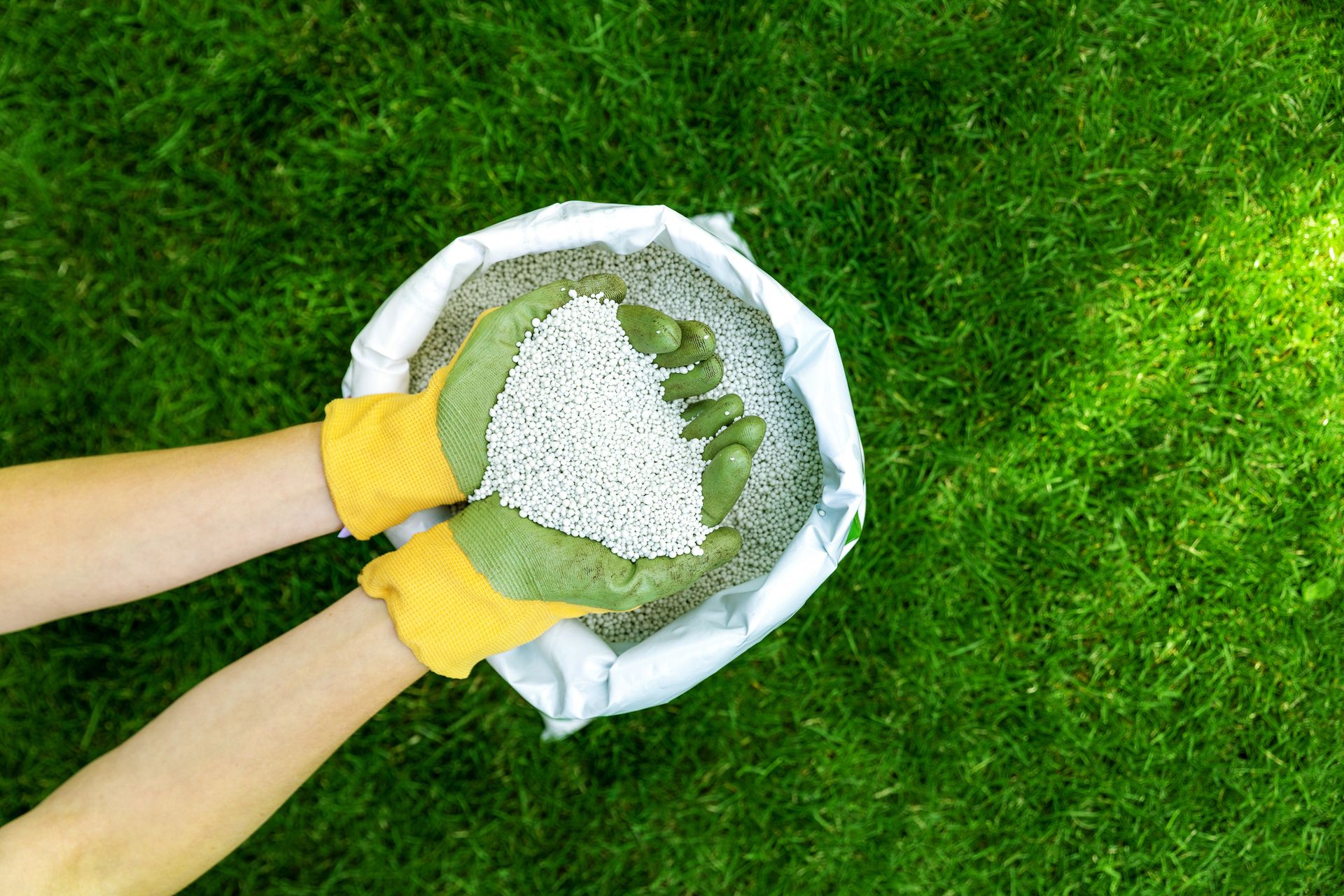
Key takeaways in this article
- Feed 3–4 times a year, 3–4 lbs N/1,000 sq ft.
- Early fall is the most important feeding.
- Feed cool-season grasses in fall, warm-season in summer—each at peak growth.
- Bag numbers are N-P-K percentages by weight.
- Over-fertilizing can do more harm than good, causing lawn burn, weakening soil health, and an increase in disease.
Fertilizer is food for your lawn. It adds essential nutrients to the soil which help grass grow greener, thicker, and stronger. And just like an athlete looking to pack on a little muscle, a lawn’s diet requires the right nutrients in the right quantities and at the right times.
In this article you’ll learn about:
- The benefits of fertilizing a lawn
- Lawn fertilizer ingredients
- When and how often to fertilize
- How much fertilizer to apply
- How to apply fertilizer
What are the benefits of fertilizing a lawn?
Fertilizing helps make a lawn look beautiful, which could even add value to a home.
Fertilizing also helps create dense and healthy turfgrass that is more resistant to weeds, insects, and disease, and typically requires less water because its root structure is so strong and deep.
Properly fertilized and maintained turfgrass is also more resistant to heat and drought, as well as those cold temperatures it must endure over the winter.
What are the ingredients in lawn fertilizer?
Ever wonder what those three numbers mean on a bag of granular fertilizer?
They refer to the concentration of each primary nutrient in the fertilizer:
- N – Nitrogen
- P – Phosphorus
- K – Potassium
For example, when a bag says 32-0-4, that means it contains 32% nitrogen, 0% phosphorus, and 4% potassium by weight.
Nitrogen helps support overall plant growth, including its vibrant green color. That is why nitrogen is considered the most essential nutrient for established lawns.
Phosphorus supports the photosynthesis process which helps with seed germination, cell growth, and root development.
Potassium helps regulate both root growth and top growth, enabling the turfgrass to maintain a healthy balance throughout its life.
Let’s get back to that middle number, phosphorus, for a second. You may notice that it shows up as 0 quite a bit these days. The main reason why is that applying phosphorus to an established lawn is prohibited in many states. Even in those states where there isn’t a statewide ban, county and local governments may have enacted their own bans.
Why is the use of phosphorus on lawns sometimes outlawed? It has to do with concerns over excessive amounts of phosphorus making their way to waterways like lakes and streams, which can cause pollution like algae blooms.
There is also an agronomic reason for outlawing phosphorus. Most established lawns no longer need phosphorus, since its primary function is to promote seed germination, cell development, and root growth. To that point, exceptions will often be made for newly seeded lawns, as well as lawns where a soil test shows a phosphorus deficiency.
In other words, it’s not that phosphorus is completely bad, it’s just that too much is unnecessary.
The bottom line is that a homeowner always wants to do right by their lawn’s nutritional needs, but must also remain compliant with state and local laws.
Manufacturers of retail-ready lawn fertilizers put a lot of thought into their formulations to help homeowners achieve both of those objectives. Sometimes they’ll even add other active ingredients to help fight weeds, insects, and turf disease.
Of course, you could always have your soil tested to determine its precise nutritional needs, and then try to find fertilizer blends that are more inline with those needs. For instance, sandier soils can benefit from a fertilizer with more potassium. But for the typical DIYer who’s looking to establish a greener and healthier lawn, it’s perfectly appropriate to simply buy a prepackaged fertilizer that is suited to your grass type and climate.
When to fertilize cool-season grasses
Cool-season grass types like Bluegrass, Fescue and Ryegrass typically benefit from 3–4 applications per year, with the heaviest emphasis on fall rather than spring. A light spring feeding in May, an optional early-summer application for irrigated lawns, and most importantly, a primary feeding in late August or September followed by a late-fall winterizer application is the schedule most university extension services recommend.
Skip mid-summer fertilization on cool-season grasses entirely. Nitrogen applied during summer heat stress can damage the lawn, promote disease, and encourage weed growth at the expense of the grass itself. If you only fertilize cool-season grass once or twice a year, make sure one of those applications happens in early fall, it's the single-most important feeding of the year.
When to fertilize warm-season grasses
Warm-season grasses like St. Augustine, Zoysia, and Bermuda generally require 3–4 applications per year, beginning in mid-spring once the grass has fully greened up and ending in early fall before the first frost.
Timing the first application matters more than the calendar date. Wait until soil temperature reaches 65°F at a 4-inch depth, typically when daytime air temperatures are consistently in the 70s, before fertilizing warm-season grasses in spring.
Unlike cool-season grasses, a summer application is essential for most warm-season varieties. They actively grow during hot summer months, so feeding them during this time helps them grow stronger and heartier, enabling them to withstand the hot, dry conditions they must endure. One exception: Centipedegrass and Bahiagrass should not receive a fall application; late-season nitrogen on these grasses can cause winterkill.
There are general best practices regarding when, how, and how often you should fertilize your lawn. However, maximizing the benefits of lawn fertilization takes several specific factors into consideration, including local climate, soil temperature, and grass type.
The following calendar is an excellent guide to help establish an annual lawn fertilization program based on where you live and the type of grass you’re maintaining.
Grass Type | Region | App 1 (Spring) | App 2 (Late Spring / Early Summer) | App 3 (Summer) | App 4 (Fall) | Annual (lbs per 1,000 sq ft) |
Kentucky Bluegrass, Tall Fescue, Ryegrass (Cool-season) | Northern (MN, WI, MI, upper New England) | Mid-late May | Skip—risks summer disease | Do not fertilize | Aug 15–Sept 15 (PRIMARY) + late Oct/early Nov winterizer | 2–4 |
Kentucky Bluegrass, Tall Fescue, Ryegrass (Cool-season) | Transition / Central (IL, IN, OH, KS, MO, mid-Atlantic) | Early-mid May | Early June (irrigated lawns only) | Do not fertilize | Early Sept (MOST IMPORTANT) + early Nov winterizer | 3–4 |
Kentucky Bluegrass, Tall Fescue, Ryegrass (Cool-season) | Southern Transition (TN, NC, northern GA, AR) | Late April | Skip | Skip | September + late October winterizer | 2–3 |
Bermudagrass (Warm-season) | Upper South / Transition (NC, TN, OK, north TX, northern AL/GA) | Late April–early May (when soil hits 65°F at 4" depth) | Mid-June | Late July–early August | No fall application—risks winterkill | 3–5 |
Bermudagrass (Warm-season) | Deep South / Gulf (FL, south GA/AL, south TX, LA) | April | June | July–August | September (30 days before first frost) | 4–6 |
Zoysiagrass (Warm-season) | Transition Zone (KS, MO, KY, mid-Atlantic) | May (after full green-up) | Mid-June | Mid-July | Skip | 2–3 |
Zoysiagrass (Warm-season) | Deep South | April–May | June | August | September | 2-4 |
St. Augustinegrass (Warm-season) | Gulf Coast / FL / South TX | April (after green-up, soil >65°F) | June | August | September (30 days before first frost) | 2–4 |
Augustinegrass (Warm-season) | Upper South / Transition (NC / TN / OK / north TX / northern AL / northern GA) | Late April–May (when soil hits 65°F at 4 inch depth) | Mid-June | Late July–early August | No fall application—risks winterkill | 2–3 |
Centipedegrass (Warm-season) | Deep South / Gulf (FL / south GA / south AL / LA) | Late April | Skip | June–July | No fall application — causes winterkill | 1–2 |
Bahiagrass (Warm-season) | Upper South / Transition (south GA / south AL / north FL) | Late April–May | June | July | Skip | 2–3 |
Bahiagrass (Warm-season) | FL, Gulf Coast | April–May | June | July | Skip | 2–3 |
Cool-season grasses (Bluegrass, Fescue, Ryegrass) are not included for Deep South / Gulf regions because they don't perform reliably in those climates due to summer heat stress.
Spring vs. fall fertilizing: which matters more?
As a general rule, fertilizing a lawn four times a year is best practice, spanning from early spring through early fall. This ensures the lawn has a steady supply of nutrients to promote healthy growth and strong root development, while also enabling the lawn to overcome the unique challenges it faces each season.
For example, the first spring application helps a lawn emerge from winter dormancy and green up nicely. A summer application on warm-season grasses helps a lawn withstand the stress of summer heat. A late-summer application on cool-season grasses helps a lawn recover from the summer stress it just endured.
That brings us to that final fall application. There are four main reasons why fall fertilizing is arguably the most important:
- Helps a lawn recover from summer stress
- Encourages root development since the grass’s top growth isn’t as aggressive
- Allows grass to absorb nutrients that will carry it through winter
- Enables grass to emerge from dormancy and green up faster the following spring
So to summarize, providing your lawn with a regular diet of nutrients throughout the growing season is ideal. But if you only want to fertilize once a year, early fall is the best time to do it.
How much fertilizer should I apply?
The guiding rule ties to that first number on a bag of fertilizer, the nitrogen. For both cool- and warm-season grasses, it’s generally recommended to apply 3-4 pounds of nitrogen per 1,000 square feet over the course of a year, applying anywhere from 0.5-1 pounds per application.
Let’s say you bought a 37.5-pound bag of fertilizer from a local hardware store, which is designed to treat 15,000 square feet (i.e., a 150’ x 100’ lawn). The bag says 32-0-4, which means 32% of those 37.5 pounds is nitrogen. That means there are 12 pounds of nitrogen in that bag, which enables you to apply 0.8 pounds of nitrogen per 1,000 square feet. That’s about perfect in most situations. And if you fertilize four times, you’ll be right in that 3- to 4-pound range for the year.
But let’s say the fertilizer you bought is 29-0-4. That enables you to apply 0.725 pounds of nitrogen per 1,000 square feet. That’s still within the desired per-application range, but you’ll be slightly under the desired annual target if you fertilize four times.
If your lawn is in good shape and you’re maintaining it properly, you’ll probably be just fine if you’re slightly below the annual target–especially if you aren’t bagging your grass clippings when you mow. Grass clippings provide vital nutrients like nitrogen back into the lawn, potentially reducing the amount of fertilizer your lawn requires to stay green and healthy.
On the other hand, it’s never a good idea to apply too much fertilizer to a lawn. When there are more nutrients available than the grass can handle, the excess fertilizer can end up drawing moisture away from the grass roots, leading to a host of problems with the lawn’s appearance and overall health.
Signs of an overfertilized lawn
One of the clearest indications of an overfertilized lawn is what’s referred to as “burning” of the grass. That’s when streaks or patches of grass have a brownish appearance due to the grass drying out.
Burning happens when far too much fertilizer is applied in a single application. It can also happen in concentrated areas when fertilizer is accidentally spilled on a lawn, or when too much fertilizer drops out of the bottom of a spreader due to either equipment malfunction, or operator error.
If the burned grass has died, it will need to be replanted. In many instances, however, the grass can be thoroughly rinsed to dissolve the excess salts in the fertilizer. Following up with a regular watering regimen for a week or so should restore moisture to the root zone and allow the grass to gradually green back up.
Aside from burning, there are other less dramatic signs of overfertilizing that are just as important to take note of. Many are symptomatic of chronic overfertilization that not only inflicts near-term damage on the grass, but also long-term damage to the health of the soil:
- Chalky residue visible in soil due to excess fertilizer salts that don’t dissolve
- Numerous thin patches in lawn due to nonuniform fertilizer application
- Grass grows aggressively after fertilizing, but quickly dries out and wilts
- Increased thatch due to sudden overgrowth that can’t decompose properly
- Increased amount of weeds, insects, and/or disease as the grass and soil lose vigor
How to apply fertilizer to a lawn
It’s important to apply fertilizer at the proper rate and in a uniform manner to avoid different lawn areas getting either too much or too little. Uniform application requires using the right equipment in the right way.
A walk-behind broadcast spreader is the most common application tool for most DIYers. As the operator pushes the spreader across the lawn, fertilizer falls through the holes in the hopper onto an impeller. That impeller spins and scatters the fertilizer. Thus, two key factors dictate how effectively the fertilizer is scattered:
- Walking pace–Movement of the impeller is directly tied to the movement of the drive wheel. Thus, it’s best to maintain a steady walking pace of, say, 2 or 3 mph to achieve optimum fertilizer distribution.
- Flow control–To make sure the proper amount of fertilizer is allowed to drop from the hopper onto the impeller, it’s important to utilize the right flow control setting on the spreader’s handlebars. There is usually a recommendation on the back of the bag of fertilizer you are spreading.
Once everything is set up and ready to go, a good approach is to take a lap around the yard and fertilize the perimeter first. In most instances, the fertilizer is going to be thrown roughly 4-5 feet to the front and both sides. Keep that in mind as you position the spreader itself, because you don’t want to throw a bunch of fertilizer into flower beds, or onto sidewalks, patios, etc.
Once you’ve completed your perimeter lap, the next step is to go back and forth in straight lines from one end of the lawn to the other. To determine where to position the spreader itself for each pass, keep in mind that you’re fertilizing in an 8- to 10-foot swath from left to right. That said, a little overlap helps ensure even coverage because the midsection of each swath receives more fertilizer than the edges. A good rule of thumb is to move the spreader over about 5 feet with each pass.
There are also spreader options that can mount to types of zero-turn lawn mowers like we manufacture here at Grasshopper. This can be a good option if you already own this type of equipment, have a really large lawn, or simply do not want to walk behind a spreader.
Regardless of which equipment you choose, the goal is to operate it correctly so you can apply the fertilizer as uniformly as possible.
In summary
A lot goes into creating an attractive, healthy lawn. Proper fertilization is a big part of it. Proper mowing and maintenance are also very important, as are several other lawn care practices that help the fertilizer do its job even better—things like dethatching, aerating, and weed control.
Grasshopper has a wide range of mowers and attachments that can help in all of these areas. Stop by your local Grasshopper Dealer and find out how Grasshopper can help you create the best-looking lawn in your neighborhood.
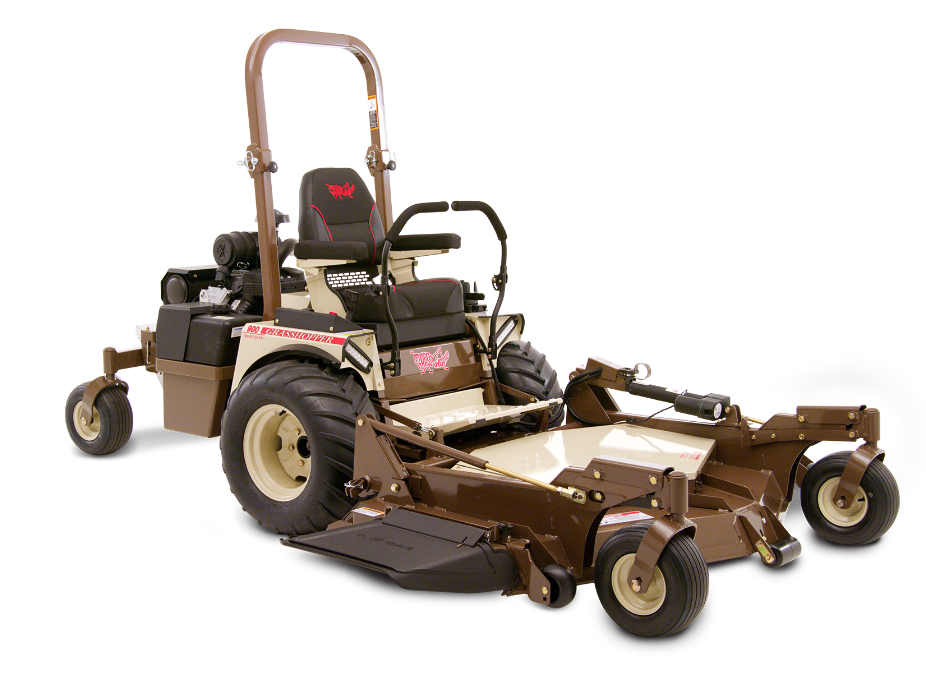
Ready to talk to a dealer?
Frequently asked questions
The best time to fertilize a lawn depends on your grass type: cool-season grasses (Bluegrass, Fescue, Ryegrass) are fed heaviest in early fall, while warm-season grasses (Bermuda, Zoysia, St. Augustine) start in mid-spring once soil reaches 65°F at a 4-inch depth. Cool-season lawns should skip mid-summer feeding, but warm-season lawns benefit from a summer application during active growth.
Fertilize a lawn three to four times per year for both cool- and warm-season grasses. Aim for 3–4 pounds of nitrogen per 1,000 square feet over the season, applying about 0.5–1 pound per application. If you fertilize only once or twice, make sure one feeding lands in early fall for cool-season grass.
For cool-season grasses, fall is the more important time to fertilize and is the single most valuable feeding of the year. An early-fall application helps the lawn recover from summer stress, develop deeper roots, and green up faster the following spring. A four-times-a-year program from early spring through early fall is ideal, but if you feed only once, choose early fall.
Yes, you can over-fertilize a lawn, and the clearest sign is "burning" — brown streaks or patches where the grass dries out from too much fertilizer in one application. Chronic overfertilizing also causes chalky salt residue in the soil, increased thatch, and more weeds, insects, and disease. To avoid it, stay within 0.5–1 pound of nitrogen per 1,000 square feet per application.
The three numbers on a fertilizer bag, such as 32-0-4, are the percentages of nitrogen, phosphorus, and potassium (N-P-K) by weight. So 32-0-4 means 32% nitrogen, 0% phosphorus, and 4% potassium. Phosphorus often shows 0 because many states and localities restrict its use on established lawns to prevent runoff that pollutes lakes and streams.
.webp&w=3840&q=75)
.webp&w=3840&q=75)